TL;DR:
- Using CBD rarely triggers positive drug tests because standard screens target THC, not CBD. However, poorly regulated products with undeclared THC can cause false positives, especially in oral fluid tests due to residual mouth contamination. Clinical blood monitoring of CBD enables precise dose management and helps avoid test issues through selecting high-quality, compliant products.
If you use CBD regularly, you have probably wondered whether it will show up on a blood test. The honest answer is more nuanced than most articles admit. A blood test CBD interaction depends heavily on the type of test being run, the quality of the product you are using, and how much THC it actually contains. Standard drug screens do not target CBD itself, but that does not mean you are automatically in the clear. This guide breaks down exactly what different blood tests detect, how CBD can influence the results, and what you can do about it.
Table of Contents
- Key takeaways
- Types of blood tests related to CBD
- How CBD use can affect drug screening
- Clinical CBD blood monitoring: why it matters
- Reducing your risk of a positive blood test
- My take on CBD and blood testing
- Smokocbd products built for peace of mind
- FAQ
Key takeaways
| Point | Details |
|---|---|
| Drug tests target THC, not CBD | Standard screening tests look for THC metabolites, so CBD alone rarely causes a positive result. |
| Product quality matters enormously | Mislabelled or unregulated CBD products with undeclared THC can trigger positive drug test results. |
| Therapeutic monitoring is different | Clinical blood analysis for CBD uses advanced LC-MS/MS technology to measure CBD and its metabolites precisely. |
| Oral fluid tests carry the highest risk | Residual CBD product in the mouth can contaminate oral fluid samples and produce false positives shortly after use. |
| Lab-tested products reduce your risk | Choosing third-party tested, compliant CBD products with verified THC content is the most reliable way to protect yourself. |
Types of blood tests related to CBD
Not all blood tests work the same way, and understanding the difference is the foundation of everything else in this article. There are broadly two categories you need to know about: drug screening tests and therapeutic drug monitoring (TDM).
Drug screening tests are the kind used by employers, insurers, or law enforcement. Most of these rely on immunoassay technology, which flags compounds structurally similar to known drugs. Here is the critical point: these tests are calibrated to detect THC and its primary metabolite, THC-COOH. They are not designed to detect cannabidiol (CBD) at all.
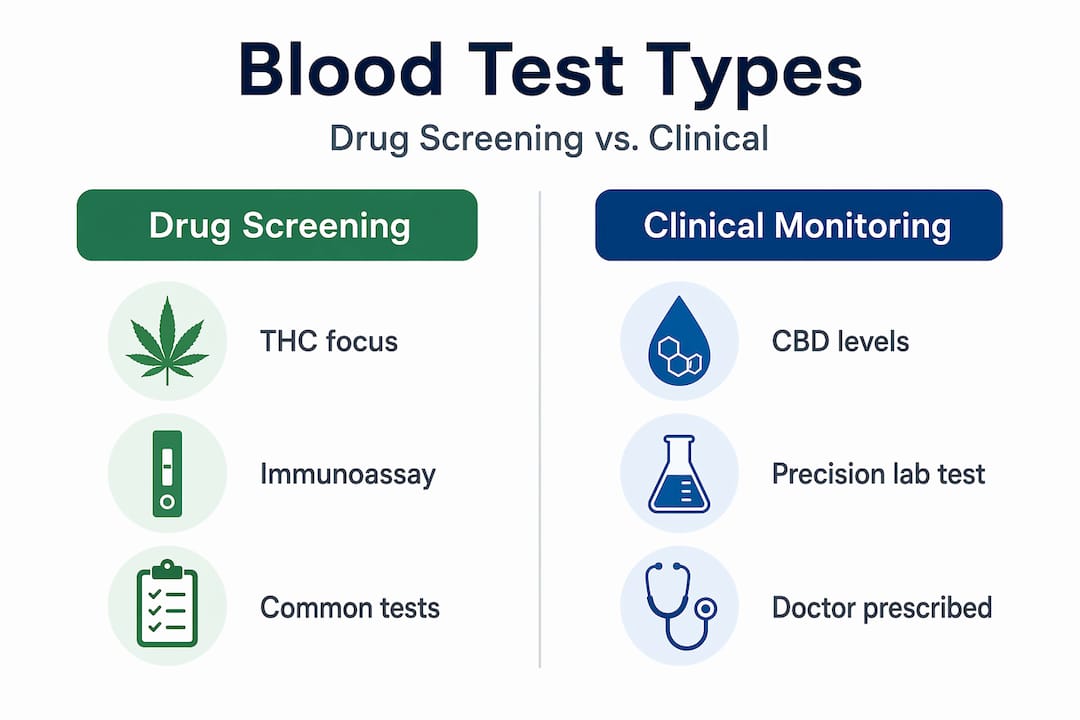
Therapeutic drug monitoring, by contrast, is used in clinical settings where doctors need precise measurements. This typically uses liquid chromatography coupled with tandem mass spectrometry, or LC-MS/MS, which can measure CBD and its active metabolite 7-hydroxy-CBD (7-OH-CBD) down to nanogram concentrations in blood plasma. This level of precision is what clinicians rely on when managing conditions such as treatment-resistant epilepsy.
A few practical distinctions worth understanding:
- Immunoassay screens are fast and inexpensive, but they cannot distinguish between legal hemp-derived CBD use and illicit cannabis consumption
- Confirmatory mass spectrometry tests are more accurate, can identify specific compounds, and are used when a positive immunoassay needs verification
- Timing matters: CBD has a half-life of roughly 24 to 60 hours, meaning steady-state blood concentrations are not reached until approximately 5 to 12 days of consistent dosing
- Trough sampling (taking a blood sample just before your next dose) is the standard protocol in therapeutic settings to get comparable, reliable readings
Pro Tip: If you are being monitored therapeutically, always take your blood sample at the same time relative to your dose. A trough sample taken consistently before your morning dose gives clinicians the cleanest data for adjusting your treatment.
How CBD use can affect drug screening
This is where many people get caught out. You are using a legal, hemp-derived CBD product, you are not impaired, and yet a test comes back positive. How does that happen?
The answer usually comes down to trace THC. Most broad-spectrum CBD products contain very low levels of Delta-9-THC, within legal limits, but present nonetheless. Standard drug tests target THC, not CBD, so even a small amount of THC from a poorly labelled product can push a result above the detection threshold.
Research from Johns Hopkins University found that positive urine tests occurred at Delta-9-THC doses of 1.0 mg or higher, with detectable samples still present after a one-week washout period. To put that in context, some commercial CBD oils contain enough trace THC to approach that threshold with regular use.
| Testing matrix | Primary target compound | Risk of false positive from CBD use | Notes |
|---|---|---|---|
| Blood | THC / THC-COOH | Low to moderate | More accurate systemic detection than oral fluid |
| Urine | THC-COOH | Low to moderate | Most common workplace screening method |
| Oral fluid | Delta-9-THC | Higher | Vulnerable to direct contamination from CBD products |
The oral fluid situation deserves particular attention. A study found that up to five of ten participants had detectable THC in oral fluid just 30 minutes after taking CBD orally, even without co-dosing THC. This is not the CBD being detected, it is the residual THC from the product lingering in the mouth.
“Conventional drug tests cannot reliably distinguish illicit cannabis use from legal hemp-derived CBD product use due to trace THC contamination.” Impact of CBD and hemp oil on drug test results
The practical implication is straightforward. A blood test provides more reliable systemic detection than oral fluid, but no testing matrix is completely free of risk when the product you are using contains undeclared or poorly measured THC. Product quality is not just a marketing consideration. It is a safety one.
Clinical CBD blood monitoring: why it matters
Beyond workplace drug screens, there is a growing and genuinely fascinating use of cbd blood monitoring in clinical medicine. When CBD is prescribed therapeutically, such as for epilepsy or autism spectrum conditions, doctors use blood analysis to track whether patients are receiving an effective dose and whether the treatment is working.
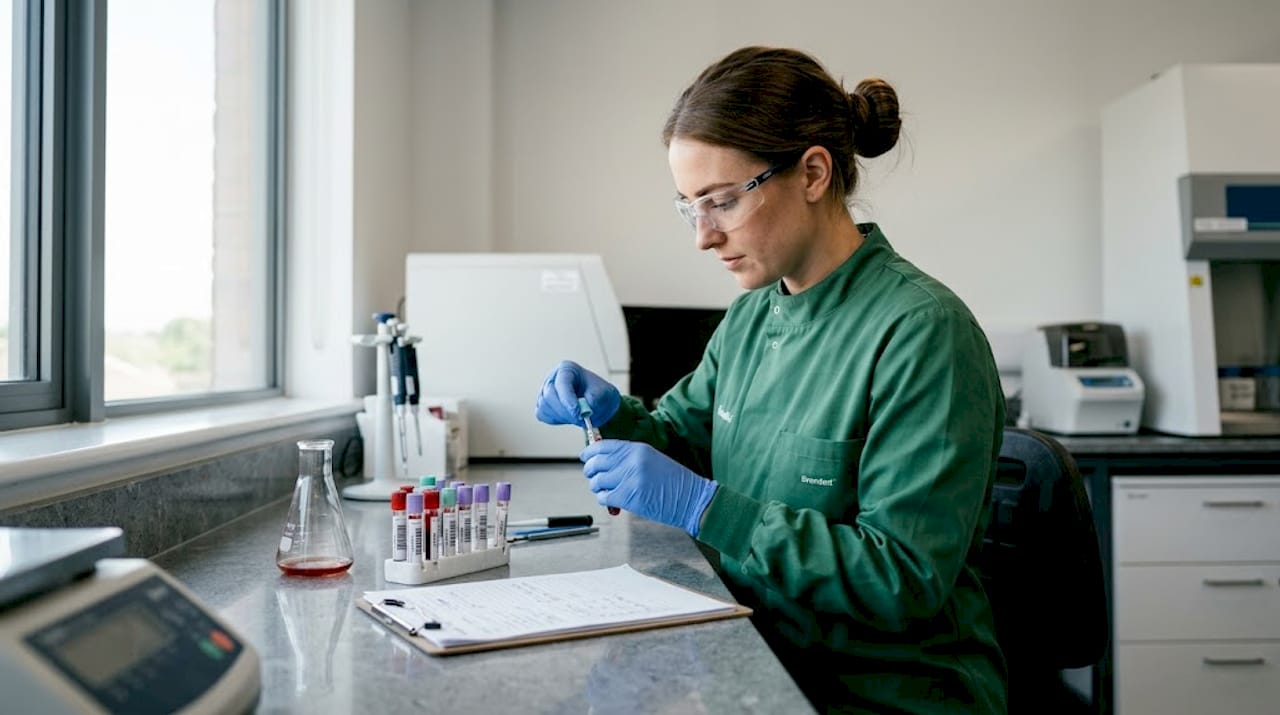
The goal of therapeutic drug monitoring is to correlate CBD blood metabolite levels with actual clinical outcomes. A 2026 study in boys with autism found positive associations between blood CBD and 7-OH-CBD concentrations and measurable improvements in receptive vocabulary and cognitive function. This kind of cannabidiol blood analysis transforms CBD from a supplement into a precisely managed treatment tool.
Key elements of clinical CBD blood monitoring include:
- Measuring both CBD and 7-OH-CBD: 7-OH-CBD is an active metabolite with its own pharmacological effects, so quantifying it alongside the parent compound gives a fuller picture
- Sampling at steady state: Because CBD half-life ranges from 24 to 60 hours, blood levels only stabilise after five or more half-lives, which means doctors wait 5 to 12 days before drawing a meaningful trough sample
- Monitoring drug interactions: CBD is a known inhibitor of liver enzymes CYP2C and CYP3A. This means CBD can elevate levels of co-administered medications, particularly certain anticonvulsants, anticoagulants, and immunosuppressants. Regular bloodwork is therefore not optional in these contexts, it is clinically necessary
- Distinguishing therapeutic failure from non-adherence: Trough sampling helps clinicians determine whether a patient is not responding to treatment or simply not taking their dose consistently
Pro Tip: If you are on prescription CBD alongside other medications, ask your doctor to include CYP enzyme substrate monitoring in your routine bloodwork. Elevated levels of a co-medication can be an early sign that CBD is affecting its metabolism.
Reducing your risk of a positive blood test
If drug testing is a concern in your life, whether for work, sport, or insurance, the decisions you make about which CBD products to buy genuinely matter. The good news is that the risk is largely manageable with the right approach.
Here are the steps to follow:
- Buy only lab-tested products with verified THC content. A certificate of analysis from an independent laboratory should show CBD and THC concentrations per serving. If a brand cannot produce this document, do not buy the product. A systematic review found that most standard CBD products are unlikely to trigger positive tests, but the exceptions are consistently linked to unregulated or mislabelled goods.
- Understand UK legal THC limits and choose compliant products. In the UK, CBD products must contain no more than 1 mg of THC per container. Understanding UK CBD regulations helps you identify which products genuinely meet this threshold.
- Avoid oral fluid tests immediately after dosing. Given the contamination risk, do not take an oral fluid test within at least two hours of using a CBD oil or tincture. Residual product in the mouth is the primary culprit for false positives in this matrix.
- Tell your healthcare provider and testing administrator. Disclosing your CBD use before a test protects you if a borderline result requires explanation. Confirmatory testing can often clarify whether THC is present at a pharmacologically meaningful level.
- Consider product format and delivery method. Capsules and soft gels bypass the mouth entirely, reducing oral contamination risk compared to tinctures taken sublingually. For precision monitoring, knowing your CBD dosage in relation to a blood test outcome is easier when your dose is consistent and measurable.
When comparing product types, broad-spectrum CBD (which removes THC through further processing but retains other cannabinoids) and CBD isolate (pure CBD with no other cannabinoids) both carry lower THC-related risks than full-spectrum products. Always verify with a certificate of analysis rather than relying on the label alone, as mislabelled products remain a documented problem across the market.
My take on CBD and blood testing
I have spent a considerable amount of time working through the research on this topic, and the thing that consistently strikes me is how large the gap is between what most people believe and what the evidence actually shows.
The popular assumption is simple: CBD is not a drug, so it will not show up on any test. That belief is dangerously incomplete. The reality is that what shows up on a test is not about CBD itself. It is about what else is in the product you are using. I have seen case after case in the literature where someone using a legal, well-intentioned product ended up with a positive result because the manufacturer’s THC figures were inaccurate.
What I find genuinely underappreciated is the clinical value of blood analysis for CBD. Most of the public conversation focuses on whether CBD will get you in trouble at work. But the more interesting story is how precisely we can now use cbd testing results to manage therapeutic outcomes. Correlating blood metabolite levels with cognitive improvements, as the 2026 autism study did, is the kind of work that moves CBD from wellness trend to evidence-based medicine.
My practical advice is this: treat product selection as the single most important variable in your CBD experience. Not dose, not timing, not delivery method. The quality and compliance of what you buy. Everything else flows from that decision.
— Mike
Smokocbd products built for peace of mind
If this article has made one thing clear, it is that product quality is not optional. At Smokocbd, every product in the range is independently lab-tested to verify CBD concentration and confirm THC levels comply with UK regulations. The broad-spectrum 1000mg CBD tincture is a popular choice for those who want a higher-strength daily option with a clean, mint flavour and the transparency of a full certificate of analysis. For those starting out or looking for a lighter dose, the 500mg citrus CBD oil offers the same quality standards at a gentler strength. If you prefer a format that avoids oral contamination entirely, the CBD soft gels and gummies bundle gives you a consistent, measurable dose in an easy-to-track format. Browse the full Smokocbd range and make your wellness choices with confidence.
FAQ
Does a blood test detect CBD directly?
Standard blood-based drug screening tests do not target CBD. They are calibrated to detect THC and its metabolites. Clinical therapeutic monitoring is the only context in which CBD itself is directly measured in blood.
Can legal CBD products cause a positive drug test?
Yes, though it is uncommon with compliant products. Research shows that positive results are linked to unregulated or mislabelled CBD goods containing undeclared THC. Using third-party tested products significantly reduces this risk.
How long does CBD stay in the blood?
CBD has a half-life of approximately 24 to 60 hours. With regular use, it reaches steady-state blood concentrations after 5 to 12 days. A single dose may remain detectable in blood for several days depending on the dose and individual metabolism.
Why is oral fluid testing riskier than blood testing for CBD users?
Oral fluid tests detect residual THC from CBD products in the mouth shortly after use. Studies found detectable THC in oral fluid within 30 minutes of CBD dosing. Blood tests reflect systemic absorption rather than local mouth contamination, making them more reliable.
Should I tell my doctor I use CBD before having bloodwork done?
Yes. CBD can inhibit liver enzymes that metabolise other medications, which may alter the blood levels of co-administered drugs. Informing your doctor allows them to interpret your bloodwork accurately and adjust any medication monitoring accordingly.