TL;DR:
- Applying a CBD tincture under your tongue and holding it for 60 to 90 seconds ensures rapid absorption through mucous membranes, resulting in a faster onset. Starting with a low dose, checking product concentration, and consulting a healthcare professional optimize safety and effectiveness. Proper technique improves bioavailability, making sublingual delivery more efficient than swallowing directly.
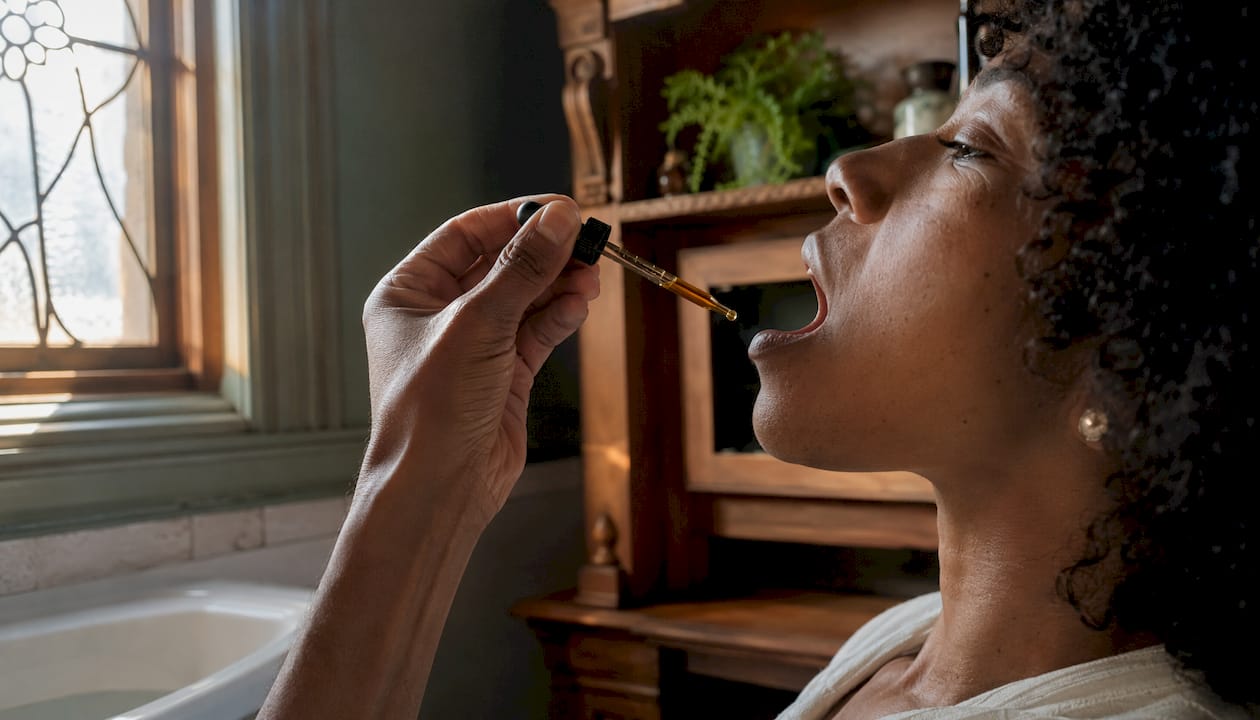
Place your CBD tincture under your tongue and hold it there for 60–90 seconds before swallowing. That single step is the whole CBD tincture sublingual method in practice. The thin mucous membranes beneath your tongue sit directly over a dense capillary network, so cannabinoids can pass into your bloodstream without travelling through your digestive system first. The result is a faster, more consistent onset than simply swallowing the oil.
A few things to keep in mind before you start:
- Start low. A small dose is a sensible first step for most adults.
- Check your product label. Concentration varies widely between bottles; always confirm mg per ml before measuring.
- Consult a clinician or pharmacist if you take any prescription medicines, particularly blood thinners or antiepileptics.
- Choose a quality product. Smokocbd’s mint-flavoured broad-spectrum tinctures are available in 1000 mg and 2000 mg strengths and are verified by third-party lab reports.
- Record your response. Note how you feel 30–60 minutes after each dose to guide future adjustments.
Pro Tip: Avoid eating or drinking for 15 minutes before taking your tincture. A clean, moist mouth helps the mucosa absorb cannabinoids more readily.
Table of Contents
- How to take a CBD tincture sublingually: step by step
- Why sublingual absorption works faster than swallowing
- How long should you hold CBD oil under your tongue?
- How often should you take CBD and what dose should you start with?
- Safety, side effects, and drug interactions you should know
- Practical tips for consistent, accurate dosing every day
- How does sublingual compare with other ways of taking CBD?
- Smokocbd’s recommended tinctures for UK adults
- Key takeaways
- Why the sublingual approach is worth getting right
- Try Smokocbd’s mint CBD tinctures
- Useful sources and further reading
How to take a CBD tincture sublingually: step by step
Getting the technique right matters more than most people realise. A few seconds of carelessness with the dropper or an early swallow can reduce how much CBD actually reaches your bloodstream. Follow this sequence every time.
What you need
A CBD tincture is a liquid extract packaged in a small bottle with a graduated dropper. The dropper lets you draw up a measured volume of oil, which you then deposit under your tongue. Some tinctures use an alcohol base; most UK consumer products use a carrier oil such as MCT (medium-chain triglyceride) oil.
Step-by-step instructions
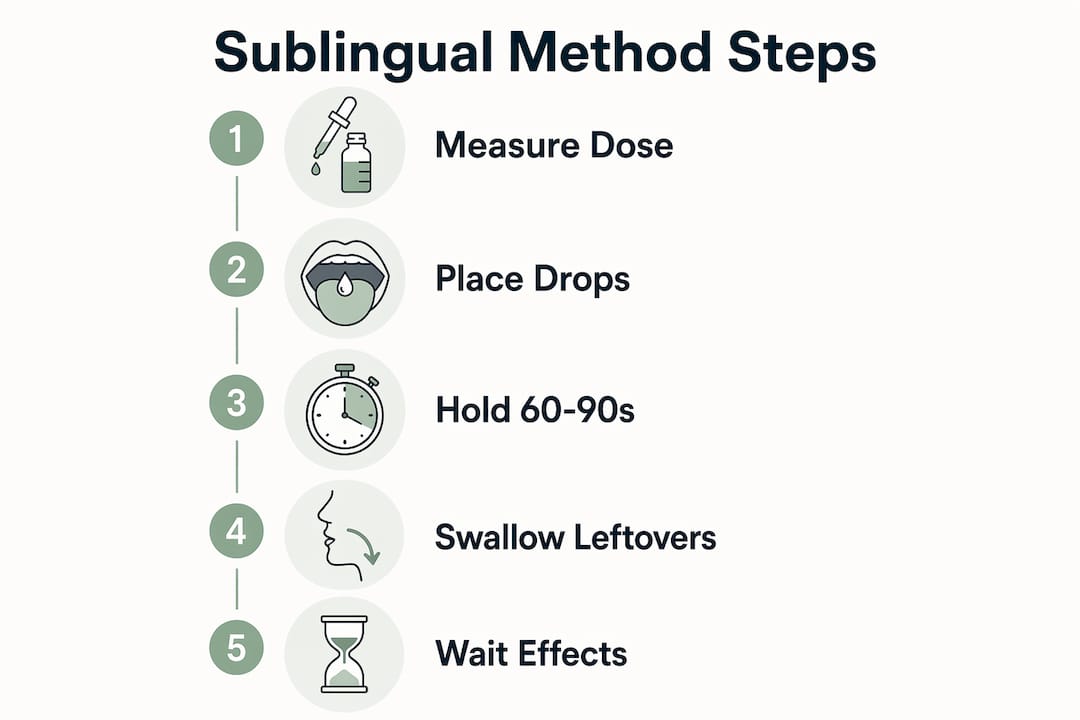
- Shake the bottle for five to ten seconds to distribute the cannabinoids evenly through the carrier oil.
- Wash your hands or use a clean surface; hygiene matters when you are handling something going near your mouth.
- Check the concentration. Read the label to confirm mg per ml. A 10 ml bottle containing 1000 mg delivers roughly 100 mg per ml.
- Draw up your dose. Squeeze the dropper bulb, insert the tip into the bottle, and release slowly to fill it. A full standard dropper is typically 1 ml.
- Lift your tongue. Tilt your head slightly back, raise your tongue to the roof of your mouth, and place the drops on the floor of your mouth directly beneath the tongue.
- Hold for 60–90 seconds. Keep still, breathe through your nose, and resist the urge to speak or swallow. This is the critical window.
- Swallow the remainder. After the hold time, swallow whatever liquid is left. Any CBD not absorbed sublingually will continue through the digestive route.
- Rinse if needed. A small sip of water after swallowing helps clear the taste.
Pro Tip: To reduce the swallowing reflex during the hold time, try pressing the tip of your tongue gently against your lower front teeth. It keeps the tongue lifted and gives the oil more contact with the mucosa.
For a deeper look at why drops absorb faster than capsules or pills, Smokocbd’s educational blog covers the pharmacokinetic reasoning in plain language.
Why sublingual absorption works faster than swallowing
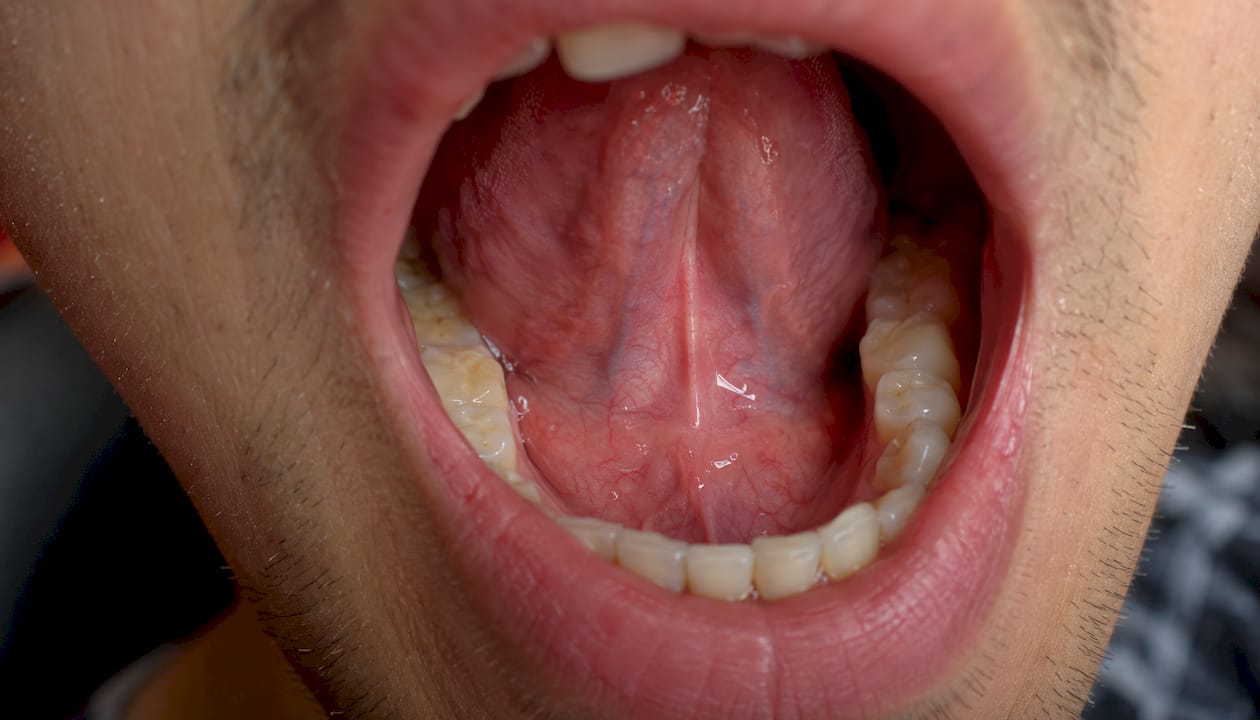
The science behind sublingual administration of CBD comes down to anatomy. The floor of your mouth is lined with a thin, highly vascular mucosa. Beneath it runs a network of capillaries connected to the sublingual and lingual veins, which drain directly into systemic circulation. When you hold oil under your tongue, cannabinoids diffuse across this membrane and enter the bloodstream within minutes, bypassing the liver’s first-pass metabolism at least partially.
Compare that with swallowing the oil outright. Once CBD reaches the stomach and small intestine, it is absorbed and routed through the portal vein to the liver, where enzymes (primarily CYP3A4 and CYP2C19) break down a significant portion before it ever reaches general circulation. That process, known as hepatic first-pass metabolism, reduces the effective amount of CBD that reaches your tissues.
Key points on onset and bioavailability:
- Sublingual onset is commonly reported at 15–45 minutes after administration.
- Oral ingestion (swallowed capsules or gummies) typically takes 30–120 minutes or longer to produce noticeable effects.
- Inhalation (vaping) produces effects within minutes but carries its own risk profile.
- Bioavailability for the sublingual route is variable. Reputable sources recommend caution about precise percentages; ranges differ across individuals, formulations, and study designs. Smokocbd’s article on CBD bioavailability explores the factors that influence absorption in more detail.
Statistic note: Sublingual onset of 15–45 minutes is consistently cited across multiple consumer and clinical sources, though individual variation means some people notice effects sooner or later than this window.
The practical takeaway: sublingual delivery is not magic, but it does give cannabinoids a more direct route. Correct technique, particularly the hold time, is what makes the difference between a sublingual dose and an oral one.
How long should you hold CBD oil under your tongue?
The recommended hold time is 60–90 seconds. That window gives the mucosa enough contact time to absorb a meaningful portion of the cannabinoids before you swallow the rest.
Why does the duration matter? The sublingual mucosa is permeable, but absorption is not instantaneous. Cannabinoids need time to diffuse across the membrane and into the capillaries beneath. Cutting the hold time to 10–15 seconds means most of the oil simply slides down your throat and enters the digestive route instead.
Practical variations:
- 60–90 seconds is the standard recommendation and the target to aim for.
- 30 seconds minimum if you genuinely cannot manage longer; some absorption still occurs, though it will be reduced.
- Over 90 seconds offers diminishing returns for most people; the mucosa can only absorb so much in a single sitting.
Pro Tip: Use a phone timer for the first few weeks. Most people dramatically underestimate 60 seconds when they are new to the routine. Once the habit is set, you will not need it.
- Keep your mouth relaxed and your tongue raised throughout.
- Breathe steadily through your nose to avoid disturbing the oil pool.
- Avoid talking; it shifts the liquid and reduces mucosal contact.
How often should you take CBD and what dose should you start with?
There is no single correct dose for CBD tinctures. Scientific literature does not provide a universal frequency; most manufacturers advise once or twice daily and encourage a “start low, go slow” approach. That guidance exists because individual responses vary considerably depending on body weight, metabolism, the condition being addressed, and the product’s concentration.
A sensible starting framework for UK adults:
- Week 1–2: Start with a low dose once daily, taken at the same time each day (morning or evening).
- Week 3–4: If well tolerated and effects are minimal, increase to twice daily or raise the single dose gradually.
- Ongoing: Titrate slowly upward until you find the dose that works for you, then maintain it.
For practical help converting drops to milligrams, Smokocbd’s guide on how many drops in 1 ml is a useful reference.
| Context | Frequency | Starting dose | Notes |
|---|---|---|---|
| Manufacturer OTC guidance | Once or twice daily | Low fixed mg (product-dependent) | Follow label; titrate gradually |
| Practical starting example (1000 mg/10 ml) | Once daily | ~10 mg (0.1 ml) | Roughly 2–3 drops of a standard dropper |
| Practical starting example (2000 mg/10 ml) | Once daily | ~10 mg (0.05 ml) | Higher concentration; measure carefully |
| Clinical (Epidiolex) — prescription only | Twice daily | 5 mg/kg/day | Prescription context only; not OTC guidance |
The clinical Epidiolex figures are included purely for context. They reflect a prescription medicine for specific epilepsy syndromes and should not be used as a template for over-the-counter tincture dosing.
Safety, side effects, and drug interactions you should know
CBD is generally well tolerated, but it is not without risks, particularly when combined with other medicines.
Common mild side effects include tiredness or drowsiness, changes in appetite, loose stools or mild gastrointestinal discomfort, and dry mouth. These tend to be dose-dependent and often settle as the body adjusts.
Drug interactions are the more serious concern. CBD is metabolised by the CYP450 enzyme family, particularly CYP3A4 and CYP2C19. Taking CBD alongside medicines that use the same pathways (including warfarin, certain antiepileptics, some antidepressants, and statins) can alter how those drugs are processed. This can raise or lower their effective concentration in your blood.
If you take any prescription medicine, speak to your GP or pharmacist before starting a CBD tincture. This is not a precaution to skip. The interaction risk is real and well documented in clinical literature.
UK-specific considerations:
- CBD sold as a food supplement in the UK falls under Novel Foods regulation. Only products with a valid Novel Foods application should be on sale.
- Driving: CBD itself is not a controlled substance, but if your product contains any THC (even trace amounts), it could theoretically affect a roadside drug test. Choose zero-THC verified products and exercise caution if you drive professionally.
- Pregnancy and breastfeeding: The current medical consensus is to avoid CBD during pregnancy and breastfeeding. Consult your midwife or GP.
Pro Tip: Before starting CBD, photograph your current medicines list and take it to your pharmacist. A five-minute conversation can flag any CYP450 interaction before it becomes a problem.
This article is general information, not medical advice. Always confirm current guidance with a qualified healthcare professional or the relevant primary source for your own situation.
Practical tips for consistent, accurate dosing every day
Getting the technique right once is easy. Keeping it consistent over weeks and months is where most people slip up.
Measuring accurately:
- A standard dropper holds approximately 1 ml. For a 1000 mg/10 ml tincture, that is 100 mg per full dropper.
- Count drops if you need a smaller dose. Roughly 20 drops make up 1 ml, though this varies slightly by dropper design. Smokocbd’s drops-to-ml guide gives exact figures.
- Never estimate by eye. Draw up to the graduation mark each time.
Taste and palatability:
- Mint-flavoured tinctures (like Smokocbd’s range) mask the natural bitterness of hemp extract considerably.
- If the taste is still strong, hold the oil as far back under the tongue as comfortable; taste receptors are concentrated at the tip and sides.
- For tips on tasteless consumption options, Smokocbd’s blog covers alternative formats if sublingual is not for you.
Storage:
- Keep your tincture in a cool, dark place away from direct sunlight and heat. A kitchen cupboard away from the hob works well.
- Always replace the cap tightly after use to prevent oxidation.
- Store out of reach of children and pets.
Travel within the UK:
- CBD products with zero THC are legal to carry in the UK. Keep the original labelled bottle with you.
- At UK airports, tinctures fall under standard liquid rules (100 ml containers in a clear bag for hand luggage). A 10 ml tincture bottle is well within the limit.
Pro Tip: Keep a simple dosing diary for the first four to six weeks. Note the time, dose, and how you feel two hours later. Patterns emerge quickly, and it takes the guesswork out of titration.
How does sublingual compare with other ways of taking CBD?
Choosing the best CBD tincture method depends on what you need from it. Speed, convenience, duration, and safety profile all differ across routes.
- Sublingual (tincture under the tongue): Onset 15–45 minutes; partial bypass of first-pass metabolism; precise dosing; requires a 60–90 second hold; not ideal in public settings.
- Oral ingestion (swallowed capsules or gummies): Onset 30–120+ minutes; full first-pass metabolism reduces effective dose; convenient and discreet; gummy absorption rates are slower but effects can last longer for some people.
- Topical (creams, balms): No systemic absorption in meaningful amounts; acts locally on skin and underlying tissue; no onset comparison with sublingual; suited to localised discomfort rather than systemic effects.
- Inhalation (vaping): Fastest onset (within minutes); highest bioavailability of common routes; carries respiratory risks; not recommended for people with lung conditions; effects are shorter-lived.
For most UK adults seeking CBD tinctures for quick relief with precise control over dose, the sublingual route sits in a practical middle ground: faster than capsules, safer than vaping, and more measurable than topicals. The duration of effects varies by individual, but sublingual typically produces effects lasting several hours.
Smokocbd’s recommended tinctures for UK adults
Smokocbd offers two mint-flavoured broad-spectrum CBD tinctures designed for sublingual use, both made in the UK from organically grown hemp.
SMOKO CBD Mint 1000 mg (10 ml): At 100 mg per ml, a full dropper delivers 100 mg. For a 10 mg starting dose, you need roughly 0.1 ml or two to three drops. This strength suits adults who are new to CBD or who prefer a lower daily dose with room to titrate upward gradually.
SMOKO CBD Mint 2000 mg (10 ml): At 200 mg per ml, the same volume delivers twice the cannabinoid content. A 10 mg starting dose requires only about 0.05 ml, so careful measurement is particularly important here. This option suits those who have already established a baseline dose and want fewer daily administrations.
Both products carry the following trust signals:
- Third-party lab testing with Certificates of Analysis (COAs) available, confirming cannabinoid content and potency.
- Zero THC verified, addressing concerns about drug testing and legal compliance in the UK.
- Broad-spectrum formulation, meaning the product retains a range of cannabinoids and terpenes from the hemp plant without detectable THC.
- UK Novel Foods context: Smokocbd products are positioned for the UK consumer market; always check current FSA guidance for the latest Novel Foods status.
Statistic note: Third-party COA availability is consistently cited by UK vendors and consumer guidance as the primary trust signal when choosing a CBD product.
For adults managing specific health conditions or taking prescription medicines, the guide to CBD tinctures for senior adults on Smokocbd’s site offers tailored dosing and interaction advice.
Key takeaways
The most effective way to use a CBD tincture is to hold it under your tongue for 60–90 seconds, start at a low dose, and adjust gradually while checking for drug interactions with a pharmacist.
| Point | Details |
|---|---|
| Hold time | Keep the tincture under your tongue for 60–90 seconds to maximise mucosal absorption. |
| Start low, go slow | Begin at around 10–15 mg once daily and titrate upward over several weeks. |
| Drug interactions | CBD affects CYP450 enzymes; consult a pharmacist before combining with prescription medicines. |
| Trust signals matter | Choose products with third-party COAs and zero-THC verification for safety and legal peace of mind. |
| Smokocbd’s range | The 1000 mg and 2000 mg mint tinctures offer flexible starting and maintenance dose options for UK adults. |
Why the sublingual approach is worth getting right
Most people who try a CBD tincture and feel nothing have not failed because the product is poor. They have failed because they swallowed it too quickly. Thirty seconds under the tongue feels like a long time when you are standing in your kitchen at 7 AM, and the reflex to just get on with it is strong. But that 60–90 second window is genuinely where the method earns its reputation.
There is also a tendency to chase higher doses when a lower dose, taken correctly, would have been sufficient. The sublingual route is more efficient than oral ingestion precisely because it reduces the amount lost to first-pass metabolism. That means a well-administered 10 mg dose can outperform a carelessly swallowed 25 mg dose. Getting the technique right is not a minor detail; it is the whole point.
Smokocbd’s approach, third-party testing, zero-THC verification, and clear concentration labelling, reflects the kind of product transparency that makes correct dosing possible in the first place. You cannot titrate accurately if you do not know what is in the bottle.
Try Smokocbd’s mint CBD tinctures
If you are ready to put the sublingual method into practice, Smokocbd’s broad-spectrum mint tinctures give you a clean, well-labelled starting point. The 1000 mg option is well suited to those new to tinctures, offering a manageable concentration that makes low starting doses easy to measure. The 2000 mg option is the practical choice for those who have already found their dose and want a more concentrated bottle.
Both are made in the UK from organically grown hemp, carry zero-THC verification, and come with third-party Certificates of Analysis so you know exactly what you are taking. Visit the product pages to view the COAs, check current pricing, and place your order directly.
Useful sources and further reading
- NCBI: Cannabidiol pharmacology and toxicology — Comprehensive overview of CBD’s pharmacological profile, including metabolism and safety data.
- NCBI PMC: CBD and drug interactions — Peer-reviewed research on CYP450 interactions relevant to anyone taking prescription medicines.
- FDA: Epidiolex approval announcement — Background on the only FDA-approved CBD medicine; useful for understanding clinical versus OTC contexts.
- CDC: CBD overview — Plain-language summary of what CBD is and key safety considerations.
- WHO: Cannabidiol Q&A) — WHO’s position on CBD safety and non-dependence profile.
- Harvard Health: What we know about CBD — Accessible summary of the evidence base and honest acknowledgement of what remains uncertain.
- NCBI PMC: Cannabinoid bioavailability and pharmacokinetics — Research on absorption routes and bioavailability factors for cannabinoids.
- Medical News Today: How often can you take CBD oil under the tongue? — Practical dosing frequency guidance with clinical context.
- Releaf UK: How long does CBD stay in your system? — UK-focused resource on onset, duration, and factors affecting how long CBD remains active.
- Kejiwa Alchemy: Spagyric herbal medicine benefits — Background on traditional herbal tincture preparation methods and the broader context of liquid botanical extracts.