CBD may ease TMJ-related muscle tension and pain when used as an adjunct, according to small randomised trials. A 2024 double-blind study found a 10% intraoral formulation cut pain by 57.4% and sleep bruxism by 51%, while a 2019 transdermal trial reported a substantial drop in reported jaw pain. These results are genuinely promising but come from short, small studies, so CBD works best alongside your dentist or physiotherapist, not instead of them.
TL;DR:
- Higher concentrations of CBD, especially 10%, may provide greater pain reduction and muscle relaxation in TMJ treatment, but individual responses vary.
- Targeted topical or intraoral application methods deliver CBD directly to jaw muscles, bypassing metabolism and potentially increasing effectiveness compared to oral capsules.
- CBD appears most effective for chronic muscle tension and bruxism, with short-term trials showing significant improvements within two to six weeks.
- Existing TMJ treatments like splints and physiotherapy remain essential and should be used alongside CBD as part of a comprehensive plan.
- Always consult a healthcare professional before starting a CBD trial, and verify product quality with batch testing certificates to ensure accurate dosing and safety.
Table of Contents
- What the research shows: key trials and reviews you should know
- How CBD may work for TMJ and why application route matters
- Practical guide: forms, concentrations and a safe trial plan
- Safety, interactions and red flags for CBD and teeth grinding
- Where CBD fits in a realistic TMJ care plan
- Why you can trust this guide: SMOKO CBD and author credibility
- A cautious optimist’s take on CBD for jaw pain
- Try a cautious 4 to 6 week CBD trial with SMOKO
- Sources
- FAQ
What the research shows: key trials and reviews you should know
The evidence base for CBD and TMJ is small but surprisingly specific. Rather than vague “CBD helps with pain” claims, several trials have measured concrete outcomes using tools dentists actually trust: surface electromyography (sEMG) to track muscle activity in the masseter, and VAS (Visual Analogue Scale) scoring for pain.
The 2019 transdermal trial is the one most clinicians point to first. Patients applied CBD cream directly over the masseter muscle twice daily for 14 days. Self-reported pain fell by roughly 70.2%, and sEMG readings showed muscle activity drop by around 11% on the right side and 12.6% on the left. That’s not just people feeling better. It’s measurable muscle relaxation.
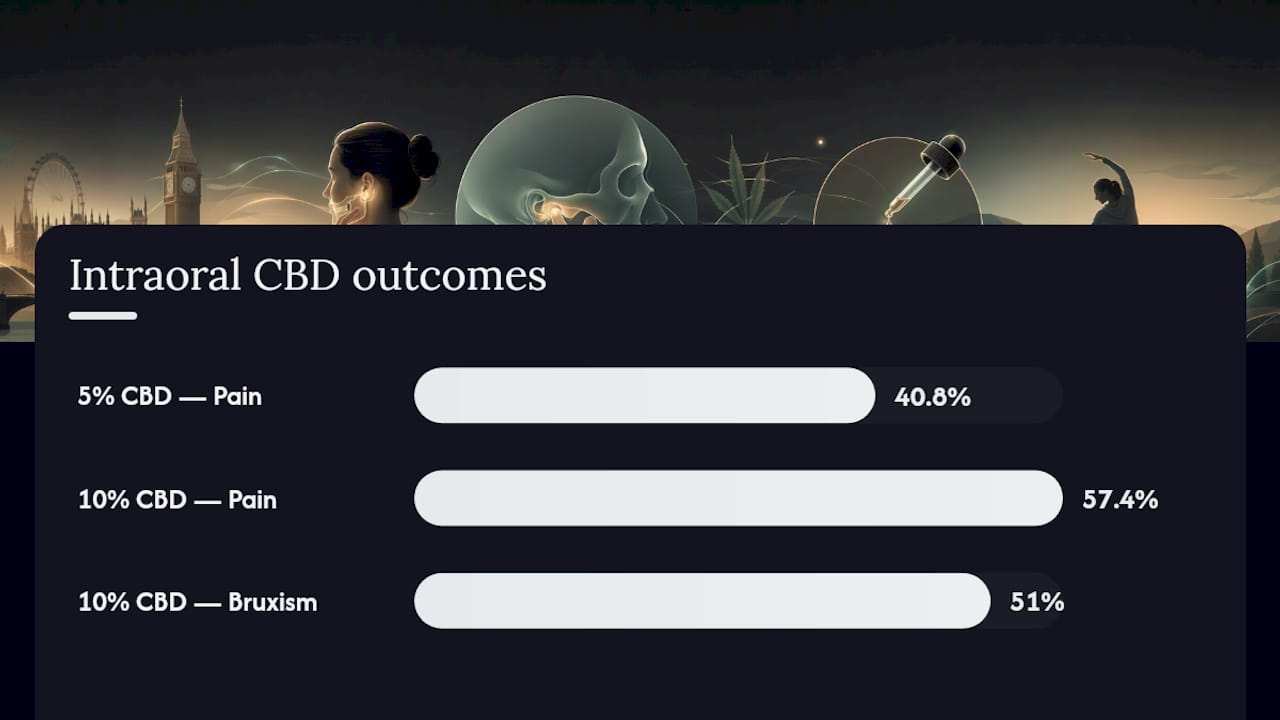
A 2024 randomised, double-blind trial went further by comparing concentrations. Participants used either a 5% or 10% CBD intraoral formulation, and the difference mattered: the 10% version delivered a 57.4% reduction in pain and a 51% reduction in the sleep bruxism index, while the 5% version still managed a 40.8% pain reduction. Higher concentration, bigger effect, at least in this trial.
More recently, a 2025 pilot study tested a nightly intraoral CBD gel over six weeks. That spread is worth sitting with: CBD does not affect every jaw the same way.
Key outcomes measured across these trials include:
- Pain intensity (VAS): reductions ranged from roughly 40% to over 70%, depending on formulation and route.
- Masseter sEMG activity: consistent reductions of 11% to nearly 38%, indicating genuine muscle relaxation, not just perceived relief.
- Sleep bruxism index: reduced by up to 51% with higher-concentration intraoral formulations.
A 2025 narrative review in Pharmaceutics pulled these threads together and reached a fair verdict: CBD shows real promise as an adjunctive treatment for TMD, thanks to its anti-inflammatory and muscle-relaxant properties, but the field still lacks standardised dosing protocols and larger confirmatory trials. A registered Clinicaltrials comparing cannabinoids to placebo for TMJ management is currently under way, which should sharpen the picture considerably. Until then, treat every percentage above as a signal worth taking seriously, not a guarantee.
How CBD may work for TMJ and why application route matters
CBD interacts with your endocannabinoid system, a network of receptors (mainly CB1 and CB2) that helps regulate pain signalling, inflammation, and muscle tone. Think of it as a volume dial your body already has. CBD doesn’t create new effects out of nowhere; it nudges an existing regulatory system, toning down inflammatory cytokines and dampening some of the nerve signals that register as jaw pain.
There’s more going on beneath the surface, too. CBD interacts with TRPV1 receptors (involved in pain and heat sensation) and 5-HT1A receptors (linked to mood and anxiety regulation). That second interaction matters more for TMJ than people realise: anxiety and stress are major drivers of jaw clenching and nighttime grinding. If CBD’s anxiolytic effect reduces the unconscious clenching that aggravates your masseter overnight, you get a knock-on reduction in muscle tension the next morning, without CBD ever touching a pain receptor directly.
Route of application isn’t a minor detail here. It’s arguably the whole story. Transdermal creams and intraoral mucosal gels deliver CBD directly to the tissue surrounding the jaw muscle, bypassing the liver’s first-pass metabolism that would otherwise break down most of an oral dose before it reached your bloodstream. That’s why the trials pointing to real effect sizes all used topical or intraoral routes rather than swallowed capsules.
One clinical nuance is worth remembering before you get your hopes up for every type of jaw pain: the evidence favours chronic myofascial TMD and bruxism far more strongly than it favours acute nociceptive pain or post-surgical dental pain. If your jaw pain came from wisdom tooth surgery last week, CBD’s evidence base doesn’t really apply. If it’s the slow-burn, months-long muscle tightness from grinding your teeth in your sleep, that’s the population these trials were actually built around.
Practical guide: forms, concentrations and a safe trial plan
Match your product to what the trials actually tested, not to whatever’s cheapest on the shelf. The strongest results came from two specific delivery formats: transdermal cream applied directly over the masseter muscle, and intraoral mucoadhesive gel held against the inner cheek or gum near the jaw joint. Both routes concentrate CBD near the muscle rather than diluting it through your whole system.
On concentration, the 2024 trial’s comparison of 5% versus 10% formulations is genuinely useful, but read it as an observation, not a prescription. It’s not licence to assume “more CBD always equals more relief.” Higher isn’t automatically better for everyone, and no consumer product on general sale has been through the exact protocol those researchers used.
Here’s a sensible four to six week trial structure based on how the studies were actually run:
- Choose a targeted product. A topical cream for the jaw and cheek area, or an intraoral gel, tracks the evidence far more closely than a general-purpose tincture swallowed under the tongue.
- Apply consistently. Trials used twice-daily or nightly application. Pick one schedule and stick to it. Sporadic use won’t replicate trial conditions.
- Keep a simple symptoms diary. Note your pain on a 0 to 10 scale, roughly how many times you notice yourself clenching during the day, and sleep quality each morning.
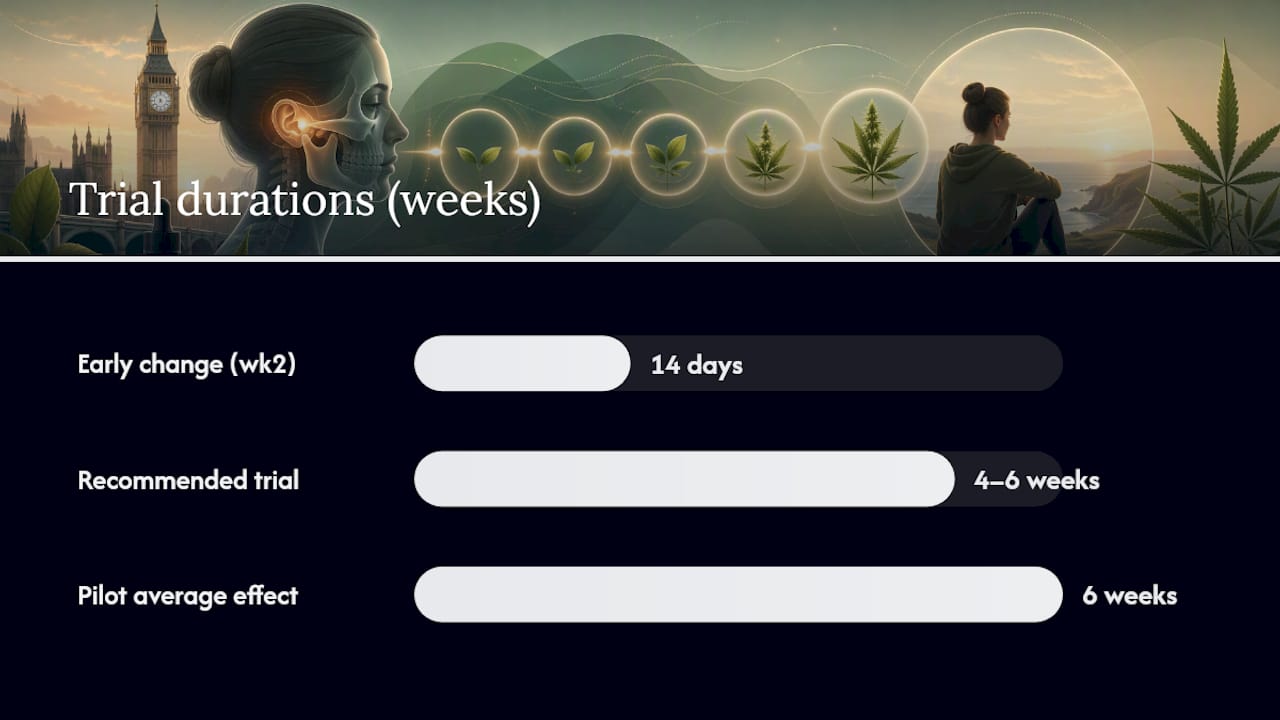
- Reassess at week 2, then again at week 6. The 2019 trial saw changes within 14 days; the pilot gel study needed the full six weeks for its average effect to show. Don’t judge too early.
- Continue your existing treatment. Splints, physiotherapy, or dental appliances stay in place throughout. CBD is being tested here as an addition, not a replacement.
Before buying anything, run through a short quality checklist. Look for a batch-specific certificate of analysis, a clearly stated CBD concentration per gram or millilitre, confirmation of zero detectable THC if that matters to you, and manufacturer instructions that specify frequency and duration rather than vague “use as needed” language. SMOKO CBD publishes third-party lab results against exactly these criteria, which gives you something concrete to check rather than taking a product’s word for it.
Pro Tip: Apply topical CBD at the same time each evening, right before your usual bedtime routine. Consistency in timing seems to matter almost as much as the product itself. It also makes your symptoms diary far easier to read back after a few weeks.
If you’re weighing up when in the day to use CBD alongside a jaw-focused routine, it’s worth reading about how timing affects sleep and daytime effects before settling on a schedule, particularly if bruxism is disturbing your sleep rather than just causing daytime soreness.
Safety, interactions and red flags for CBD and teeth grinding
Most trials of topical and intraoral CBD for TMJ reported few adverse effects, and what did appear was generally mild: localised irritation or a tingling sensation at the application site. That said, the Pharmaceutics review is candid about a real gap here: these studies ran for weeks, not years, so long-term safety data simply doesn’t exist yet in the way it does for, say, ibuprofen.
The interaction risk that deserves genuine attention involves your liver’s metabolic pathway. CBD is processed by cytochrome P450 (CYP) enzymes, the same enzymes responsible for breaking down a long list of common prescription medicines. This matters practically if you’re on:
- Anticoagulants (blood thinners like warfarin), where CBD can alter how quickly the drug clears your system.
- Antiepileptic medication, since several anti-seizure drugs share the same metabolic pathway.
- Other prescription medicines generally, particularly anything with a narrow therapeutic window.
Speak to a pharmacist before starting CBD if you take any regular prescription medication. This isn’t a formality. It’s a genuine pharmacological interaction that a five-minute conversation can rule out or flag properly.
CBD isn’t appropriate for everyone regardless of medication status. Pregnancy, breastfeeding, and severe liver disease all warrant professional consultation before use, given the current lack of safety data in those groups specifically.
And some symptoms simply aren’t CBD’s job to manage. Sudden jaw locking, visible swelling or signs of infection, or pain that’s rapidly worsening rather than staying steady, all need urgent dental or medical assessment. CBD addresses chronic muscle tension over weeks. It has no role in an acute emergency.
Where CBD fits in a realistic TMJ care plan
CBD works best as one part of a broader plan, not a standalone fix. Standard TMJ care still centres on occlusal splints worn overnight to reduce grinding pressure, physiotherapy to release muscle tension and improve jaw mobility, cognitive behavioural approaches for habit reversal in daytime clenching, and a proper dental review to rule out structural issues like disc displacement.
Slot CBD in alongside these rather than in place of them. Use a topical or intraoral product for muscle tension and sleep bruxism while your splint keeps doing its mechanical job and your physiotherapist works on mobility. The trials suggest most benefit shows up within two to six weeks, though individual variation is significant, some people notice change within days, others need the full six weeks before results stabilise. If you’re also exploring broader natural pain relief strategies, CBD for jaw pain fits comfortably alongside sleep hygiene work and stress reduction, which tackle the same underlying clenching triggers from a different angle.
Why you can trust this guide: SMOKO CBD and author credibility
This guide draws on peer-reviewed trials and a 2025 systematic review, not marketing copy, because TMJ sufferers deserve a straight answer about what CBD can and can’t do.
They make broad-spectrum products from organically grown hemp, with batch testing by independent labs to confirm zero THC.
This article was written by Mike, drawing on the clinical literature summarised throughout, alongside their product and quality resources. Readers wanting more background on topical CBD for musculoskeletal pain can find further detail in SMOKO’s joint pain guide.
A cautious optimist’s take on CBD for jaw pain
My honest read is that CBD deserves a place in a TMJ toolkit, not the top shelf of it. The mechanism makes sense, the sEMG numbers are real muscle measurements rather than just self-reported comfort, and the concentration data gives you something concrete to act on.
What I’d push back on is treating any single percentage as a promise. Talk to a dentist or GP before adding CBD, especially if you’re on other medication, and lean on SMOKO’s support team if you have questions about a specific product before you start.
— Mike
Try a cautious 4 to 6 week CBD trial with SMOKO
Lab-tested, broad-spectrum products are available online to start trialling without booking an appointment. The trials discussed above used transdermal creams and intraoral gels, and while SMOKO’s current range centres on tinctures, gummy bears and soft gels, an oral tincture applied sublingually near the jaw area or a measured-dose product like the SMOKO CBD Gummy Bears can still form a sensible starting point for readers who want consistent, broad-spectrum dosing while they explore what works.
Whichever product you choose, check the batch’s certificate of analysis before you open it, note the stated concentration, and commit to a four to six week trial with a simple symptoms diary running alongside it, exactly as outlined earlier in this guide. If you’re taking other medication, speak to your GP or pharmacist first. Ready to start tracking your own results? Browse the full CBD collection and pick the format that fits your daily routine.
Sources
This article draws on the following peer-reviewed studies and reviews:
- Cannabidiol intervention for muscular tension, pain, and sleep bruxism intensity — randomised, double-blind clinical trial (2024)
- Halloysite-assisted delivery of cannabidiol for the management of temporomandibular pain: pilot study (2025)
- The therapeutic potential of cannabidiol in the management of temporomandibular disorders and orofacial pain (Pharmaceutics, 2025)
These sources underpin the percentages cited throughout, though every trial involved small samples and short durations, so treat the figures as promising signals rather than settled fact.
This article is general information, not a substitute for advice from a qualified doctor. Consult a qualified healthcare professional about your own circumstances before acting on anything here.
FAQ
Does CBD help TMJ pain and jaw clenching?
Small randomised trials suggest CBD can reduce TMJ-related pain and jaw clenching when applied topically or intraorally, with one 2024 trial reporting a 51% reduction in sleep bruxism index using a 10% formulation. Evidence remains limited to short-term studies, so it works best as an addition to standard care.
Can CBD repair nerve damage?
No, there’s no clinical evidence that CBD repairs nerve damage. The TMJ trials discussed here measured reductions in muscle activity and pain perception, not nerve regeneration, so any claim about nerve repair goes beyond what the research supports.
Is CBD like a muscle relaxer?
CBD shows a myorelaxant effect in TMJ trials, with the 2019 transdermal study recording an 11 to 12.6% drop in masseter sEMG activity, but it works through different pathways to prescription muscle relaxants and generally produces a milder effect.
What calms down TMJ symptoms besides CBD?
Occlusal splints, physiotherapy, and habit reversal techniques for daytime clenching all have stronger, longer-established evidence than CBD for calming TMJ symptoms. CBD fits best as an adjunct alongside these rather than a replacement for any of them.
How long does a CBD trial for TMJ usually take to show results?
Trial evidence suggests changes can appear within two weeks for transdermal application, though the six-week pilot gel study needed the full period for its average effect to show. A four to six week trial with symptom tracking gives a realistic window to judge whether it’s working for you.