Current evidence suggests CBD can meaningfully reduce anxiety in situational settings, such as public speaking, and shows promise over several weeks of daily use, but it is not a guaranteed fix and should not replace first-line treatments for social anxiety disorder (SAD). The strongest support comes from acute single-dose trials, one small chronic trial in teenagers, and systematic reviews that describe the effect as real but limited by small sample sizes.
Before you try anything, there’s one caveat you shouldn’t skip: CBD is metabolised by liver enzymes that also process many prescription medicines, so anyone on regular medication should speak to a GP or pharmacist first.
Here’s what the rest of this guide covers, so you can jump to what matters most to you:
- What the clinical trials and reviews actually found, including the doses that worked
- Who tends to benefit and who should be more cautious
- Side effects, drug interactions, and the UK regulatory picture
- How to choose a safe, lab-tested product and read a certificate of analysis
- A conservative, step-by-step approach to dosing
- Where a broad-spectrum tincture like Smokocbd’s fits into that picture
Key Takeaways
CBD shows a genuine, evidence-backed capacity to ease situational and mild-to-moderate social anxiety, but it works best as a carefully dosed, lab-verified complement to established treatment, not a replacement for it.
| Point | Details |
|---|---|
| Evidence is real but limited | Acute 300 mg doses and a 4-week chronic trial both showed benefit, but sample sizes remain small. |
| Dose response isn’t linear | The inverted U-shaped curve means 600 mg performed worse than 300 mg in public speaking trials. |
| Check interactions first | CBD affects CYP450 liver enzymes, so anyone on prescription medicine should consult a GP or pharmacist. |
| Choose lab-tested broad-spectrum | Look for a current COA showing potency and zero or trace THC before buying. |
| Smokocbd offers a fitting option | The Mint 2000mg broad-spectrum tincture gives lab-verified potency and precise sublingual dosing for the workflow above. |
Table of Contents
- What does the research say about CBD for social anxiety?
- Who is CBD likely to help, and who should be cautious?
- Is CBD safe, and does it interact with other medicines?
- How do you choose a CBD product that’s actually suitable for anxiety?
- How much CBD should you take for social anxiety?
- Where Smoko CBD’s Mint tincture fits this checklist
- Is CBD legal, and how is it regulated where you live?
- What the evidence actually tells us to prioritise
- Why choose Smokocbd for managing social anxiety
- Sources
What does the research say about CBD for social anxiety?
The clearest signal comes from acute, single-dose studies using a simulated public speaking test. This is a well-established experimental model where participants with SAD give a speech in front of an audience while researchers measure anxiety before, during, and after.
In one of the most cited trials in this field, researchers tested multiple doses of CBD against a placebo before participants gave a public speech. The 300 mg dose significantly reduced speech-induced anxiety, while 150 mg and 600 mg did not produce the same effect. That pattern (a middle dose working better than a lower or much higher one) is called an inverted U-shaped dose-response curve, and it’s one of the more counterintuitive findings in CBD research: more is not automatically better.
Statistic callout: In the same trial, participants who took 300 mg CBD reported anxiety levels close to those of a control group who never gave a speech at all, a level of reduction the 150 mg and 600 mg doses failed to match.
Chronic, daily use has been tested too, though on a smaller scale. A 4-week double-blind trial in teenagers with social anxiety disorder gave 17 participants 300 mg CBD daily against 20 on placebo. The CBD group showed statistically significant drops on both the Fear of Negative Evaluation Questionnaire and the Liebowitz Social Anxiety Scale, two standard clinical measures of social anxiety severity.
Zooming out, a systematic review of human studies concluded that acute CBD administration tends to reduce social anxiety in both healthy volunteers and people with SAD, but flagged that trials remain small and inconsistent in dosing and design. A separate 2024 meta-analysis reported a substantial overall effect on anxiety measures, while cautioning that wide confidence intervals and study heterogeneity mean the results should be read carefully rather than treated as settled science.
The honest summary: the evidence base is promising, not proven. It points towards CBD as one useful tool, not a substitute for larger, standardised trials that haven’t happened yet.
- Acute doses of 300 mg reduced public speaking anxiety in controlled trials
- A 4-week trial at 300 mg/day improved social anxiety scores in teenagers with SAD
- Systematic reviews describe the effect as real but built on small, varied studies
- An ongoing trial comparing 400 mg and 800 mg daily doses against placebo should clarify optimal dosing in the coming years
Who is CBD likely to help, and who should be cautious?
If your anxiety spikes around specific events such as giving a presentation, attending a networking evening, or speaking up in a meeting, you fit the profile that showed the clearest benefit in trials. Situational or performance-related anxiety and mild to moderate social anxiety disorder are where the acute-dose and short-term chronic-use evidence is strongest.
That doesn’t mean CBD works the same way for everyone. Some people notice a fairly quick easing of nerves before a specific event; others find that weeks of daily use produce little change at all. Trial data can’t yet predict which pattern you’ll get, and that unpredictability is worth setting your expectations around from the start.
A few groups should be more careful, or should speak to a doctor before starting:
- Pregnant or breastfeeding people, where safety data is not established
- Anyone with severe psychiatric comorbidities (severe depression, psychosis, bipolar disorder), where self-directed CBD use could complicate existing treatment
- Children and younger teenagers outside the narrow age range studied in trials
- Anyone already taking prescription medication for anxiety, without first checking for interactions
Pro Tip: Keep a simple daily log for the first two to three weeks, noting dose, timing, and anxiety level before and after a social event. Patterns that aren’t obvious day to day often become clear once you look back over a fortnight.
CBD works best as an addition to established approaches, not a replacement for them. Cognitive behavioural therapy (CBT) and prescribed medication such as SSRIs have a far larger and longer evidence base for treating SAD. If you’re already using either, the sensible move is to keep doing so and treat CBD as a complementary layer, not a swap.
Is CBD safe, and does it interact with other medicines?
Side effects reported across trials are generally mild. Fatigue, diarrhoea, and changes in appetite show up most often, and unlike many prescription anxiolytics, CBD doesn’t carry a strong sedation signal at the doses tested.
The bigger practical concern is drug interactions. CBD is broken down by the liver’s cytochrome P450 (CYP450) enzyme system, the same pathway responsible for metabolising a large share of prescription medicines, including some antidepressants, anticonvulsants, and blood thinners. When CBD competes for the same enzymes, it can raise or lower the levels of those medicines in your blood, sometimes enough to matter clinically.
“Acute CBD administration significantly reduced social anxiety in both healthy volunteers and individuals with SAD, but more standardised and larger trials are needed to determine optimal dosing and long-term effects.” That’s the core finding of a systematic literature review of human CBD studies, and it’s worth holding onto as a north star through everything that follows.
On the regulatory side, the MHRA is the UK body that governs medicines. CBD products sold as supplements can’t legally make medical claims (curing, treating, or preventing a condition), which is why reputable sellers describe potential wellness benefits rather than promising clinical outcomes. If a company claims its CBD treats anxiety disorder outright, that’s a regulatory red flag, not a selling point.
A short checklist before you start:
- Speak to your GP or pharmacist first if you take any regular prescription medicine, particularly anticonvulsants, blood thinners, or antidepressants.
- Check the product’s certificate of analysis (COA) for potency and contaminants before buying.
- Start at the lowest sensible dose and track effects for at least two weeks.
- Stop and seek medical advice if you notice unusual side effects or interactions with other medication.
For a deeper look at specific medicine classes, our guide to CBD drug interactions covers this in more detail.
How do you choose a CBD product that’s actually suitable for anxiety?
Not all CBD products are built the same, and for anxiety specifically, the details on the label matter more than the marketing on the box. Start with the certificate of analysis, or COA: a third-party lab report that confirms exactly how much CBD is in each millilitre or gummy, and whether THC is present or trace-level only. Without one, you’re guessing at your dose.
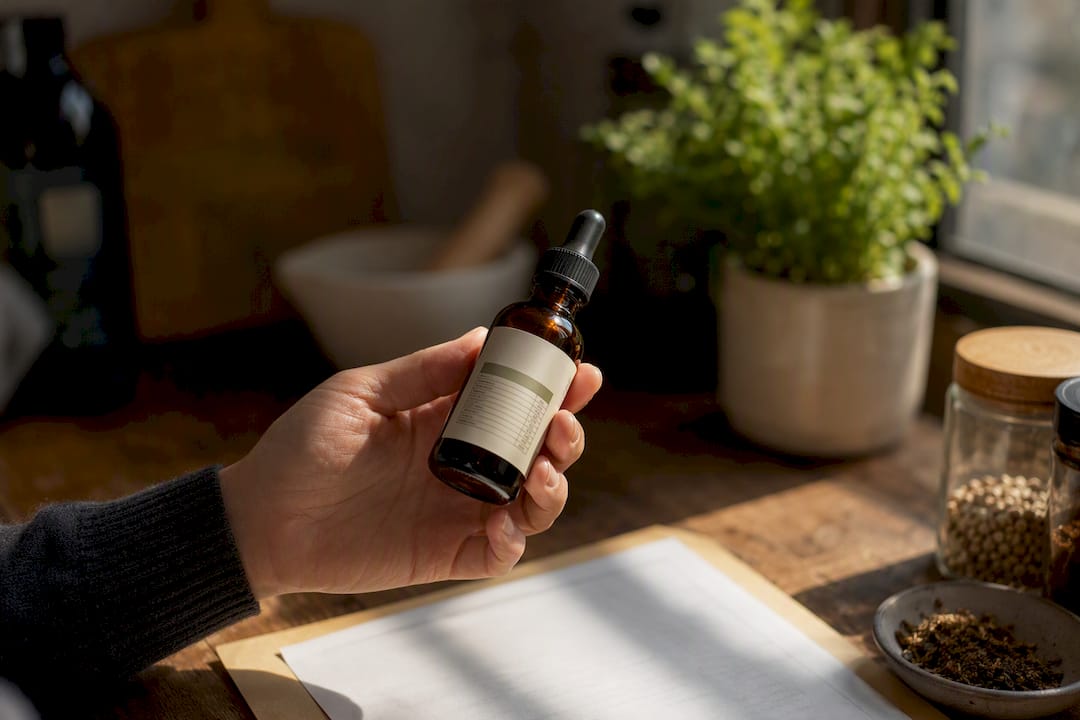
Broad-spectrum products, which keep a range of other cannabinoids and terpenes while stripping out THC, are often recommended for anxiety because these compounds may work together in what’s called the entourage effect, potentially supporting CBD’s own action. Isolate, by contrast, contains CBD alone, which can suit people who want to avoid any trace cannabinoids entirely, including THC, for workplace drug testing or personal preference.
The form you choose changes how the dose behaves in your body:
- Tinctures, taken sublingually (under the tongue), tend to act faster and let you fine-tune dose in small increments
- Gummies are easy to dose consistently and simple to carry, but pass through digestion first, so onset is slower
- Capsules offer a standardised, discreet dose, useful if you want a routine rather than event-based timing
Pro Tip: Before buying, check the COA’s date against the batch number on your product. A lab report from two years ago tells you nothing reliable about the bottle in your hand today.
Whichever form you pick, look for clear extraction method details (CO2 extraction is the industry standard for purity) and full ingredient transparency on the packaging, not just the website.
How much CBD should you take for social anxiety?
Trial doses give a useful reference point, even though they were run under clinical supervision rather than as consumer guidance. Acute single-dose studies tested 150 mg, 300 mg, and 600 mg, with 300 mg producing the clearest anxiety reduction before a stressful event. The 4-week chronic trial in teenagers used 300 mg daily and saw measurable symptom improvement by the end of the month.
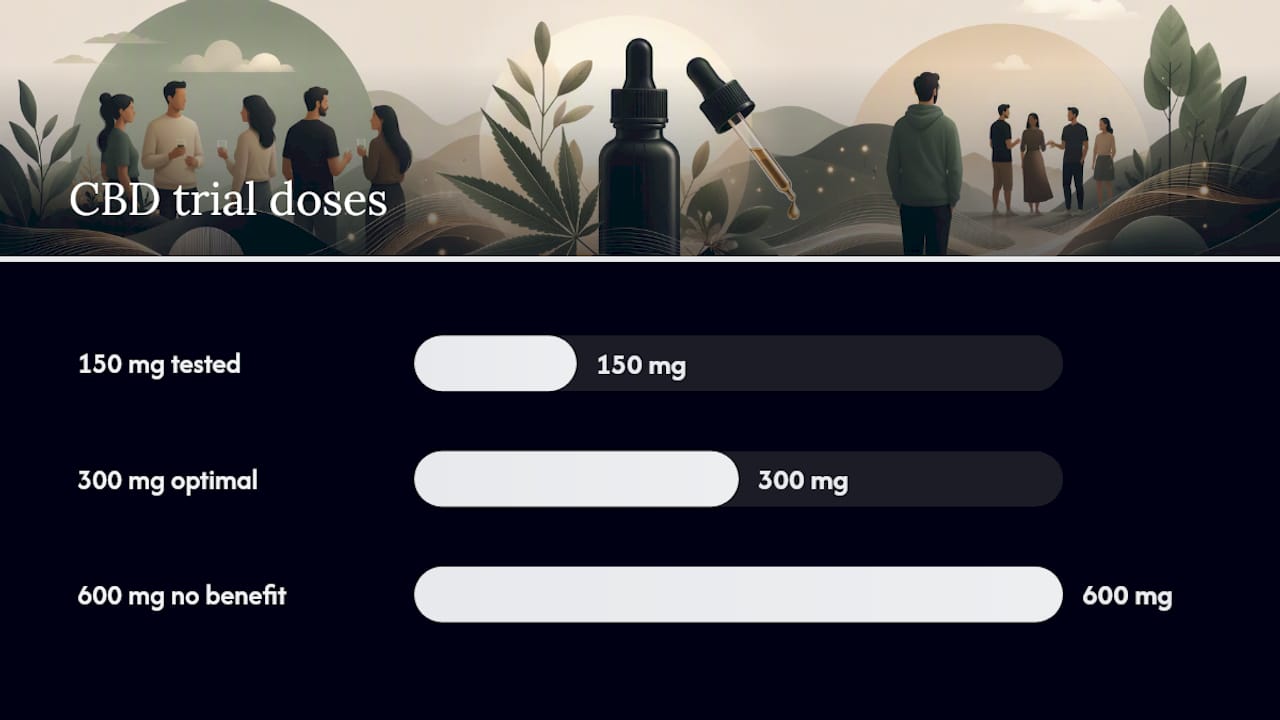
That inverted U-shaped curve matters practically: doubling your dose doesn’t double the benefit, and in the 600 mg arm of the public speaking trial, it didn’t help at all. Overshooting is a real risk, not just a theoretical one.
A conservative starting workflow looks like this:
- Start low. Begin with roughly 5 to 10 mg of CBD from a tincture, since drops let you adjust in small steps that gummies and capsules don’t allow.
- Hold for a few days. Keep the same dose for three to five days before increasing, watching for side effects like fatigue or digestive changes.
- Titrate gradually. Step up in small increments, giving each new level several days before judging its effect.
- Test situational use separately. If you’re targeting a specific event, take your chosen dose roughly 60 to 90 minutes beforehand, mirroring the timing used in the public speaking trials.
- Know when to stop. If side effects become intolerable, new symptoms appear, or you see no benefit after two to three weeks at a stable dose, stop and speak to a healthcare professional rather than continuing to increase the amount.
Our anxiety management tips guide walks through pairing this kind of titration with everyday lifestyle habits that support the same goal.
Where Smoko CBD’s Mint tincture fits this checklist
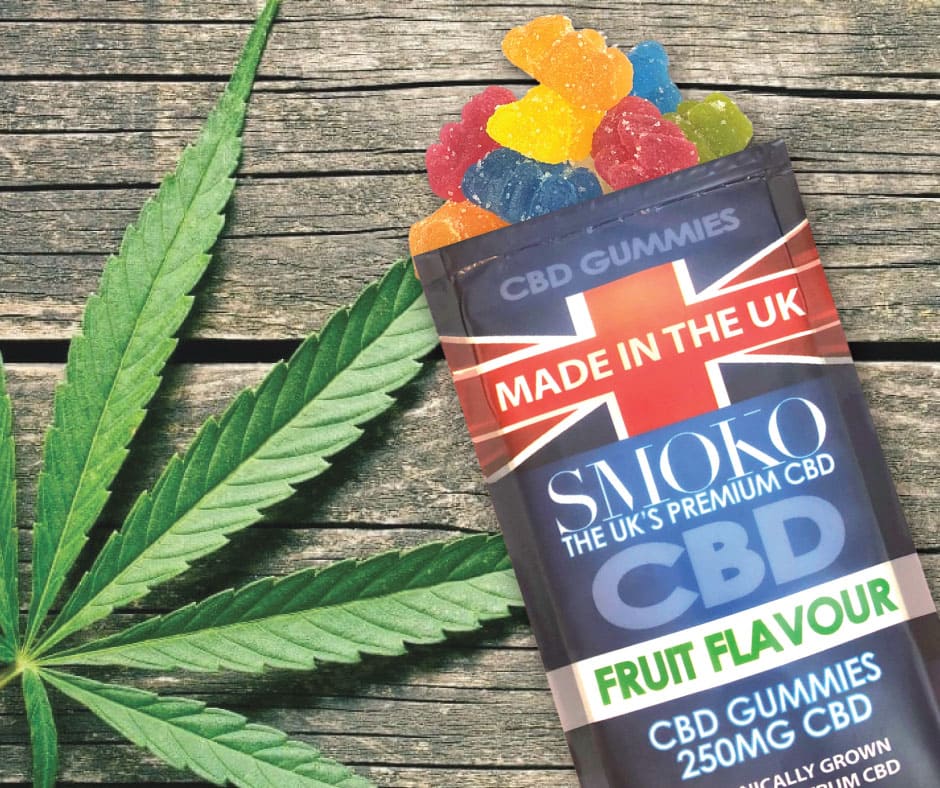
If you’re weighing up an actual product against everything covered above, the SMOKO CBD Mint 2000mg Broad Spectrum Tincture is worth measuring against the same criteria. It’s a broad-spectrum formula, meaning it retains the wider range of hemp compounds discussed earlier rather than isolating CBD alone, and it carries third-party lab testing confirming potency and zero THC.
With 2000 mg in a 10 ml bottle, each drop delivers a known, calculable amount, which is exactly what the titration workflow above depends on. A sublingual tincture also gives you the faster onset and finer dose control that situational anxiety calls for, compared with a gummy you can’t easily split into smaller amounts.
- Broad-spectrum formula with stated potency (2000 mg per 10 ml bottle)
- Third-party lab testing confirming zero THC
- Sublingual tincture format for faster onset and precise dosing
- Mint flavour for straightforward daily or event-based use
For readers wanting more background on interpreting lab reports and building anxiety routines around CBD, our educational articles under CBD for anxiety explained go into further detail, including guidance contributed by Author Mike on our blog.
Is CBD legal, and how is it regulated where you live?
Legal status varies significantly by country, and conflating them is one of the most common mistakes people make when researching CBD online. In the UK, CBD products derived from industrial hemp are legal to sell and buy as long as they contain no more than a trace, legally defined THC limit and are not marketed with medical claims. This is a supplement and consumer product framework, not a medicines licence, and the MHRA oversees the boundary between the two.
Elsewhere, the picture shifts. Some European countries apply stricter THC thresholds or require novel food authorisation for CBD-containing products. In the United States, hemp-derived CBD is federally permitted under the 2018 Farm Bill, but individual states retain the right to impose their own restrictions, creating a patchwork rather than a single national standard. Other regions treat CBD as a controlled substance regardless of THC content, so what’s freely available in one country can be illegal to import into another.
The practical rule for readers: check the regulatory status in your own country before buying or travelling with CBD products, rather than assuming rules seen online apply universally. If a product makes a specific medical claim, treat that as a warning sign rather than reassurance, since legitimate UK sellers operate within MHRA’s supplement framework precisely because they avoid that language.
What the evidence actually tells us to prioritise
The conventional advice on CBD and anxiety tends to swing between two extremes: dismissing it as unproven, or presenting it as a near-miracle calm-in-a-bottle. Neither holds up against the trial data. What the research actually supports is narrower and more useful: a middle dose, taken with intent, around a specific stressor, has repeatedly outperformed both lower and higher doses in controlled conditions.
That inverted U-shaped curve is the detail most casual guides skip, and it’s the one that should change how people actually use CBD. Chasing bigger doses because “more must be better” runs directly against what the public speaking trials found. The teenagers’ trial matters for a different reason: it shows a modest daily dose sustained over weeks, not just a single hit before an event, moved the needle on standardised anxiety scores.
If there’s one priority for a reader weighing this up, it’s this: treat dose and product transparency as the two levers that actually matter, and treat marketing claims about “curing” anxiety as noise to ignore.
— Mike
Why choose Smokocbd for managing social anxiety
Smokocbd exists for exactly the reader this article is written for: someone who wants a lab-tested, broad-spectrum option they can dose with confidence, rather than a vaguely labelled bottle promising the world. Where many CBD sellers hide potency and testing behind marketing language, Smokocbd publishes third-party lab results and states potency clearly, so the titration steps covered above are actually usable with the product in your hand.
The SMOKO CBD Mint 2000mg Broad Spectrum Tincture gives you a known concentration per drop, made from organically grown hemp and verified free of THC, which matters if you’re starting low and tracking your response over several weeks as this guide recommends. It suits readers dealing with situational nerves before social events as much as those looking to build a steadier daily routine.
If you’re ready to put the dosing workflow into practice, visit the product page to check current pricing and order your first bottle, and start your own two-week log from day one.
Sources
- Anxiolytic effects of repeated cannabidiol treatment in teenagers with social anxiety disorders — Frontiers (2019)
- Cannabidiol presents an inverted U‑shaped dose‑response curve in a simulated public speaking test — Bergamaschi et al. (2011) PMC
- Systematic literature review of human studies assessing the efficacy of cannabidiol for social anxiety — PubMed
- Therapeutic potential of cannabidiol (CBD) in anxiety disorders: A systematic review and meta‑analysis — ScienceDirect (2024)
- Clinicaltrials
- Full spectrum vs broad spectrum CBD — Medical News Today