The honest answer is: CBD shows promising, but not definitive, potential as an add‑on for some PTSD symptoms – particularly sleep disruption, hyperarousal, and intrusive anxiety – rather than as a standalone treatment. It is not a licensed medicine for PTSD anywhere in the UK, and nothing here should replace trauma‑focused therapy or a prescriber’s advice.
The dosing signals from human research vary considerably. Single doses around 300 mg have reduced anxiety during trauma‑recall tasks in some trials, while other pilot work has used daily doses as low as 30 mg, and ongoing randomised controlled trials are testing 400 mg to 800 mg per day for eight weeks to measure changes in PTSD severity scores. Some people notice changes within a week; the trials designed to detect real clinical improvement typically run six to eight weeks or longer.
Before you consider CBD alongside therapy or medication, three things matter immediately:
- CBD is metabolised by liver enzymes that also process many psychiatric medicines, so interaction risk is real and worth discussing with a prescriber.
- Evidence quality varies enormously – from small pilot studies to properly registered RCTs, and headlines rarely make that distinction clear.
- Pro Tip: Keep a simple daily log of sleep, nightmares, and anxiety spikes before you start CBD. Without a baseline, you won’t be able to tell whether any change is real or coincidental.
Key Takeaways
CBD shows biologically plausible, evidence-supported potential as an adjunct for specific PTSD symptoms like sleep disruption and hyperarousal, not as a standalone or licensed treatment.
| Point | Details |
|---|---|
| Evidence is promising but incomplete | Meta-analysis data shows a real anxiety effect (Hedges’ g = -0.92), but PTSD-specific trials remain small. |
| Dosing varies widely by goal | Studies range from 30 mg daily for general wellbeing to 400–800 mg daily in ongoing PTSD-specific RCTs. |
| Sleep and hyperarousal respond most consistently | Nightmares, hyperarousal, and trauma-recall anxiety show the strongest early signals across pilot studies. |
| Interactions require clinical oversight | CYP3A4 and CYP2C19 pathways mean CBD can affect levels of common psychiatric medications. |
| Quality control is non-negotiable | Choose broad-spectrum, batch-tested products such as Smokocbd’s Mint 2000mg tincture for precise titration. |
Table of Contents
- What does the clinical evidence for CBD and PTSD actually show?
- How does CBD affect the fear response in the brain?
- What doses and results have PTSD trials actually found?
- Is CBD safe to use if you’re also on psychiatric medication?
- How can CBD fit alongside therapy for PTSD?
- What should you look for when choosing a CBD product?
- What proof should a CBD brand offer for PTSD-related use?
- Are there other benefits beyond reduced anxiety worth knowing about?
- What does the evidence actually mean for someone with PTSD right now?
- Where can you find a reliable CBD tincture to start with?
- Sources
What does the clinical evidence for CBD and PTSD actually show?
The honest picture is a mix of encouraging biology, a handful of small human trials, and several large registered studies still collecting data. No systematic review has concluded that CBD is an effective, standalone treatment for PTSD. What the evidence does support is a more modest claim: CBD looks biologically plausible as an adjunct for specific symptom clusters, and researchers are actively testing that idea properly.
A 2024 meta-analysis combined with a 2026 literature review, covering 316 participants across multiple anxiety-related studies, found a statistically significant reduction in anxiety symptoms associated with CBD, with an effect size (Hedges’ g) of -0.92 (95% CI -1.80 to -0.04). That is a moderate-to-large effect on paper, but the wide confidence interval tells its own story: some studies in that pool showed a strong benefit, others showed almost none. This is anxiety data broadly, not PTSD-specific data, which matters because PTSD involves distinct features – flashbacks, hyperarousal, avoidance – that a general anxiety measure doesn’t fully capture.
A separate review focused specifically on stress-related disorders found that preclinical models consistently show CBD promoting fear extinction and reducing stress-related behaviours in animals. The same review was candid about the gap between animal data and human trials: clinical evidence in people remains limited, and the authors called for larger, better-controlled studies before firm conclusions can be drawn.
Where the current evidence stands:
- Systematic reviews consistently flag small sample sizes and short trial durations as the biggest weaknesses in existing PTSD‑specific CBD research.
- Preclinical (animal) evidence for fear extinction is considerably stronger and more consistent than human clinical evidence.
- Expectancy effects are a documented confound: belief about CBD’s effects measurably altered physiological and subjective outcomes in controlled experiments, meaning some reported benefit may reflect anticipation rather than pharmacology alone.
- At least one large trial, Clinicaltrials, is testing daily oral CBD at 400 mg and 800 mg over eight weeks specifically for PTSD, using the CAPS‑5 clinical interview as its primary outcome measure.
Statistic callout: An effect size of Hedges’ g = -0.92 sounds impressive until you see the confidence interval running from -1.80 to -0.04 – a range wide enough to include both a dramatic effect and a barely-there one. That’s the honest state of CBD anxiety research: real signal, but not yet a precise, reliable number you can plan treatment around.
The expectancy research deserves more attention than it usually gets. When researchers manipulated what participants believed about the CBD they were given, physiological markers like heart rate variability and subjective sedation shifted according to belief, not just according to the actual dose received. This doesn’t mean CBD does nothing – it means that trials without proper blinding, and personal anecdotes without any control group, are vulnerable to overstating the drug’s true effect.
Where does that leave someone with PTSD reading the research today? Cautiously optimistic is the fair position. The biological rationale is sound, several small trials have shown genuine symptom improvement, and multiple properly designed RCTs are now running to settle the bigger questions. What doesn’t yet exist is a large, replicated trial proving CBD reduces core PTSD symptoms beyond a shadow of doubt. Anyone telling you otherwise, in either direction, is overstating the current science.
How does CBD affect the fear response in the brain?
PTSD, at its biological core, is partly a disorder of failed fear extinction. Your brain learned a threat response during a traumatic event, and the normal process of updating that memory – recognising the threat has passed – doesn’t happen properly. Triggers keep reactivating the original fear circuitry years later. This is where CBD’s proposed mechanisms get genuinely interesting.
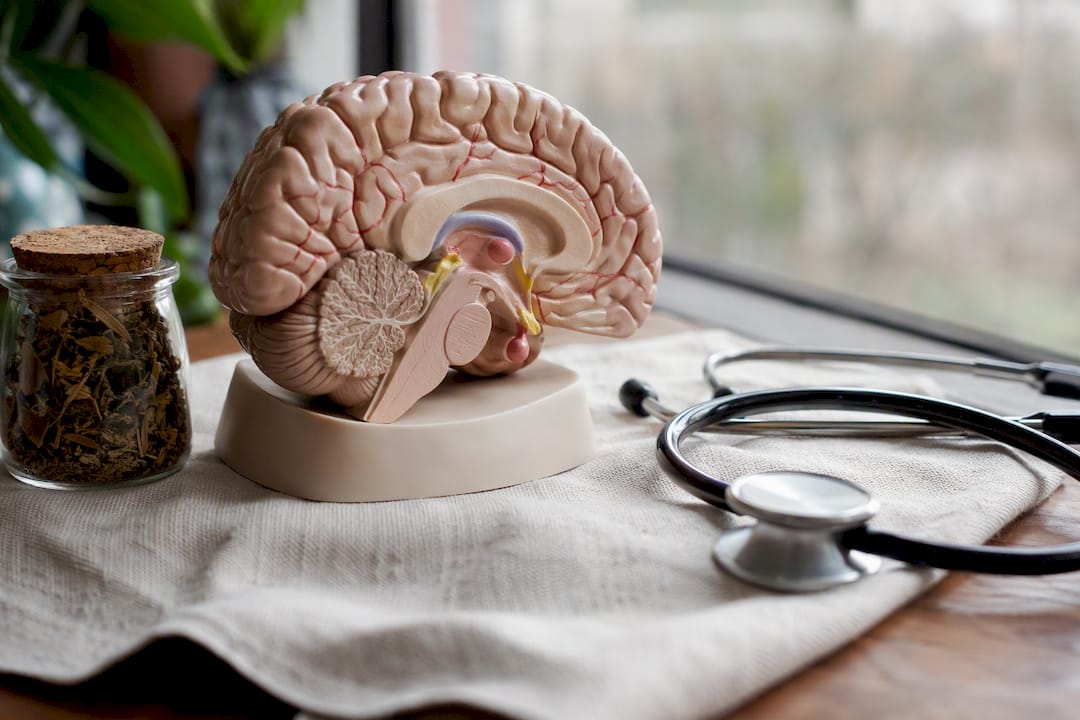
The endocannabinoid system (eCB system) regulates stress response through its interaction with the hypothalamic-pituitary-adrenal (HPA) axis, the body’s central stress-hormone pathway. When this system functions normally, it helps “tone down” an overactive threat response once danger has passed. In PTSD, that regulatory braking system appears to work poorly, leaving people stuck in heightened alertness long after the original threat is gone.
CBD doesn’t act like THC – it doesn’t directly bind cannabinoid receptors in a strong, intoxicating way. Instead, it appears to work more indirectly. Preclinical research suggests CBD influences fatty-acid binding proteins involved in transporting anandamide (AEA), the body’s own cannabinoid neurotransmitter, sometimes nicknamed the “bliss molecule” for its role in mood regulation. By slowing anandamide’s breakdown, CBD may raise its availability in the brain, which in animal models has been linked to improved fear extinction learning: the very process that appears disrupted in PTSD.
CBD also interacts with serotonin receptors (notably 5-HT1A) and TRPV1 channels, both implicated in anxiety and pain signalling. This gives it a broader mechanistic footprint than a single-target drug, which is part of why researchers describe it as having a “multimodal” profile rather than one clean mechanism.
What this means practically – and what it doesn’t:
- The mechanism is genuinely plausible and well-supported at the level of animal models and cell studies.
- Translation from “this happens in a mouse brain” to “this fixes PTSD symptoms in a person” is where the evidence gets thinner and more provisional.
- No study has proven CBD directly reverses fear-extinction deficits in humans with PTSD; the closest data comes from trauma-recall experiments showing reduced anxiety response, not confirmed extinction learning.
Pro Tip: If a product or seller claims CBD “rewires trauma responses” or “resets your fear centre,” treat that as marketing, not science. The honest mechanism story is “biologically plausible and actively being tested,” not “proven and understood.”
What doses and results have PTSD trials actually found?
Specific numbers matter more here than general reassurance, so here’s what’s actually been tested.
Open-label and case series data. A 2019 case series tracked patients taking daily oral CBD over eight weeks, alongside routine psychiatric care, and found reductions in PTSD symptom severity using the PCL-5 checklist in the majority of patients studied. This is encouraging but comes with a major caveat: case series have no control group, so you can’t separate the effect of CBD from the effect of ongoing therapy, natural symptom fluctuation, or simple expectation.
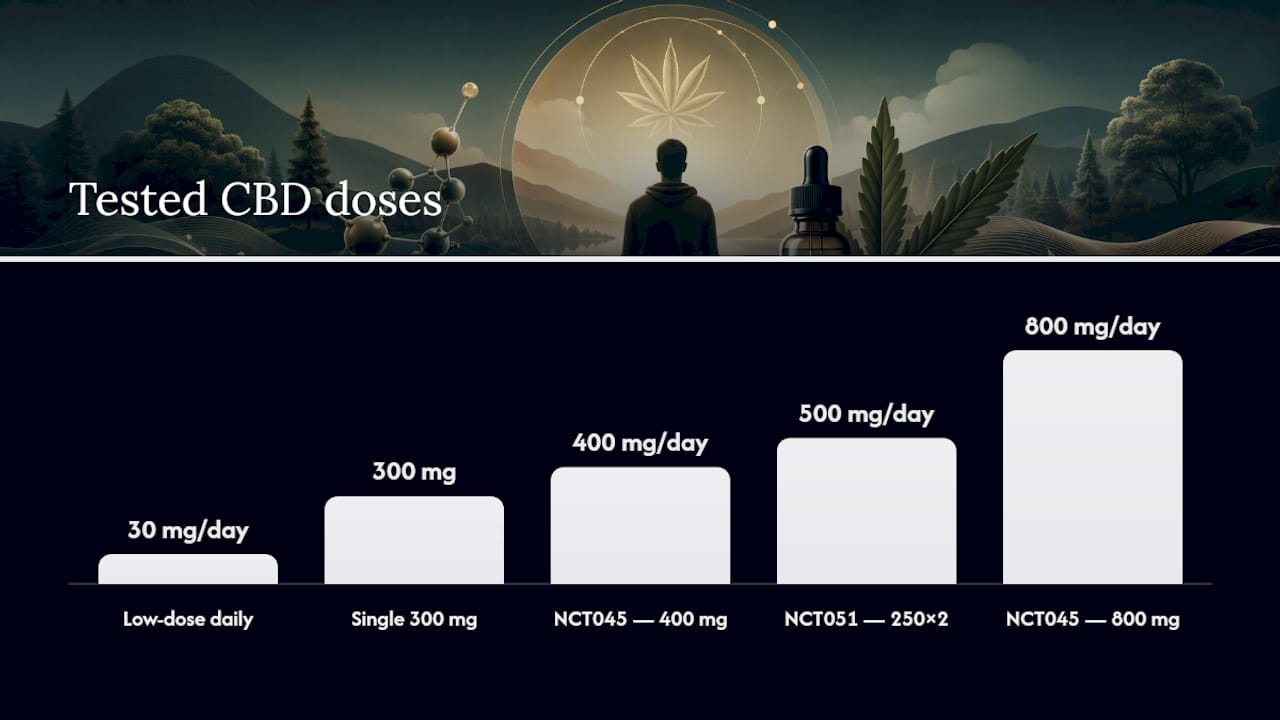
Single-dose experiments. Several trials have tested a single 300 mg dose of CBD before or during a trauma-recall task, where participants are asked to recall traumatic memories under controlled conditions. One such study found that 300 mg attenuated anxiety and cognitive impairment triggered by trauma recall, but the effect was stronger in participants whose trauma was non-sexual in nature. That subgroup difference is a reminder that PTSD is not one uniform condition. Trauma type may genuinely change how someone responds to CBD, and studies that lump all trauma types together risk washing out real differences.
Low-dose daily regimens. Separate pilot work has used considerably lower daily doses, around 30 mg per day, and still reported improvements in subjective anxiety, mood, sleep quality, and general wellbeing, with some participants noticing changes within the first week. This matters because it challenges the assumption that more CBD automatically means a stronger effect.
The dose-response curve isn’t a straight line. Human dose-response data for CBD in anxiety and trauma-related outcomes has shown an inverted-U pattern in some studies: too little does very little, but too much can also blunt the benefit rather than amplify it. That’s a strong argument against simply taking the highest dose you can find and hoping for the best.
Larger ongoing trials. The most rigorous data will come from bigger, properly randomised studies now underway. NCT04550377 is testing 400 mg and 800 mg of oral CBD daily for eight weeks, tracking outcomes with the CAPS-5, the gold-standard clinician-administered PTSD scale. A separate protocol, NCT05132699, is testing 250 mg of CBD twice daily over an 18-day massed prolonged exposure therapy schedule, specifically to see whether CBD enhances the biochemical and psychological effects of intensive exposure-based treatment.
What the studies so far suggest improves most:
- Sleep quality and nightmare frequency show some of the most consistent early improvement across pilot studies.
- Subjective anxiety and general hyperarousal appear responsive in several small trials.
- Intrusive memories and flashback intensity have shown improvement in case series data, though this outcome needs confirmation in controlled trials.
- Core avoidance symptoms – a defining feature of PTSD – have the least robust evidence behind any CBD-related improvement so far.
None of these trials, individually, are large enough to settle the question. Collectively, they paint a picture of a substance worth testing rigorously rather than dismissing or overselling.
Is CBD safe to use if you’re also on psychiatric medication?
Safety is where caution earns its keep, because PTSD is rarely treated in isolation. Most people managing it are also taking prescribed medication, attending therapy, or both, and CBD doesn’t exist in a vacuum alongside those treatments.
The most commonly reported side effects in trials are mild but worth knowing: somnolence (sleepiness), gastrointestinal upset such as diarrhoea or reduced appetite, and fatigue. These tend to be dose-related, appearing more often at the higher end of studied ranges (such as the 400–800 mg daily doses used in ongoing RCTs) than at low daily doses around 30 mg.
Statistic callout: Trials testing CBD at 800 mg per day report meaningfully more sedation and gastrointestinal side effects than those testing 30 mg per day – a reminder that “natural” doesn’t mean “dose doesn’t matter.”
Drug interactions are the more serious concern, and here’s why. CBD is metabolised primarily through liver enzymes in the cytochrome P450 family, specifically CYP3A4 and CYP2C19. Many common psychiatric medications, including certain SSRIs, benzodiazepines, and mood stabilisers, are processed through these same enzyme pathways. When CBD competes for the same metabolic route, it can raise or lower blood levels of those medications, sometimes unpredictably.
Follow this sequence if you’re considering CBD alongside existing treatment:
- List every medication and supplement you currently take, including anything prescribed for PTSD, anxiety, sleep, or unrelated conditions, before starting CBD.
- Ask your prescriber specifically about CYP3A4 and CYP2C19 interactions rather than a general “is CBD safe” question, since that’s the mechanism that actually matters.
- Avoid starting CBD during a medication change or dose adjustment, so any new side effect can be attributed correctly.
- Request liver function monitoring if you have existing liver disease or are taking CBD at higher daily doses over an extended period.
- Never stop or reduce psychiatric medication because you’ve started CBD, without your prescriber’s explicit guidance.
Populations that need extra caution: pregnant or breastfeeding people (insufficient safety data exists), anyone with existing liver disease (CBD is processed hepatically and can elevate liver enzymes at higher doses), and anyone on blood thinners such as warfarin, where CBD’s interaction potential is well documented.
One regulatory point worth stating plainly: CBD is legally available to buy as a food supplement in the UK, but it is not licensed or approved as a medicine for PTSD or any mental health condition. That distinction matters when you’re deciding how much clinical weight to put on it versus an evidence-based, prescribed treatment.
How can CBD fit alongside therapy for PTSD?
The clinical evidence points toward CBD working best as a supporting tool, not a substitute, for trauma-focused therapy such as prolonged exposure or EMDR. Researchers testing CBD in PTSD are almost universally studying it as an adjunct, timed around therapy sessions or taken alongside ongoing psychiatric care, rather than as something used instead of treatment.
Here’s a practical sequence that reflects how trials have actually approached this:
- Talk to your therapist or prescriber before introducing CBD, particularly if you’re mid-course in trauma-focused therapy such as prolonged exposure or EMDR, since timing can matter.
- Consider the timing relative to therapy sessions. Pilot research testing CBD alongside massed prolonged exposure used dosing around each session (250 mg twice daily across an intensive schedule) specifically to test whether CBD supports the extinction learning that exposure therapy relies on.
- Start at the lowest end of studied doses – research points to benefits reported even at 30 mg daily – rather than jumping to the 400–800 mg range used in trials designed to test upper-limit efficacy and tolerability.
- Keep a simple symptom log covering sleep quality, nightmare frequency, intrusive thoughts, and hyperarousal, checked weekly, so you have real data rather than a vague impression of whether it’s helping.
- Give it a fair trial period. Some pilot studies report early changes within a week, but the more rigorous trials run six to eight weeks before drawing conclusions, so don’t judge too early or too late.
- Reassess with your care team at a set point, adjusting or stopping based on your log rather than guesswork.
When adjunctive CBD use makes reasonable sense: you’re already engaged in evidence-based therapy and have residual symptoms – disrupted sleep, persistent hyperarousal, anxiety around sessions – that aren’t fully resolved, and your prescriber has confirmed no significant interaction risk with your current medication.
When it doesn’t: during an acute mental health crisis, if you’re experiencing suicidal ideation, or as a replacement for starting trauma-focused therapy in the first place. CBD has shown no evidence of treating acute crisis states, and delaying proper crisis support in favour of a supplement carries real risk.
Pro Tip: If you notice increased sedation, unusual grogginess, or that your existing medication suddenly feels “stronger” or “weaker” than usual after starting CBD, stop and contact your prescriber promptly. That pattern often signals a metabolic interaction worth investigating properly, not something to push through.
Trauma type and individual biology both shape response, echoed in the subgroup differences seen in the trauma-recall dosing studies discussed earlier. What works for one person’s PTSD profile may do far less for another’s, which is exactly why a symptom log and clinical oversight matter more than following a generic dosing chart.
What should you look for when choosing a CBD product?
Product quality varies enormously across the UK CBD market, and PTSD symptoms make consistency particularly important. A product with fluctuating potency between batches makes it nearly impossible to know whether a symptom change is real or just a dosing accident.
Formulation trade-offs matter more than marketing suggests. Oral tinctures, taken sublingually (under the tongue), tend to offer faster onset (often within 30 to 60 minutes) and much easier dose adjustment, since you can measure drops or millilitres precisely. Capsules offer a fixed, consistent dose with no measuring required but slower onset, as they pass through digestion first. Gummies are the most convenient and discreet, though flavouring and sugar content vary, and dose precision is fixed per piece rather than adjustable. For anyone titrating carefully, as PTSD dosing genuinely requires, a tincture like SMOKO CBD’s Mint 2000mg broad-spectrum oil allows far more granular control than a fixed-dose gummy or capsule.
What a Certificate of Analysis (COA) should actually confirm:
- Cannabinoid potency that matches the label claim within a reasonable margin, not wildly under or over-dosed.
- THC content below the UK’s legal trace threshold, confirmed by an independent, third-party laboratory rather than an in-house test.
- Screening for contaminants including pesticides, heavy metals, and residual solvents.
- A batch number matching the product you actually purchased, not a generic or outdated certificate.
If avoiding THC entirely is a priority, given potential interactions and legal clarity, look specifically for broad-spectrum products verified as zero-THC by third-party testing, rather than full-spectrum products that retain trace THC. Clear labelling of milligrams per millilitre and milligrams per serving, alongside visible manufacturer contact details, are simple but reliable signals that a brand takes accuracy seriously.
| Factor | What to check |
|---|---|
| Format | Tinctures allow finer dose control than capsules or gummies for titration |
| Lab testing | Independent COA confirming potency and contaminant screening |
| THC status | Broad-spectrum or verified zero-THC if avoiding THC entirely |
| Labelling | Clear mg/ml and mg/serving figures, plus batch-matched COA |
What proof should a CBD brand offer for PTSD-related use?
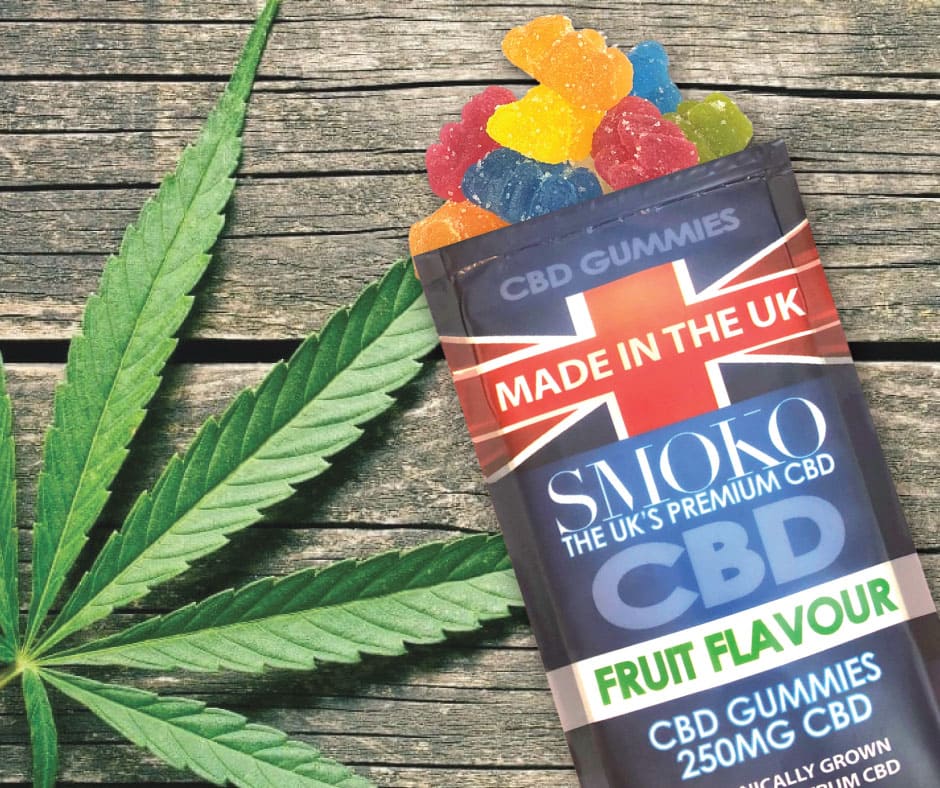
Any brand discussing CBD for a condition as serious as PTSD should be transparent about what it actually knows, sells, and can verify. Smokocbd publishes third-party lab testing results for its broad-spectrum tinctures, gummy bears, and soft gel capsules, all manufactured in the UK using organically grown hemp extract sourced from the USA.
The core promise worth holding any CBD brand to is simple: can you show me the actual lab result for the exact batch I’m buying, confirming both potency and zero detectable THC? If a brand can’t answer that clearly, that’s a reason to look elsewhere.
What to expect and ask for from Smokocbd or any comparable brand:
- A Certificate of Analysis available on request or published directly against the specific product batch.
- Confirmation of broad-spectrum extraction with verified zero THC, tested by an independent laboratory rather than in-house.
- Clear product descriptions specifying milligram strength per bottle and per serving, such as the 2000mg Mint tincture.
- Accessible customer support for questions about dosing, batch testing, or product sourcing.
- Educational content explaining realistic expectations, rather than exaggerated therapeutic claims.
| What to verify | Why it matters for PTSD use |
|---|---|
| Batch-specific COA | Confirms the exact bottle you’re using matches its label |
| Zero-THC verification | Reduces legal and interaction concerns for cautious users |
| mg per serving clarity | Essential for careful titration and symptom tracking |
| Responsive customer support | Useful when questions arise about dosing or sourcing |
Smokocbd positions itself as a UK-based, direct-to-consumer option for people wanting verified, lab-tested broad-spectrum CBD, rather than an unregulated or unverifiable product bought from an unclear source.
Are there other benefits beyond reduced anxiety worth knowing about?
Most CBD coverage focuses narrowly on anxiety, but PTSD research has picked up signals in areas that matter just as much day-to-day.
Sleep architecture, not just sleep duration, shows up repeatedly in pilot studies: participants report fewer nightmares and less disrupted sleep, not simply falling asleep faster. For PTSD specifically, nightmares are a core diagnostic symptom, not an incidental complaint, so any genuine effect here is clinically meaningful in its own right.

Reduced physiological reactivity during trauma-recall tasks has appeared in the single-dose 300 mg experiments, measured through markers like cognitive performance under stress, not just self-reported calm. That’s a more objective signal than a mood questionnaire alone.
Hyperarousal and startle response – the jumpiness and constant alertness common in PTSD – has shown improvement in some case series, tracked through the hyperarousal subscale of the PCL-5 rather than a general anxiety score.
Emotional numbing and social withdrawal, two symptom clusters that respond poorly to many existing PTSD treatments, have the thinnest evidence base of all. No trial to date has shown a clear, replicated CBD effect on these specific symptoms, which is worth knowing before assuming CBD addresses PTSD comprehensively rather than selectively.
What does the evidence actually mean for someone with PTSD right now?
The conventional advice on this topic tends to swing between two extremes: outright dismissal (“there’s no proof, don’t bother”) or overpromising (“CBD calms your nervous system”). Both misread the research. The honest middle ground is that CBD has a genuine, mechanistically sound rationale and a growing body of small but real clinical signals, particularly around sleep and hyperarousal, alongside serious gaps that only the current wave of larger RCTs will close.
What gets underrated is dose caution. People assume more CBD means more benefit, but the inverted-U pattern seen in trauma-recall dosing research argues for starting low and tracking results carefully, not chasing the highest milligram count available. If you take one thing from this article, make it that: treat CBD as a variable to test methodically alongside your existing care, with a symptom log and your prescriber’s input, not as a substitute for trauma-focused therapy.
— Mike
Where can you find a reliable CBD tincture to start with?
If you’ve read this far, you already understand that vague, unlabelled CBD products aren’t good enough when you’re tracking something as specific as PTSD symptoms. That’s precisely the gap Smokocbd was built to close: broad-spectrum tinctures manufactured in the UK from organically grown hemp, with third-party lab testing confirming zero THC on every batch, so you’re titrating against a number you can actually trust.
The SMOKO CBD Mint 2000mg tincture suits exactly the use case this article has walked through: a sublingual oil lets you adjust your dose drop by drop, which matters when research suggests low daily amounts around 30 mg can work as well as, or better than, chasing a higher figure. Whether you’re just beginning to explore CBD alongside therapy or refining a dose you’ve already started, having a clearly labelled milligram-per-millilitre strength makes your symptom log meaningful instead of guesswork. Visit the product page to check current batch Certificates of Analysis, review the mint flavour’s full ingredient list, and place an order to begin tracking your own response properly.
Sources
- Meta-analysis on CBD and anxiety (2024/2026)
- Potential utility of cannabidiol in stress-related disorders (J Clin Med review)
- Clinicaltrials