CBD does not consistently inhibit bulk protein synthesis at human-relevant concentrations. The more reproducible finding across experimental models is that cannabidiol acts as a proteostasis modulator, influencing how cells handle, fold, and clear proteins rather than switching the ribosomal machinery on or off. Three mechanistic threads run through the literature:
- Proteostasis over bulk inhibition. Dash et al. (2021) in Ageing Research Reviews frames CBD’s primary action as modulation of protein clearance and misfolding pathways, not wholesale translational suppression.
- Context- and dose-dependence. A 2023 biorxiv preprint found transcriptional downregulation of ribosomal and energy-metabolism genes in hippocampal tissue after seven days of daily CBD, yet controlled skeletal muscle studies report no meaningful acute anabolic effect at physiologically relevant doses.
- Assay limitations explain apparent contradictions. Bulk puromycin labelling (SUnSET) and single time-point readouts cannot distinguish translational rate changes from protein-clearance shifts, which is why early reports of cannabinoid interference with protein synthesis, including Jakubovic’s 1979 Leydig cell work, have not generalised to other cell types or human-relevant exposures.
Key takeaways
CBD’s most reproducible effect on protein handling is proteostasis modulation, not direct inhibition of bulk protein synthesis at human-relevant concentrations.
| Point | Details |
|---|---|
| Proteostasis, not bulk inhibition | CBD consistently modulates protein clearance, autophagy, and proteasome activity rather than suppressing ribosomal translation at clinical doses. |
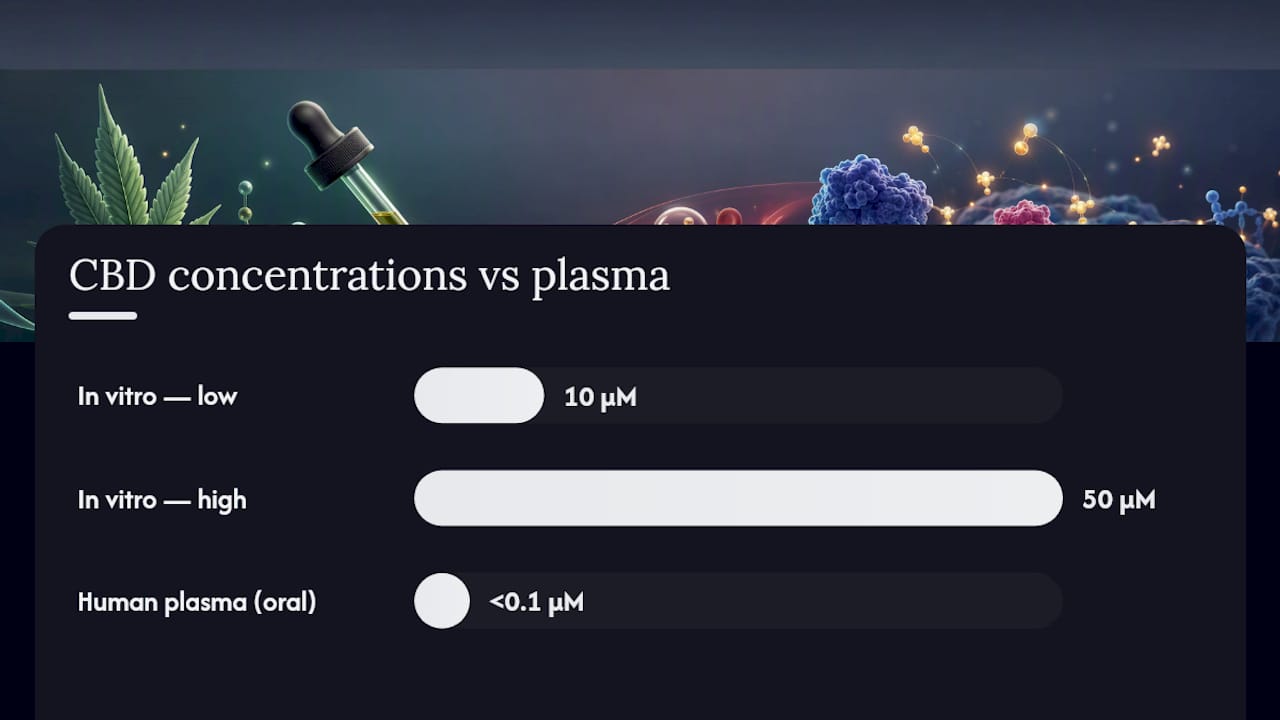
| Dose and model dependence | In vitro effects at 10–50 µM do not translate to human exposures, which are typically well below 0.1 µM after standard oral dosing. |
| Strongest mechanistic signal | CDC123–eIF2γ PPI inhibition in colorectal cancer cells is the most proteomics-validated mechanism; it is cancer-context specific and requires independent replication. |
| Assay limitations are critical | Bulk SUnSET/puromycin assays cannot distinguish synthesis rate changes from protein-clearance shifts; deuterium labelling and polysome profiling are the recommended alternatives. |
| Clinical relevance | Evidence supports CBD as a proteostasis modulator relevant to neurodegeneration; there is no reliable basis for framing it as an anabolic or anti-anabolic agent in healthy skeletal muscle. |
Table of Contents
- What review-level evidence says about CBD, proteostasis, and proteinopathies
- Primary experimental findings on CBD’s effects on protein synthesis genes and pathways
- What molecular mechanisms link CBD to protein synthesis and proteostasis?
- Why CBD effects vary across neurons, muscle cells, Leydig cells, and cancer models
- How assay choice, dosing, and pharmacokinetics shape conclusions
- What the evidence means for clinicians and researchers in the UK
- Open questions and recommended experiments to resolve CBD’s role
- A measured view on where the evidence actually stands
- Sources
What review-level evidence says about CBD, proteostasis, and proteinopathies
The dominant conceptual model in the review literature is proteostasis modulation, not translational suppression. Dash et al. (2021) argue in Ageing Research Reviews that CBD can enhance proteostasis and reduce the accumulation of disease-specific protein aggregates in neurodegenerative models by modulating protein clearance and misfolding. The mechanisms they highlight include upregulation of autophagy flux, proteasome activity, and molecular chaperone expression, all of which act downstream of translation rather than at the ribosome itself.
A muscle-physiology review reinforces this framing from a different angle. Langer et al. (2022) conclude that early in vitro reports of cannabinoid interference with protein synthesis were not reproducible at human-relevant concentrations, and recommend viewing CBD through the lens of inflammation and proteostasis modulation rather than as an anabolic or anti-anabolic agent. That recommendation matters for study design: researchers who frame a trial around “does CBD suppress muscle protein synthesis?” are likely asking the wrong question at clinical doses.
Preclinical work also shows CBD suppressing atrophy markers such as Atrogin-1 and MuRF1 in muscle-atrophy models, and supporting proteostasis through autophagy and proteasome pathways. This is consistent with the review consensus: CBD’s reproducible signal is in protein-handling quality control, not in net synthesis rate.
Key review-level claims worth noting:
- Autophagy and proteasome modulation are the most consistently reported protein-handling effects across models.
- CBD’s anti-aggregation effects in proteinopathy models (Alzheimer’s, Parkinson’s, Huntington’s) are mechanistically distinct from any direct effect on ribosomal translation.
- Bulk anabolic or anti-anabolic effects are not a reliable feature of CBD’s pharmacology at clinical exposures.
Primary experimental findings on CBD’s effects on protein synthesis genes and pathways
What the key studies actually show
The experimental picture is genuinely mixed, and that heterogeneity is informative rather than frustrating. Model choice, dose, and assay type each pull results in different directions.
The 2023 biorxiv preprint is the most direct transcriptomic evidence to date. Seven days of daily CBD administration in rodents produced downregulation of genes related to energy metabolism and ribosomal protein synthesis in hippocampal tissue. Critically, this is a transcriptional finding in a neuronal model under chronic exposure; it does not establish that translational output fell proportionally, and it has not yet been replicated in peer-reviewed form.
At the opposite end of the spectrum, a controlled in vitro and in situ study by Langer et al. (2022) found no meaningful impact of CBD on acute anabolic signalling in skeletal muscle under physiologically relevant conditions. Small increases in puromycin labelling were noted at the highest dose with IGF-1 co-treatment, but the effect was not considered biologically significant. This is the most methodologically rigorous acute muscle data available.
2D-TPP chemoproteomics adds a third layer: label-free thermal proteome profiling in live mammalian cells identified dose-dependent stability changes in dozens of proteins after CBD exposure, with many targets localising to membranes and mitochondria. This approach does not measure synthesis rates directly, but it maps the protein-interaction landscape that upstream signalling changes would need to traverse.
Concentration callout: In vitro studies reporting protein synthesis effects frequently use CBD concentrations of 10–50 µM, whereas estimated human plasma levels after oral dosing typically remain below 0.1 µM. This gap of two or more orders of magnitude is the single most important caveat when interpreting cell-culture data.
Representative findings across models:
- Hippocampal neurons (rodent, chronic): Transcriptional downregulation of ribosomal and energy-metabolism genes after seven days of daily CBD (biorxiv 2023 preprint; requires replication).
- Skeletal muscle (in vitro/in situ, acute): No meaningful change in anabolic signalling or puromycin incorporation at physiologically relevant CBD concentrations (Langer et al. 2022).
- Colorectal cancer cells: Selective inhibition of the CDC123–eIF2γ protein–protein interaction, triggering integrated stress responses; a cancer-specific mechanism not observed in healthy tissue.
- Mammary epithelial cells (HC11): Earlier in vitro work suggested concentration-dependent effects on protein handling, though assay specificity and dose relevance limit interpretation.
What molecular mechanisms link CBD to protein synthesis and proteostasis?
Several mechanistic hypotheses have been proposed, and they differ substantially in the strength of their supporting evidence. Understanding which mechanisms are well-supported versus speculative is essential for designing experiments that will actually resolve the question.
-
CDC123–eIF2γ protein–protein interaction (PPI) inhibition. The most mechanistically specific finding comes from proteome profiling in colorectal cancer cells, where CBD was identified as a putative inhibitor of the CDC123–eIF2γ interaction. CDC123 is required for eIF2 complex assembly; disrupting it impairs translation initiation and triggers the integrated stress response (ISR), leading to apoptosis in that model. This is a selective, cancer-context mechanism with strong proteomics backing.
-
eIF2α phosphorylation and the integrated stress response. Downstream of CDC123–eIF2γ disruption, phosphorylation of eIF2α at Ser51 globally attenuates cap-dependent translation while selectively upregulating stress-response mRNAs. Whether CBD activates eIF2α kinases (HRI, PERK, GCN2, PKR) independently of CDC123 in non-cancer cells remains an open question.
-
ER stress and the unfolded protein response (UPR). CBD’s lipophilicity and membrane affinity can perturb ER membrane composition, potentially activating UPR sensors (IRE1α, PERK, ATF6). UPR activation transiently suppresses global translation while upregulating chaperones, which would appear as reduced bulk synthesis in SUnSET assays without reflecting a direct ribosomal effect.
-
mTORC1 pathway modulation. mTOR complex 1 is a central regulator of ribosome biogenesis and cap-dependent translation. Some preclinical data suggest CBD can modulate mTORC1 activity indirectly through AMPK or Ca²⁺-dependent pathways, though direct evidence in human-relevant models is limited.
-
Ca²⁺ handling and mitochondrial interactions. 2D-TPP chemoproteomics shows CBD’s strongest thermal stability effects localise to membrane and mitochondrial proteins. Disruption of mitochondrial Ca²⁺ buffering can impair ATP production and secondarily reduce the energy available for translation elongation, a plausible but indirect route to apparent synthesis suppression.
-
Autophagy and proteasome upregulation. CBD’s most reproducible proteostasis effect is enhancement of protein clearance rather than synthesis inhibition. Upregulation of autophagy flux and proteasome activity reduces the burden of misfolded proteins, which is therapeutically relevant in proteinopathies but mechanistically distinct from translational control.
Pro Tip: When designing mechanistic experiments, pair p-eIF2α (Ser51) western blotting with polysome profiling and targeted deuterium-labelled peptide flux measurements. This orthogonal trio distinguishes translational initiation changes from elongation effects and from protein-clearance artefacts that bulk SUnSET assays cannot separate.
Why CBD effects vary across neurons, muscle cells, Leydig cells, and cancer models
Cell-type specificity is not a confound to explain away; it is a core feature of CBD’s pharmacology. The same compound produces qualitatively different outcomes depending on baseline stress state, receptor and transporter expression, and the metabolic context of the target cell.
-
Cancer cells (high sensitivity, selective PPI disruption). Colorectal cancer cells show selective vulnerability to CBD’s CDC123–eIF2γ inhibition because tumour cells often have elevated baseline translation rates and reduced stress-response capacity. The integrated stress response triggered by eIF2γ disruption pushes these cells towards apoptosis rather than adaptation.
-
Stressed or diseased neurons (proteostasis modulation). In neurodegenerative models where misfolded protein aggregates accumulate, CBD’s enhancement of autophagy and proteasome activity produces measurable benefits. The 2023 hippocampal transcriptome preprint fits here: chronic CBD in a neuronal context downregulates energy-intensive ribosomal programmes, possibly as an adaptive response to altered mitochondrial function.
-
Healthy skeletal muscle (low sensitivity, no acute anabolic effect). Langer et al. (2022) found no meaningful change in anabolic signalling in healthy muscle at physiologically relevant concentrations. Skeletal muscle has robust translational regulation through mTORC1 and MAPKs, and CBD at clinical doses does not appear to override these pathways. For researchers and clinicians interested in CBD and athletic recovery, this finding is important context.
-
Leydig cells (historical, high sensitivity at low concentrations). Jakubovic’s 1979 work showed that cannabinoids could interfere with testosterone and protein synthesis in Leydig cells at very low concentrations, suggesting steroidogenic cells have particular vulnerability. This finding has not been systematically followed up with modern assays, but it remains a relevant historical data point for reproductive toxicology considerations.
The mechanistic explanation for this divergence lies in membrane composition and receptor expression. CBD’s affinity for membrane and mitochondrial proteins means its effects are amplified in cells with high mitochondrial density or elevated ER stress, and attenuated in metabolically stable, well-oxygenated healthy tissue.
How assay choice, dosing, and pharmacokinetics shape conclusions
The apparent contradictions in the CBD-and-protein-synthesis literature are largely methodological. Choosing the wrong assay or the wrong dose does not just introduce noise; it systematically biases results in predictable directions.
Common limitations to recognise:
- Bulk puromycin/SUnSET assays measure total puromycin incorporation across all proteins in a cell population. They cannot distinguish changes in synthesis rate from changes in protein degradation, nor can they identify which proteins are affected. A compound that upregulates proteasome activity will appear to “reduce protein synthesis” in a SUnSET assay even if translational rates are unchanged.
- Single time-point measurements miss the temporal dynamics of stress responses. UPR activation, for example, transiently suppresses global translation before adaptive resolution; a measurement at two hours versus twenty-four hours will give opposite conclusions.
- In vitro solvent effects. CBD is highly lipophilic and typically dissolved in DMSO or ethanol for cell-culture work. Solvent controls at matched concentrations are non-negotiable, yet not always reported.
- Supraphysiological concentrations. As noted above, many in vitro studies use 10–50 µM CBD, whereas human plasma levels after oral dosing are typically sub-0.1 µM. Effects observed at supraphysiological doses may reflect non-specific membrane disruption rather than receptor-mediated pharmacology.
Recommended approaches for more reliable conclusions:
- Deuterium labelling and targeted peptide flux. Stable isotope labelling (e.g., deuterium-labelled amino acids) combined with mass spectrometry allows peptide-level synthesis rate measurements for specific proteins, bypassing the bulk-assay confound entirely.
- Polysome profiling. Sucrose gradient sedimentation of polysomes directly measures translational engagement of mRNAs, distinguishing initiation from elongation effects.
- CETSA and 2D-TPP. Cellular thermal shift assays and two-dimensional thermal proteome profiling, as used in the orthogonal chemoproteomics study, map CBD’s binding landscape in intact cells without requiring genetic manipulation.
- Targeted proteomics (PRM/SRM). Parallel reaction monitoring of specific protein targets provides quantitative, reproducible synthesis and turnover data that bulk assays cannot match.
- Explicit PK reporting. Every study should state nominal concentration, estimated free (unbound) concentration, exposure time, solvent, and vehicle. CBD bioavailability is substantially affected by food, which matters for in vivo study design.
Concentration context: In vitro studies reporting protein synthesis effects frequently use 10–50 µM CBD. Human plasma levels after standard oral doses are typically well below 0.1 µM, a gap of two or more orders of magnitude that fundamentally limits the translational relevance of many cell-culture findings.
What the evidence means for clinicians and researchers in the UK
Translating the mechanistic evidence into clinical or research practice requires honest acknowledgement of what the data currently supports and what it does not.
- Proteostasis modulation in neurodegeneration. The strongest translational signal is CBD’s potential to reduce toxic protein aggregate burden in neurodegenerative models. For UK researchers working on Alzheimer’s, Parkinson’s, or Huntington’s disease, this is the most mechanistically grounded hypothesis to pursue. CBD’s effects on neurological conditions are an active area of preclinical investigation, and the proteostasis framing gives that work a tractable molecular target.
- Muscle hypertrophy and athletic performance. At clinically achievable concentrations, there is no reliable evidence that CBD meaningfully suppresses or enhances muscle protein synthesis. Researchers and clinicians should not frame CBD as an anabolic or anti-anabolic agent for skeletal muscle without substantially stronger human data.
- Oncological contexts. The CDC123–eIF2γ PPI inhibition finding in colorectal cancer cells is mechanistically specific and proteomics-validated, but it is a single cancer model. Extrapolation to other tumour types or to clinical oncology requires independent replication and in vivo validation.
- CYP interactions and dosing variability. CBD is a known inhibitor of CYP2C19 and CYP3A4, which affects the plasma levels of co-administered drugs. Any clinical protocol must account for these interactions explicitly. Dosing variability between products is also substantial; for translational studies, using third-party tested, well-characterised preparations is non-negotiable. Researchers in the UK should consult MHRA guidance on CBD as a medicinal product where applicable.
- Safety and supervision. At doses used in clinical research, CBD is generally well tolerated, but liver enzyme elevations have been reported at high doses in clinical trials. Explicit dose and PK reporting in every study is a minimum standard, not an optional extra.
Open questions and recommended experiments to resolve CBD’s role
The field needs targeted experiments rather than more broad-spectrum cell-culture screens. Here is a prioritised checklist:
- Human-relevant PK paired with deuterium peptide flux. Conduct in vivo studies in rodents or human volunteers at clinically achievable plasma concentrations, measuring protein synthesis rates at the peptide level using stable isotope labelling. This would definitively answer whether CBD alters translational output at doses humans actually receive.
- Cell-type conditional studies. Use conditional knockout or overexpression systems to test whether CDC123–eIF2γ disruption is the operative mechanism in cancer cells, and whether analogous PPI targets exist in neuronal or muscle models.
- Orthogonal proteomics validation. Combine AfBPP (activity-based protein profiling) with 2D-TPP to map CBD’s binding landscape across multiple cell types simultaneously, resolving whether mitochondrial and membrane targets are universal or cell-type specific.
- Time-course and dose-response at clinical concentrations. Design studies with at least four time points and concentrations spanning 0.01–1 µM to capture the full temporal dynamics of stress responses and proteostasis changes at human-relevant exposures.
- Chemoproteomics target validation for CDC123–eIF2γ. Independent replication of the CDC123–eIF2γ PPI inhibition finding in additional cancer cell lines, followed by genetic validation (CDC123 knockdown rescue experiments), would substantially strengthen the oncological hypothesis.
- Chronic exposure studies with cumulative PK. Given that CBD accumulates with repeated dosing, time-course studies under chronic dosing regimens are needed to determine whether transcriptional effects observed in the hippocampal preprint are transient adaptations or sustained changes.
- Statistical design and replication standards. Pre-registration of hypotheses, power calculations based on expected effect sizes at clinical concentrations, and independent replication in at least two laboratories should be minimum standards for any new primary study in this area.
How studies were selected and evidence weighted
This synthesis prioritised peer-reviewed primary experiments and high-quality preprints where methods were explicitly reported, including dose or concentration, exposure time, cell or animal model, and assay type. Preprints (specifically the 2023 biorxiv entry) are flagged as requiring peer-reviewed replication and are not treated as equivalent to published primary data. The PubMed/PMC index was used to cross-reference study designs and identify controlled experiments with physiologically relevant dosing.
Evidence was weighted as follows:
- Studies reporting explicit concentrations, free versus nominal drug levels, and orthogonal assay types were ranked highest.
- Single time-point bulk assays (SUnSET/puromycin) without complementary readouts were treated as hypothesis-generating rather than confirmatory.
- In vitro findings at concentrations above 1 µM were noted but not extrapolated to human-relevant conclusions without corroborating in vivo data.
- Review articles were used to establish conceptual framing but not as primary evidence for mechanistic claims.
A measured view on where the evidence actually stands
The proteostasis framing is the right one, and the field would benefit from committing to it more decisively. The persistent framing of CBD as a potential anabolic or anti-anabolic agent for muscle growth has generated a body of literature that is largely negative at clinical doses, which is itself a useful finding, but it has also distracted attention from the more tractable and better-supported question: how does CBD modulate protein quality control in stressed or diseased cells?
The CDC123–eIF2γ PPI inhibition finding is the most mechanistically specific result to emerge in recent years, and it deserves rigorous independent replication. If confirmed across cancer models, it opens a genuinely novel therapeutic hypothesis that is grounded in translational biology rather than receptor pharmacology. The mitochondrial and membrane target landscape revealed by 2D-TPP chemoproteomics is equally worth pursuing, particularly in neurodegeneration models where mitochondrial dysfunction and proteostasis failure are co-occurring pathologies.
What the field should resist is over-generalising any single model’s results. The hippocampal transcriptome preprint is interesting and hypothesis-generating; it is not evidence that CBD suppresses protein synthesis in humans. The Langer et al. skeletal muscle data is the most methodologically rigorous acute readout available, and its null result at physiological concentrations should be the default assumption for healthy tissue until stronger evidence emerges.
Sources
- Cannabidiol administration reduces the expression of …
- Orthogonal strategies for profiling potential cellular targets of anandamide and cannabidiol
- Cannabidiol Does Not Impact Acute Anabolic or Inflammatory …
- Stability and degradation‑based proteome profiling reveals cannabidiol as a promising CDC123‑eIF2γ inhibitor for colorectal cancer therapy
- Review / expert perspective on cannabinoids and muscle physiology
- Emerging potential of cannabidiol in reversing proteinopathies
This article provides general scientific information for research and educational purposes. It is not a substitute for professional medical or clinical advice. Researchers and clinicians should consult primary sources and relevant regulatory guidance, including the MHRA, when designing studies or making clinical decisions.