TL;DR:
- CBD skincare improves skin health, reduces inflammation, and regulates sebum production by interacting with the endocannabinoid system. Its benefits include acne reduction, enhanced hydration, barrier repair, and anti-aging effects surpassing those of vitamins C and E. Consumers should select high-quality, verified products for consistent results over time.
Cannabidiol (CBD) skincare benefits are defined as the measurable improvements to skin health, hydration, and resilience that topical cannabidiol delivers through the skin’s own biological systems. CBD, a non-psychoactive compound derived from hemp, interacts with the skin’s endocannabinoid system to tone down inflammation, regulate sebum production, and protect against environmental damage. Clinical reviews support its role in addressing acne, dryness, and premature ageing. Smokocbd’s broad-spectrum formulations, verified through third-party lab testing, are designed to bring these potential health benefits within reach for anyone serious about their skincare routine.
How does CBD interact with the skin’s biology?
CBD works on the skin by modulating the endocannabinoid system (ECS), a network of receptors found throughout the body, including the skin itself. The ECS regulates sensation, inflammation, and cellular balance. When CBD is applied topically, it interacts with CB1 and CB2 receptors, as well as PPARs and TRPV channels, to influence how skin cells behave and respond to stress.
Beyond receptor activity, CBD acts as an antioxidant and an immuno-modulator. It can ramp up the skin’s defences against oxidative stress while toning down the production of pro-inflammatory cytokines. This dual action makes it particularly relevant for conditions where both inflammation and cellular damage are at play.
CBD also exerts a sebostatic effect on the sebaceous glands. In plain terms, it helps regulate how much sebum (oil) the skin produces. Excess sebum is a primary driver of acne, so this regulation is clinically meaningful, not just cosmetically appealing.
Pro Tip: Apply topical CBD to clean, slightly damp skin. Moisture helps the active compounds penetrate the outer skin barrier more effectively, improving absorption.
| Biological target | CBD’s effect |
|---|---|
| CB1 and CB2 receptors | Modulates inflammation and pain signalling in skin cells |
| Sebaceous glands | Reduces excess sebum production (sebostatic effect) |
| Pro-inflammatory cytokines (IL-6) | Suppresses secretion, reducing redness and irritation |
| MMP-1 enzyme | Inhibits collagen breakdown, supporting skin structure |
| TRPV channels | Influences skin sensitivity and barrier function |
What are the main skin health benefits of CBD?
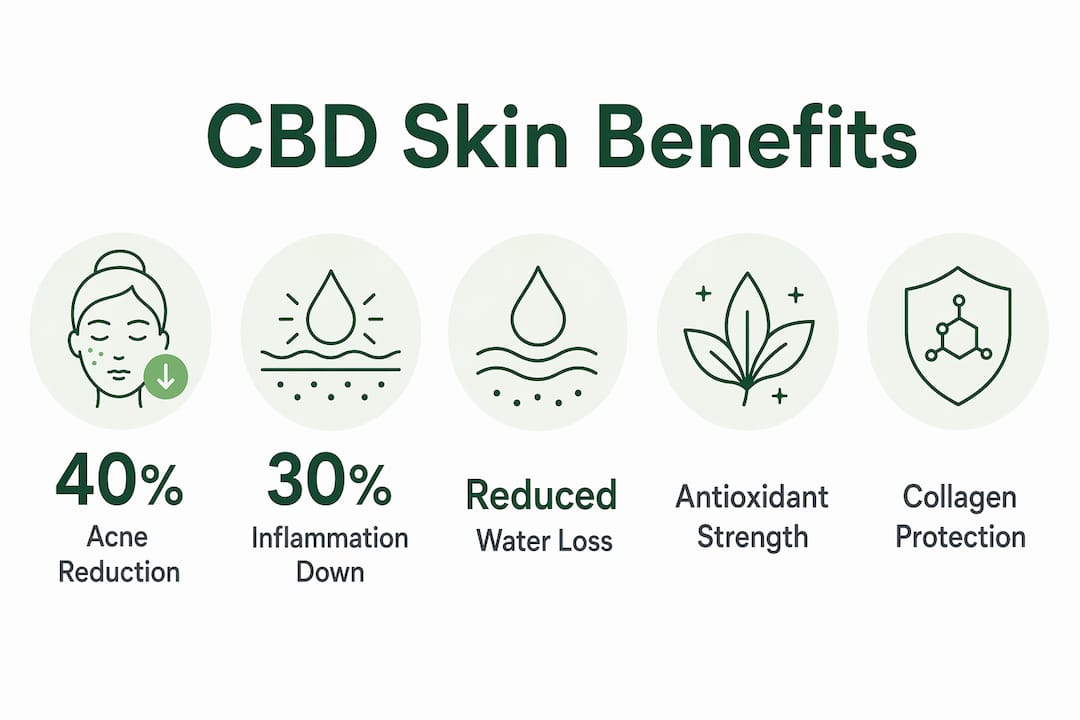
CBD delivers several well-documented skin health benefits, each supported by laboratory and clinical evidence. The most significant are acne reduction, improved hydration, and calming of irritated or sensitive skin.
Acne and inflammation
Topical CBD treatments can reduce acne lesions by 40% after 12 weeks of consistent use in cases of mild-to-moderate inflammatory acne. That figure is significant because it reflects a real reduction in visible lesions, not just a subjective improvement in skin feel. CBD achieves this by suppressing the inflammatory signals that cause spots to form and by regulating sebum output at the gland level.
Hydration and barrier function
CBD creams improve skin hydration and barrier integrity by reducing transepidermal water loss (TEWL). TEWL is the rate at which moisture escapes through the outer skin layer. When TEWL decreases, skin stays hydrated for longer, feels less tight, and becomes more resilient to irritants. The same research found reductions in erythema (redness) and improvements in atopic-prone skin, which is skin that is predisposed to conditions like eczema.
Calming sensitive and reactive skin
CBD’s anti-inflammatory properties make it well suited to sensitive skin that reacts to environmental triggers, stress, or harsh products. It does not simply mask redness. It addresses the underlying cytokine activity that causes the reaction in the first place.
Here is a summary of the core benefits supported by current evidence:
- Acne reduction: 40% decrease in lesions after 12 weeks of topical use
- Hydration: Reduced transepidermal water loss and improved moisture retention
- Barrier repair: Strengthened outer skin layer, reducing sensitivity to irritants
- Redness reduction: Lower erythema scores in clinical observations
- Sebum regulation: Reduced oiliness without stripping the skin
- Calming effect: Decreased inflammatory cytokine activity in reactive skin
How does CBD support anti-aging and protect against environmental damage?
CBD’s anti-aging properties rest on two pillars: antioxidant strength and enzyme suppression. Both address the biological processes that cause skin to age visibly over time.
Antioxidant activity
Free radicals from UV exposure, pollution, and stress break down skin cells and accelerate ageing. Antioxidants neutralise free radicals before they cause lasting damage. CBD shows stronger antioxidant properties than vitamins C and E in some laboratory tests. That comparison matters because vitamins C and E are widely regarded as gold-standard antioxidants in dermatology. CBD outperforming them suggests a meaningful protective capacity against environmental damage.
MMP-1 suppression and collagen protection
MMP-1 is an enzyme that breaks down collagen, the structural protein that keeps skin firm and smooth. As MMP-1 activity increases with age and pollution exposure, collagen degrades and wrinkles form. CBD-loaded nanoemulsion formulations suppress MMP-1 by over 90% in ex vivo human skin models. That level of suppression is striking. It suggests CBD can meaningfully protect the extracellular matrix, the scaffolding that gives skin its structure.
The same nanoemulsion research found that CBD reduces IL-6 secretion by 30–46% when skin is exposed to particulate matter from pollution. IL-6 is a pro-inflammatory mediator that accelerates skin ageing when chronically elevated. Reducing it protects both the appearance and the health of the skin over time.
Pro Tip: If you live in an urban area with high pollution levels, applying a CBD-containing serum or cream in the morning creates a protective layer before you step outside. Pair it with SPF for full environmental defence.
| Antioxidant | Relative strength | Key skin benefit |
|---|---|---|
| CBD | Stronger than vitamins C and E in some tests | Neutralises free radicals, suppresses MMP-1 |
| Vitamin C | High | Brightening, collagen synthesis support |
| Vitamin E | Moderate to high | Membrane protection, moisturisation |
What should you know about using CBD skincare products?
Practical application of CBD skincare requires realistic expectations and careful product selection. The science is promising, but results do not appear overnight.
Realistic timeframes and consistent use
Repeated daily application over weeks to months is required before visible improvements appear. This is not a weakness of CBD. It reflects how skin biology works. The skin renews itself on a roughly 28-day cycle, so any active ingredient needs time to influence that process. Expecting results after two or three applications sets you up for disappointment.
CBD as an adjunct, not a replacement
Clinical evidence supports CBD as adjunctive skincare, not as a replacement for prescription treatments. For chronic conditions like eczema or psoriasis, CBD should complement, not replace, medications such as corticosteroids or calcineurin inhibitors. Clinicians caution that current trials are limited by small sample sizes, which means CBD is not yet validated as a first-line monotherapy in dermatology. Use it alongside your existing routine, not instead of it.
Choosing quality products
CBD skincare products lack standardised dosing and quality control across the market. That variability makes third-party lab testing non-negotiable when choosing a product. Here is what to look for:
- Third-party lab certificate (COA): Confirms actual CBD concentration and verifies zero THC content.
- Broad-spectrum or full-spectrum labelling: Indicates the presence of multiple beneficial cannabinoids, not just isolated CBD.
- Ingredient transparency: Avoid products with long lists of synthetic fillers that may irritate sensitive skin.
- Stated concentration: Products should clearly list milligrams of CBD per unit, not vague terms like “hemp extract.”
- Reputable sourcing: Organically grown hemp from verified sources reduces the risk of pesticide contamination.
Smokocbd’s products meet all five criteria. Each formulation uses broad-spectrum CBD from organically grown hemp and is verified by independent lab testing, giving you confidence in what you are actually applying to your skin.
Key takeaways
CBD skincare benefits are grounded in real biological mechanisms, from ECS modulation and MMP-1 suppression to antioxidant activity stronger than vitamins C and E, making it a credible adjunct in any evidence-informed skincare routine.
| Point | Details |
|---|---|
| Biological mechanism | CBD modulates the skin’s ECS, reducing inflammation and regulating sebum production. |
| Acne improvement | Topical CBD reduces acne lesions by 40% after 12 weeks of consistent use. |
| Hydration and barrier repair | CBD creams reduce transepidermal water loss and improve skin barrier integrity. |
| Anti-aging protection | CBD suppresses MMP-1 by over 90% and outperforms vitamins C and E as an antioxidant. |
| Product quality matters | Always choose CBD skincare verified by third-party lab testing for potency and safety. |
Why I think CBD skincare deserves more serious attention
The skincare industry has a habit of overclaiming. Every season brings a new “miracle” ingredient, and CBD has not been immune to that treatment. I understand the scepticism. But when you look past the marketing and read the actual research, CBD stands out for one specific reason: it works on multiple mechanisms simultaneously.
Most active ingredients do one thing well. Retinol accelerates cell turnover. Hyaluronic acid draws in moisture. Niacinamide calms redness. CBD does all three of those things to varying degrees, and it does so through the skin’s own regulatory system rather than forcing a response. That is a genuinely different approach.
Where I think people go wrong is expecting CBD to replace their entire routine. It will not. The evidence is clear that it works best alongside established ingredients and, where relevant, prescribed treatments. The CBD topical guide from Smokocbd is a good starting point for understanding how to layer it effectively.
My honest advice: be patient, buy quality, and treat CBD as a complement rather than a cure. The people who see the best results are those who use it consistently for at least eight weeks and choose products with verified lab testing. That combination is where the science and the real-world results actually align.
— Mike
Smokocbd’s broad-spectrum CBD for skin health support
Smokocbd offers a range of broad-spectrum CBD products formulated from organically grown hemp and verified through independent third-party lab testing. Every product confirms zero THC content, so you get the full benefit of cannabidiol without any psychoactive compounds.
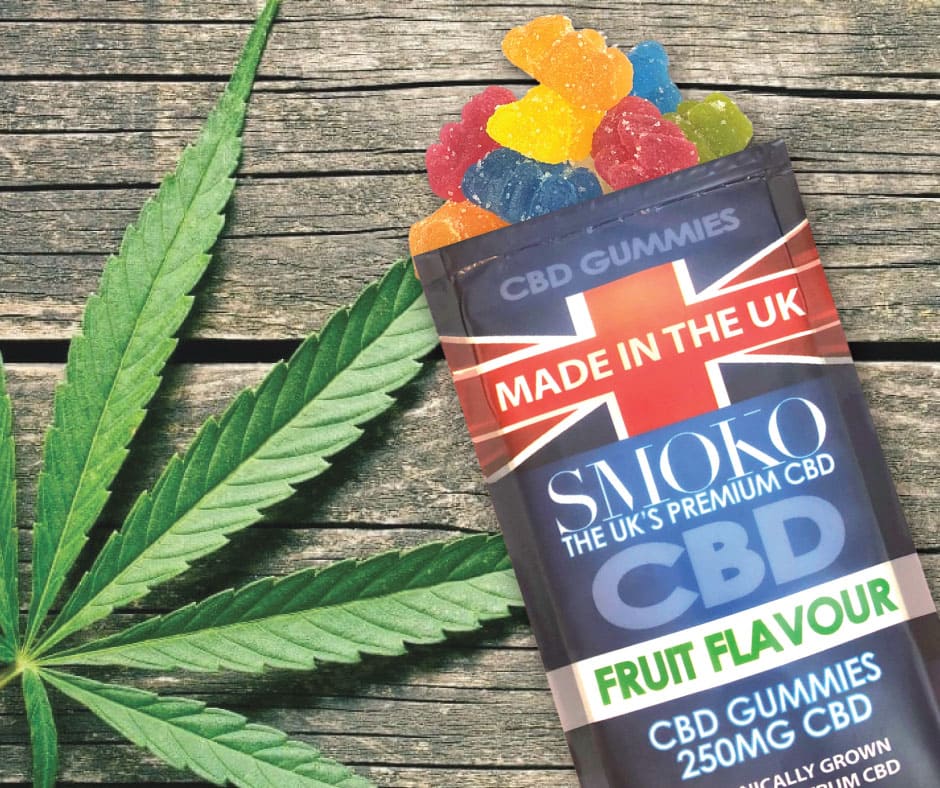
For those looking to support skin health from the inside out, Smokocbd’s 1000mg broad-spectrum CBD tincture offers a well-dosed, daily option that fits easily into any wellness routine. If you prefer a convenient alternative, the CBD soft gels and gummies pack delivers consistent dosing without any measuring. All products are made in the UK and backed by transparent lab reports, so you always know exactly what you are getting.
FAQ
What are the main CBD skincare benefits?
CBD reduces inflammation, regulates sebum production, improves skin hydration, and protects against environmental damage through antioxidant activity. Clinical evidence also shows a 40% reduction in acne lesions after 12 weeks of topical use.
Is CBD good for dry or sensitive skin?
CBD creams improve skin barrier function and reduce transepidermal water loss, making them well suited to dry and sensitive skin types. They also reduce erythema and calm reactive skin by suppressing pro-inflammatory cytokines.
How long does CBD take to show results on skin?
Consistent daily application over several weeks to months is required for visible improvements. Skin renews on a roughly 28-day cycle, so results build gradually rather than appearing after a single use.
Can CBD replace my existing skincare treatments?
CBD works best as an adjunct to your existing routine, not as a replacement. For chronic conditions like eczema or psoriasis, it should complement, not replace, prescribed medications such as corticosteroids.
How do I choose a quality CBD skincare product?
Look for products with a third-party lab certificate (COA), clearly stated CBD concentration in milligrams, broad-spectrum labelling, and organically sourced hemp. Smokocbd provides independent lab reports for all its products, confirming potency and zero THC content.