TL;DR:
- Clinical evidence for CBD’s effectiveness in neuropathic pain is limited and inconsistent.
- A 2026 high-dose CBD trial showed a modest 14 percent pain reduction, but only in specific patients.
CBD has meaningful but limited evidence for neuropathic pain. A 2026 randomised controlled trial from the University of Sydney found high-dose oral CBD reduced neuropathic pain by around 14% compared with 6.5% for placebo in spinal cord injury patients. The Cochrane living review rates the overall evidence as low to very low certainty, particularly for CBD-dominant products. In the UK, two prescription cannabis medicines exist: Epidyolex (licensed cannabidiol) and Sativex/Nabiximols (a THC:CBD oromucosal spray). Over-the-counter options, such as Smokocbd’s third-party tested, zero-THC broad-spectrum tinctures, sit in a separate consumer category with no licensed medical claims.
You might reasonably consider a CBD trial if you:
- Have tried standard neuropathic pain treatments without adequate relief
- Have no contraindications (see Section 8 below)
- Are willing to discuss it with your GP first
- Can source a product with a verified Certificate of Analysis (COA)
Immediate safety flag: CBD interacts with several commonly prescribed medicines via CYP450 enzymes. Speak to your GP before starting.
Table of Contents
- What do clinical studies actually show for nerve pain?
- What forms of CBD are available, and what can UK clinicians prescribe?
- What are the safety risks and drug interactions?
- Who should avoid OTC CBD and what are the warning signs?
- Key takeaways
- A considered view on CBD and nerve pain
- Smokocbd’s 2000 mg broad-spectrum CBD tincture
- Useful sources and further reading
What do clinical studies actually show for nerve pain?
The honest answer: mixed results, with the strongest signal coming from products containing THC alongside CBD, not from CBD alone.
The 2025 living systematic review included 29 RCTs across 30 publications and found that CBD-dominant (low THC:CBD) oral products may not be associated with improved pain or function versus placebo. Evidence strength ranged from low to moderate across product types.
| Product type | Typical evidence strength | Common adverse events |
|---|---|---|
| Comparable THC:CBD (e.g. Sativex) | Low to moderate | Dizziness, sedation, cognitive effects |
| High-THC dominant | Low to moderate | Higher nervous-system adverse events |
| CBD-dominant (low/no THC) | Very low to low | Nausea, fatigue, diarrhoea |
The Cochrane review included 16 studies (1,750 participants) and rated most CBD-dominant outcomes as very low to low certainty, with unclear benefit across pain, function, and quality of life.
29 RCTs in 30 publications were included in the 2025 living systematic review update, yet CBD-dominant products still showed inconsistent benefit for neuropathic pain versus placebo.
The standout recent finding is the 2026 University of Sydney RCT: high-dose oral CBD (titrated from 200 mg up to 800 mg/day over six weeks) produced a statistically significant mean pain reduction of approximately 14% versus 6.5% for placebo in spinal cord injury patients. Some participants achieved reductions exceeding 30%. The caveats matter: small sample, very high doses far above consumer serving sizes, and a specific patient population (spinal cord injury).
Heterogeneity across trials is substantial. Products, doses, routes of administration, and follow-up periods differ so widely that pooling results is difficult, and most trials run for only a few weeks.
What forms of CBD are available, and what can UK clinicians prescribe?
Consumer (over-the-counter) forms
Oral tinctures/oils, soft gel capsules, gummies, sublingual sprays, and topical creams are all available without a prescription. Tinctures and soft gels offer the most straightforward dose titration. Topicals may suit localised nerve pain (for example, post-herpetic neuralgia in a defined area) but deliver little systemic effect. Inhaled products carry respiratory risks and are harder to dose consistently.

What are the safety risks and drug interactions?
CBD is generally well tolerated in clinical trials, but it carries recognised risks that every prospective user should understand before starting.
Common side effects include dizziness, sedation, nausea, diarrhoea, and fatigue. At higher doses, signals for elevated liver enzymes (hepatotoxicity) have been observed, particularly in people with pre-existing liver conditions or those taking other hepatotoxic medicines.
The CYP450 interaction risk is the most clinically significant concern. CBD inhibits several CYP450 enzymes, which means it can raise or lower blood levels of other medicines metabolised by the same pathway. Drugs commonly prescribed for nerve pain that may interact include:
- Gabapentin and pregabalin (sedation risk may increase)
- Amitriptyline and other tricyclic antidepressants
- Warfarin (INR may be affected)
- Some antiepileptics (particularly valproate and clobazam)
Tell your GP:
- All current medicines, including supplements
- Any history of liver disease
- Pregnancy or breastfeeding status
- Your occupation (driving, operating machinery)
- Alcohol intake
Product variability research has found that some consumer CBD products contain undisclosed THC or contaminants. Unregulated products carry real risks beyond the pharmacological ones. Always request a COA.
Pro Tip: Ask your GP for baseline liver function tests (LFTs) if you plan to use CBD regularly at higher doses. This gives you a reference point and helps catch any early signal before it becomes a problem.
Who should avoid OTC CBD and what are the warning signs?
Avoid OTC CBD without direct clinician oversight if you:
- Are pregnant or breastfeeding
- Have significant liver disease or elevated liver enzymes
- Take medicines with a narrow therapeutic window (warfarin, antiepileptics, immunosuppressants)
- Have a history of psychosis or are at elevated risk
- Are under 18
Driving and workplace safety: Even zero-THC broad-spectrum products can cause sedation, particularly at higher doses or when combined with other sedating medicines. If your job involves driving or operating machinery, discuss this with your GP before starting. Products containing any THC may trigger a positive roadside drug test under UK drug-driving law, regardless of impairment.
Key takeaways
CBD has limited but emerging evidence for neuropathic pain; the strongest recent signal comes from high-dose CBD in a 2026 RCT, while CBD-dominant consumer products show inconsistent benefit in systematic reviews.
| Point | Details |
|---|---|
| Evidence is mixed | The 2025 living review (29 RCTs) found CBD-dominant products show inconsistent benefit; the 2026 RCT found ~14% pain reduction at very high doses. |
| Prescription vs consumer | Epidyolex and Sativex are UK-licensed medicines; consumer CBD is a Novel Food supplement with no permitted medical claims. |
| Drug interactions matter | CBD inhibits CYP450 enzymes; always review current medicines with your GP before starting. |
| COA is non-negotiable | Only buy products with a batch-matched, third-party COA confirming cannabinoid content and zero THC. |
| Smokocbd for OTC trials | Smokocbd’s 2000 mg broad-spectrum tinctures are third-party tested with zero THC verified, making them a traceable starting point for a structured consumer trial. |
A considered view on CBD and nerve pain
There is a tendency in both the sceptic and enthusiast camps to overstate their case. Sceptics dismiss CBD entirely because the evidence is not yet at the level of, say, pregabalin. Enthusiasts present every positive trial as proof of a cure. Neither position serves people living with nerve pain well.
The more honest reading is this: CBD is a pharmacologically active compound with plausible mechanisms, a reasonable safety profile at consumer doses, and a handful of genuinely encouraging clinical signals. The 2026 University of Sydney trial matters not because 14% pain reduction is dramatic, but because it is statistically significant, placebo-controlled, and achieved in a population where roughly half of patients fail standard treatments. That is not nothing.
What the evidence does not yet support is treating CBD as a first-line therapy or as a substitute for prescribed medicines. The doses that produced meaningful effects in trials are far above what consumer products deliver. The interaction risks are real. And the consumer market remains patchy in quality.
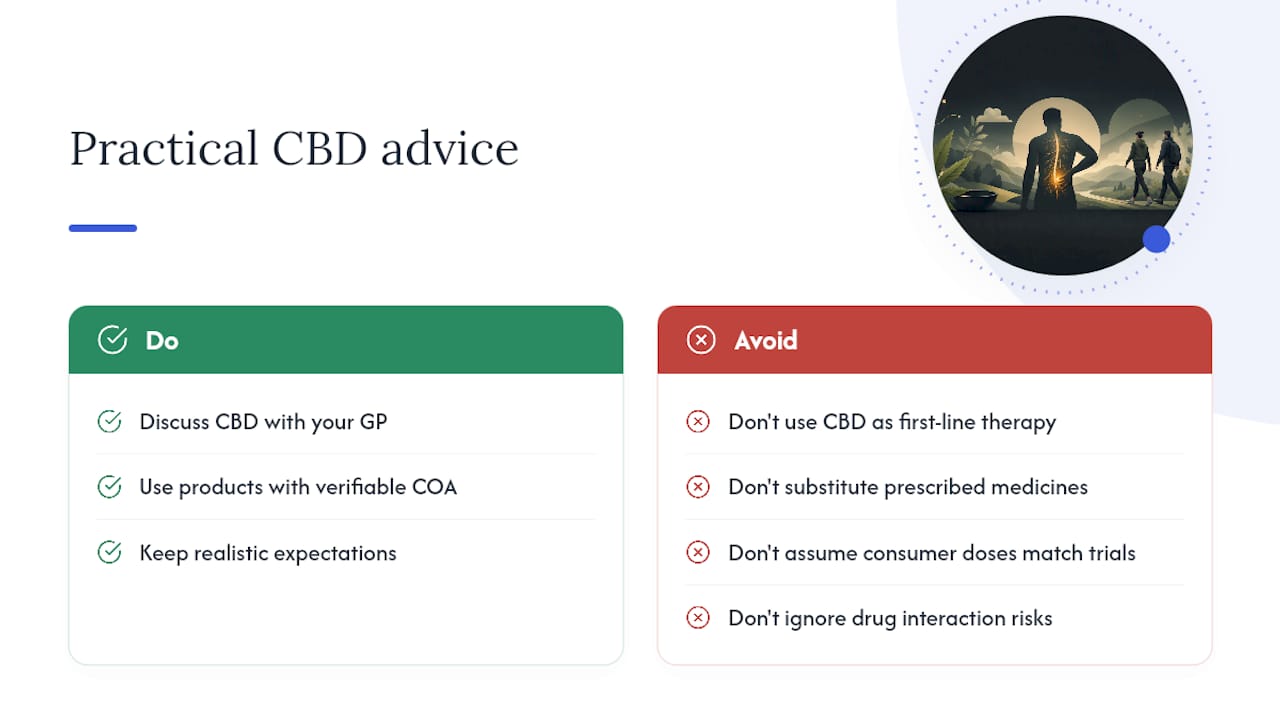
The practical position for UK adults is clear: if you want to explore CBD for nerve pain, do it with your GP’s knowledge, with a product that has a verifiable COA, and with realistic expectations. Smokocbd publishes these guides precisely because informed consumers make better decisions, and better decisions lead to better outcomes. This article is educational information, not personalised medical advice. Please consult your GP or specialist before starting CBD or changing any prescribed medicines.
For more on the evidence base, the Smokocbd CBD for pain relief guide and the natural pain relief tips guide are worth reading alongside this article.
Smokocbd’s 2000 mg broad-spectrum CBD tincture
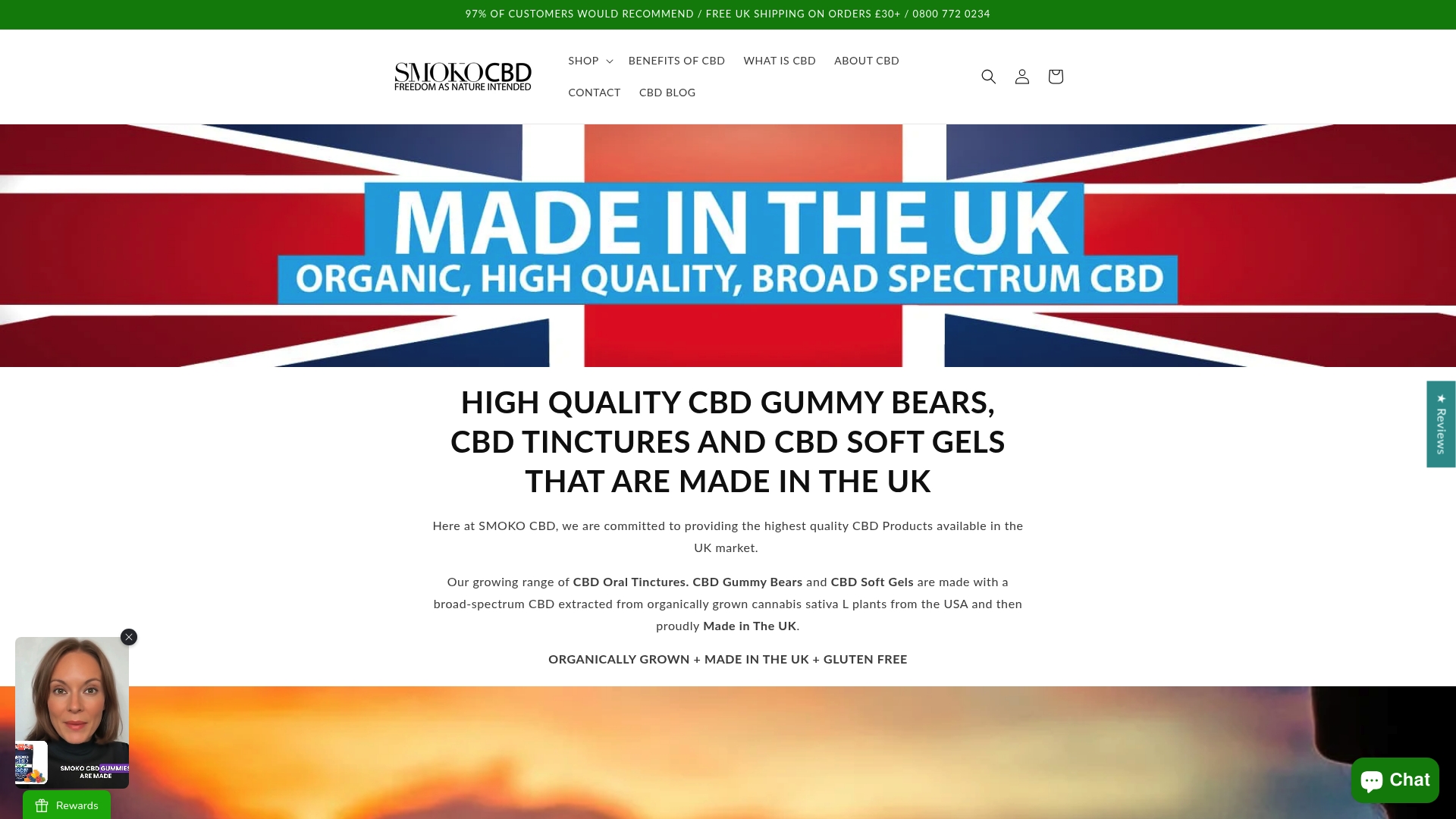
If you have spoken to your GP and want to start a structured consumer trial, product quality is the first practical decision. Smokocbd’s MINT 2000 mg Broad Spectrum CBD Tincture is UK-made, uses organically grown hemp, and is third-party tested with zero THC verified on every batch.
The COA for each batch is available directly on the product page. Check the batch number on your bottle matches the COA before use. This product is a food supplement, not a medicine, and is not a substitute for Epidyolex, Sativex, or any prescribed treatment. Use it as part of a structured 6–8 week trial, with your GP’s knowledge, and keep a daily pain diary so you have something concrete to review. View the full product details and COA on the Smokocbd tincture page.
This is general information, not medical advice. Confirm current rules and suitability with your GP or a qualified healthcare professional before starting.
Useful sources and further reading
- High-dose cannabidiol for chronic neuropathic pain associated with spinal cord injury: a randomised clinical trial
- Cannabidiol significantly reduces chronic pain for those with nerve damage, trial suggests — The University of Sydney
- Executive Summary — Living Systematic Review on Cannabis and Other Plant-Based Treatments for Chronic Pain: 2025 Update - NCBI Bookshelf
- What are the benefits and risks of cannabis-based medicines for adults with chronic neuropathic pain? | Cochrane
- Can CBD oil help manage pain? | Harvard Health
- Systematic review on CBD in pain treatment (PMC article)
- Critical analysis of CBD product variability and safety concerns (ScienceDirect article)