Most human studies show CBD is more likely to reduce or regulate appetite than to cause the classic THC “munchies”, though the evidence is genuinely mixed. A 2022 systematic review of 11 trials found appetite reduction or no change in the majority of cases, and the UK’s Food Standards Agency sets a provisional safe limit for healthy adults. Anyone on medication should check with a doctor before starting.
TL;DR:
- Most evidence indicates CBD is more likely to decrease appetite or have no effect, rather than stimulate hunger like THC does.
- Clinical trials using both CBD alone and in combination with THC generally show little to no significant increase in caloric intake or weight gain.
- CBD’s indirect interaction with the endocannabinoid system and different receptors likely explains its lack of appetite-stimulating effects compared to THC.
- Effects observed in small or short-term studies may not reflect long-term outcomes, and larger, standardized trials are needed to confirm appetite-related results.
- Consumers should stay within the UK Food Standards Agency’s provisional daily limit of 10 mg of CBD and consult healthcare professionals if on medication or experiencing health changes.
Table of Contents
- What the clinical evidence shows about CBD and appetite
- Why CBD behaves differently from THC when it comes to hunger
- The endocannabinoid system and how CBD might influence appetite
- Why clinical trial results on CBD and appetite remain mixed
- Safety, dosing and the regulatory limits that matter
- Drug interactions and who should speak to a doctor first
- Practical steps if you’re considering CBD for appetite changes
- Why we’re publishing an evidence-first look at CBD and appetite
- SMOKO CBD: for adults who decide to try lab-tested CBD
- Sources
- FAQ
What the clinical evidence shows about CBD and appetite
The clearest picture comes from a systematic review published in 2022, which pulled together 11 randomised human trials conducted up to 31 July 2022. The majority reported either a reduction in appetite or no measurable change, with only one trial recording increased appetite. The reviewers flagged risk-of-bias concerns across several of the included studies, which is an important caveat before treating the finding as settled.
A separate systematic review of cannabinoids for cachexia looked specifically at appetite and weight outcomes in people with wasting conditions. Across five randomised trials involving 934 people, the pooled effect on appetite favoured the control group over cannabinoids, though the difference was not statistically significant. The authors rated the overall evidence as low quality, and it is worth noting these trials mostly tested cannabis-based medicines containing THC alongside CBD, not CBD used alone.

More recent work has tried to isolate the question further. A 2025 triple-blind randomised crossover trial gave 17 older adults with poor appetite a cannabis spray containing 8.1 mg THC and 7.5 mg CBD per dose, separated by a two-week washout period. The result: no significant increase in caloric intake compared with placebo, with a mean difference of just 10 kcal. That trial tested a THC and CBD combination rather than CBD alone, but it is a useful data point precisely because it challenges the assumption that any cannabinoid exposure will automatically boost eating.
Taken together, the trial landscape looks like this:
- The largest systematic review to date links CBD more often to appetite reduction or no change than to stimulation.
- Cachexia trials using cannabis-based medicines found no significant appetite benefit and rated the evidence low quality.
- A 2025 crossover trial of combined THC and CBD found no meaningful calorie increase versus placebo in older adults.
- At least one small feeding study found increased energy intake after a single high dose, a result that has not been replicated at scale.
Why CBD behaves differently from THC when it comes to hunger
The “munchies” associated with cannabis are a THC phenomenon, not a CBD one. THC binds directly to CB1 receptors in the brain’s hypothalamus and reward circuits, an action reviews describe as orexigenic, meaning it tends to switch appetite on. CBD interacts with the endocannabinoid system far more indirectly, and several reviews describe its effects on appetite as weaker or, in some contexts, opposite to those of THC.
A 2025 review in Current Obesity Reports draws this distinction clearly, separating THC’s CB1-mediated stimulation from CBD’s apparent lack of a comparable orexigenic signal. The same review is careful to say the evidence is not strong enough yet to recommend CBD as a weight management tool, which is a fair summary of where the science currently sits.
In clinical practice, THC-containing medicines remain the recognised appetite stimulants, used in specific settings such as chemotherapy-related nausea. CBD has not earned that role, and nothing in the current evidence base supports marketing it as one. If anything, the data leans the other way, towards appetite regulation or mild suppression rather than stimulation.
The endocannabinoid system and how CBD might influence appetite
Appetite regulation runs through the endocannabinoid system, a signalling network built around two main receptor types: CB1 and CB2. CB1 receptors sit heavily in areas of the brain that govern feeding behaviour and reward, and when endocannabinoids such as anandamide activate them, hunger and food-seeking tend to ramp up. CB2 receptors play more of a role in immune and inflammatory processes, though the two systems overlap.
CBD does not activate CB1 in the way THC does. Instead, researchers propose several indirect mechanisms: CBD may act as a negative allosteric modulator at CB1, effectively tuning down its responsiveness rather than switching it off. It also shows affinity for serotonin 5-HT1A receptors, a pathway linked to mood and, potentially, appetite regulation. Some researchers point to CBD’s effects on inflammation and reward circuitry as additional routes through which appetite signals might be dampened.

These are plausible biological pathways rather than confirmed human mechanisms. Most of the supporting data comes from animal models or in vitro work, and reviewers are consistent in saying that targeted human research is still needed to confirm how, or how strongly, these pathways operate in real appetite regulation. Anyone reading mechanistic explanations of CBD should treat them as working hypotheses, not settled physiology.
Why clinical trial results on CBD and appetite remain mixed
Several recurring weaknesses explain why the evidence base has not produced a firm consensus.
- Sample sizes are frequently small, sometimes fewer than 20 participants, which limits statistical power to detect real effects.
- Trial populations vary widely, spanning children with epilepsy, adults with autism, older adults with poor appetite and cachexia patients, making it difficult to generalise findings across groups.
- Doses and formulations differ substantially, from pure CBD isolates to combined THC and CBD products, which means “CBD” in one trial is not the same exposure as “CBD” in another.
- Trial durations tend to be short, often a matter of days or weeks, which cannot capture longer-term appetite or weight trends.
- Appetite itself is measured inconsistently, sometimes as self-reported hunger, sometimes as caloric intake, sometimes as body weight change, making cross-study comparison difficult.
The 2022 systematic review explicitly flagged risk-of-bias concerns in several included trials, which weakens confidence in pooled conclusions even when the direction of effect looks consistent. A review noting risk of bias is not dismissing the data outright, but it is a signal to treat point estimates cautiously rather than as proven facts.
What would change this picture is straightforward in principle, if harder in practice: larger, longer randomised trials using standardised pure-CBD dosing, consistent appetite and energy-intake endpoints, and populations grouped by relevant characteristics such as age and baseline health status. Until that research exists, “mixed but leaning towards appetite reduction” remains the honest summary.
Safety, dosing and the regulatory limits that matter
Prescription cannabidiol offers a useful contrast to retail products. The product information for Epidyolex, a licensed cannabidiol medicine used in epilepsy, lists decreased appetite and decreased weight as documented adverse effects at therapeutic doses. Those are high prescription doses, calculated by body weight, and they do not translate directly to the amounts found in retail CBD products.
For everyday consumers, the relevant figure comes from the Food Standards Agency’s safety assessment, which sets a provisional acceptable daily intake of 10 mg per day for healthy adults. This is a precautionary safety threshold, not a dose calculated to influence appetite, and it applies specifically to healthy adults rather than vulnerable groups. The FSA advises that pregnant or breastfeeding people, children, and anyone taking medication should avoid CBD or seek medical advice first. Edible CBD products are also classed as novel foods in the UK, meaning they sit under authorisation and labelling requirements rather than being treated as unregulated supplements.
A few practical points follow from this:
- Product labels should state CBD content per serving clearly, allowing you to calculate your daily total.
- A genuine third-party certificate of analysis confirms both CBD content and the absence of unlisted THC.
- If you use more than one CBD product, whether an oil, a gummy or a capsule, the totals add up, and it is easy to exceed the provisional ADI without realising it.
Our dosage guide covers this cumulative intake issue in more detail, and our age limit guide sets out the FSA’s advice for groups who should exercise extra caution.
Drug interactions and who should speak to a doctor first
NICE guidance advises clinicians to discuss both benefits and harms with patients considering cannabidiol, with particular attention to interactions. CBD can increase sedation when combined with other central nervous system depressants, and it interacts with antiepileptic medicines such as valproate, where the combination raises the risk of elevated liver enzymes. These are exactly the kind of interactions a pharmacist should be involved in checking before you start.
A short checklist covers most situations:
- If you take prescription medicines of any kind, ask a clinician or pharmacist before adding CBD, particularly antiepileptics, blood thinners or hormonal contraceptives.
- If you are pregnant or breastfeeding, avoid CBD altogether, in line with FSA advice.
- If you are experiencing unexplained weight loss, get that assessed by a doctor rather than attributing it to CBD or treating it with CBD.
- If you notice signs of liver trouble, such as yellowing skin or eyes, dark urine or persistent nausea, stop taking CBD and seek medical care promptly.
Keeping a simple log of medicines, doses and any symptoms makes these conversations far more useful for the clinician reviewing your case. Our guide on checking interaction risk walks through this in more detail for people on common medications.
Practical steps if you’re considering CBD for appetite changes
Start by ruling out medical causes of any appetite change, since CBD is not a treatment for underlying conditions. Review your current medicines with a pharmacist, choose products with genuine third-party lab testing, and begin with a low dose while tracking your food intake and weight over several weeks. Stay within the FSA’s provisional ADI of 10 mg per day unless a clinician has advised otherwise.
- Log meals and hunger levels daily for a fair comparison before and after starting CBD.
- Weigh yourself at consistent times, weekly rather than daily, to smooth out normal fluctuation.
- Set a review date with your GP or pharmacist, particularly if you take other medication.
Pro Tip: Always ask for the specific certificate of analysis for the batch you’re buying, not a generic one, so you can confirm both CBD content and confirmed absence of THC.
Why we’re publishing an evidence-first look at CBD and appetite
I put this together by working through the systematic reviews and trial data rather than starting from a conclusion. SMOKO CBD sells lab-tested broad-spectrum products, and that commercial interest is exactly why we think the evidence deserves a straight account rather than a sales pitch. Nothing here treats CBD as a proven appetite treatment, because the research does not support that claim yet.
— Mike
SMOKO CBD: for adults who decide to try lab-tested CBD
If you’ve spoken with a clinician and decided CBD is worth trying, the products you choose matter as much as the decision itself. Broad-spectrum tinctures, gummies and soft gels are available, with third-party lab testing and labelling of CBD content per serving.
- Products come with certificates of analysis confirming CBD content and the absence of THC.
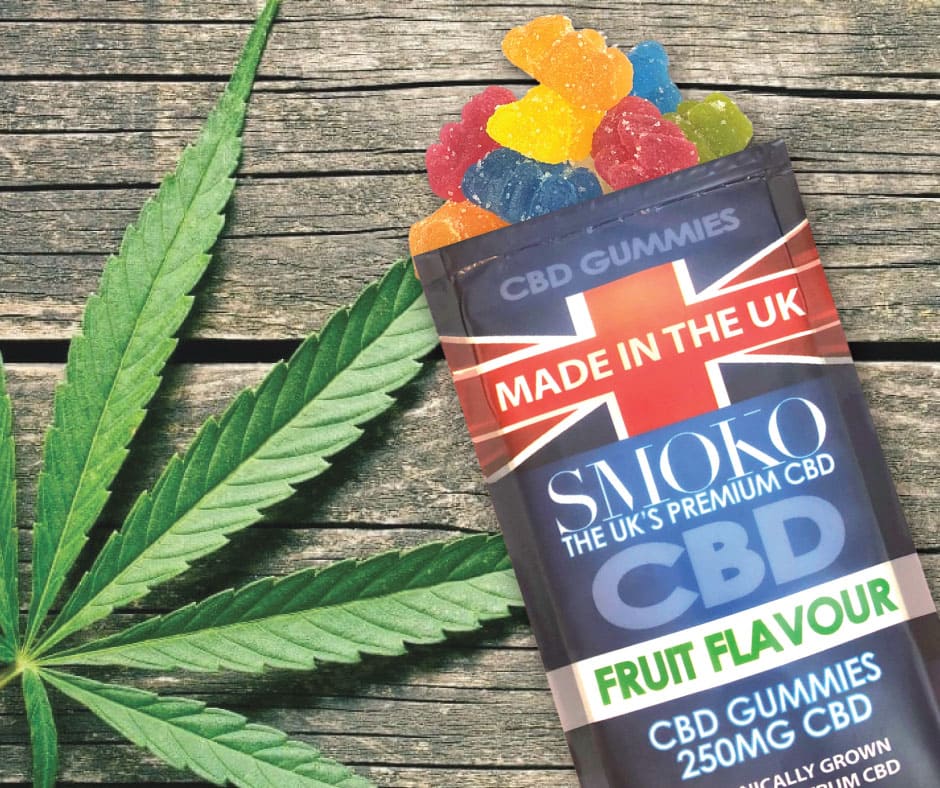
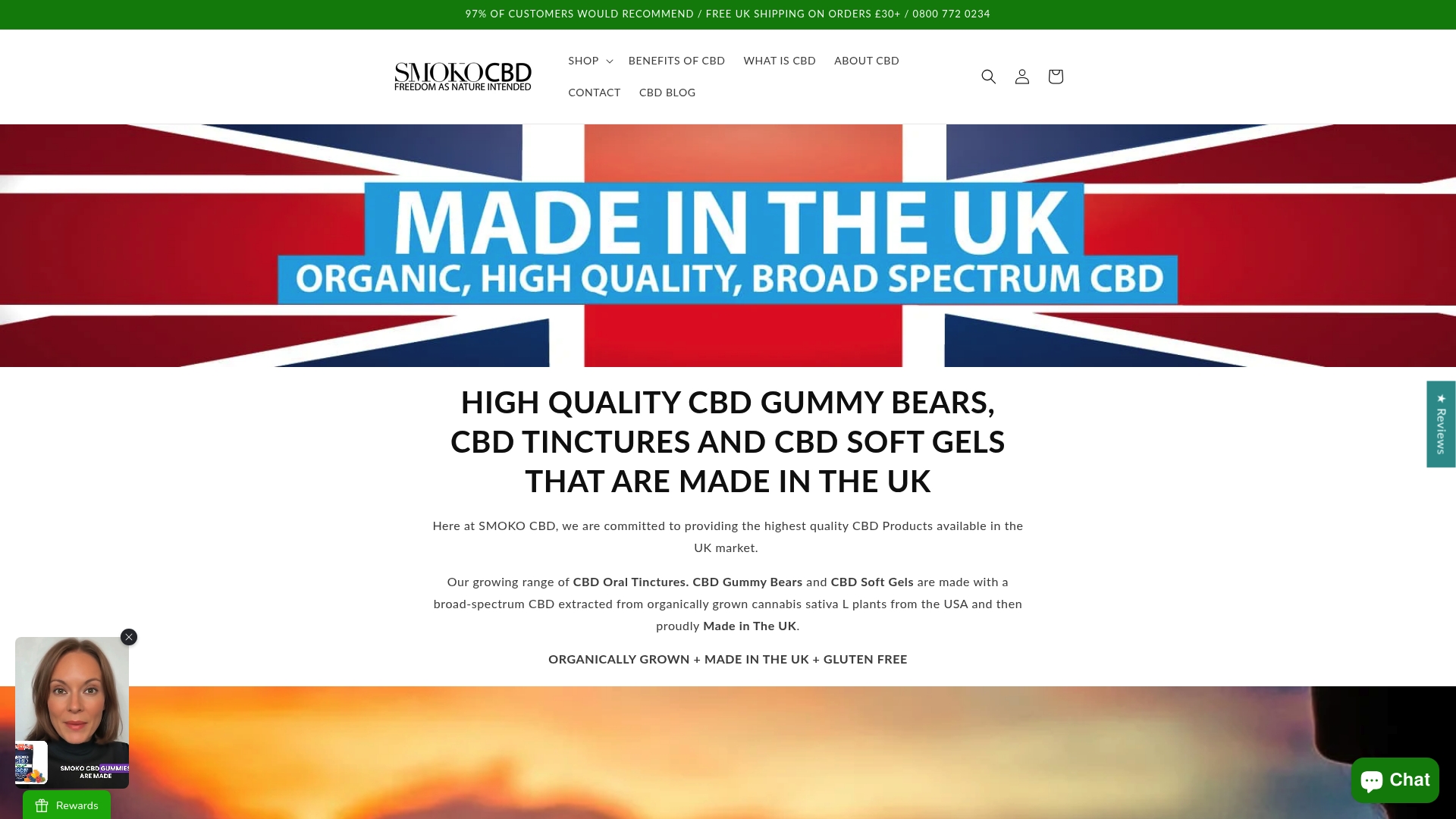
- Our tinctures, gummies and soft gels are made in the UK from organically grown, USA-sourced hemp.
- The CBD gummy bears list exact CBD content per gummy, making it straightforward to track your daily total against the FSA’s provisional limit.
Run through the safety checklist above before you buy, especially if you take regular medication or have noticed unexplained appetite or weight changes. Browse the full CBD collection when you’re ready to choose a product that fits your routine.
This article is general information, not a substitute for advice from a qualified doctor. Consult a qualified healthcare professional about your own circumstances before acting on anything here.
Sources
- Effects of Cannabidiol on Appetite and Body Weight: A Systematic Review
- Randomized trial: THC and CBD spray in older adults with poor appetite (2025)
- Systematic review of cannabinoids for cachexia (appetite/weight outcomes)
- Epidyolex (cannabidiol) summary of product characteristics
- FSA safety assessment of cannabidiol (CBD) as a novel food (RP521)
- NICE guidance: recommendations for clinicians on cannabis-based products
FAQ
Can CBD help with appetite?
Some clinical trials suggest CBD may reduce appetite slightly or leave it unchanged, based on a 2022 systematic review of 11 human trials. It is not established as a treatment for appetite loss or gain, and results vary between studies and populations.
Does CBD make people hungry?
Generally, no. The strongest human evidence points towards appetite reduction or no change rather than stimulation, which contrasts with THC’s well-documented hunger-boosting effect through CB1 receptor activation.
What is the most powerful appetite stimulant?
In clinical settings, THC-containing cannabis-based medicines are the recognised appetite stimulants, working through direct CB1 receptor activation. CBD does not share this mechanism and is not used clinically for that purpose.
What is the downside of taking CBD?
At high prescription doses, Epidyolex’s product information lists decreased appetite and weight loss as documented adverse effects, alongside potential drug interactions flagged in NICE guidance. Retail CBD carries lower exposure but still needs medical review if you take other medicines, are pregnant or breastfeeding, or notice unexplained symptoms.