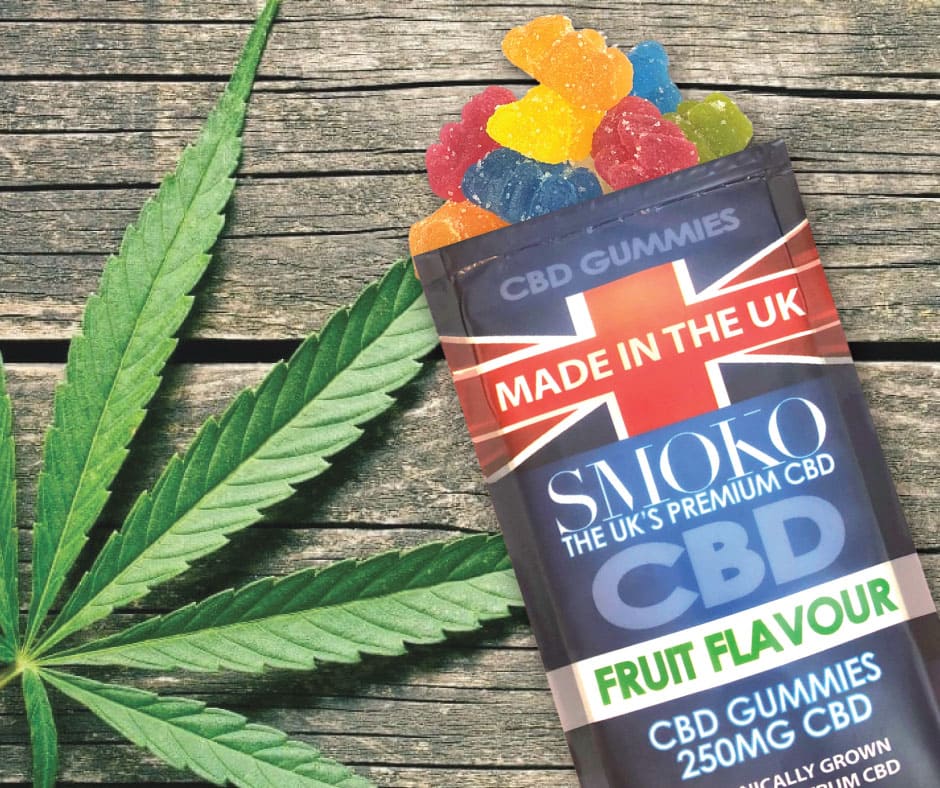
Yes, you can take CBD and melatonin together, but the evidence doesn’t show the combination beats either one alone for most people. Melatonin is the better tool when your problem is circadian timing (jet lag, a shifted body clock, trouble falling asleep at a normal hour). CBD tends to help more when anxiety or pain is what’s keeping you wired at night. A large 2023 randomised trial found both worked about equally well on their own, and combining them didn’t clearly outperform either single agent.
Three things to do before you try either:
- Start with one agent first. Trial melatonin or CBD alone for a week or two before combining them, so you know what’s actually working.
- Check your medications. CBD can interfere with how your body clears other drugs, including melatonin itself, so flag this with a pharmacist or GP if you take anything else regularly.
- Start low and watch for grogginess. Begin at the bottom of the dose range and note how you feel the next morning before adjusting anything.
Key Takeaways
Melatonin works best for circadian timing issues, CBD works best when anxiety or pain disrupts sleep, and combining them is not proven to outperform either agent alone.
| Point | Details |
|---|---|
| Match the agent to the problem | Use melatonin for circadian shifting and CBD when anxiety or pain is the main sleep disruptor. |
| Combination isn’t proven superior | The 2023 trial of 1,793 participants found no clear advantage of combined use over single agents. |
| Watch the interaction risk | CBD can inhibit melatonin clearance, with modelling suggesting exposure could rise sharply in worst-case scenarios. |
| Check the COA before buying | Confirm batch-specific lab testing, accurate CBD content, and zero THC before trusting any product’s dose. |
| Choose a measurable format | Smokocbd’s lab-tested tincture allows precise, incremental dosing suited to cautious titration. |
This article is general information, not a substitute for advice from a qualified doctor. Consult a qualified healthcare professional about your own circumstances before acting on anything here.
Table of Contents
- What melatonin and CBD actually do to your sleep
- Melatonin’s evidence base: what actually works and when
- CBD and sleep: who actually benefits
- What the 2023 combination trial actually found
- Why CBD can change how much melatonin actually reaches your system
- A conservative plan for testing melatonin, CBD, or both
- What to check on a CBD label before you buy
- Signs you need a clinician, not another supplement
- Sources
What melatonin and CBD actually do to your sleep
Melatonin is a hormone your brain produces naturally, released by the pineal gland as darkness falls. It binds to MT1 and MT2 receptors in the brain’s suprachiasmatic nucleus, the structure that runs your circadian clock. Taking it as a supplement essentially sends your body an early signal that night has arrived, which is why timing matters more than dose for most uses.
CBD works completely differently; learn more about cannabis and sleep at Does cannabis affect sleep quality?. It’s a phytocannabinoid that interacts with your endocannabinoid system, influencing anxiety and pain pathways rather than acting as a direct sedative. If you sleep badly because your mind won’t switch off or because pain flares up at night, CBD addresses the cause rather than forcing drowsiness the way a sleeping tablet might.
Format changes how fast either substance kicks in:
- Sublingual oils absorb through the tissue under the tongue, working within 15 to 45 minutes.
- Capsules and soft gels pass through digestion first, taking longer to act but delivering a steadier, more predictable dose.
- Gummies sit between the two, with absorption slowed by digestion but flavour and dosing consistency that many people find easier to stick with.
Melatonin’s evidence base: what actually works and when
Melatonin’s strongest evidence sits with circadian problems, not general insomnia. Reviews of melatonin trials consistently show reduced sleep onset latency and real benefit for jet lag and delayed sleep-wake phase disorder, where your internal clock runs later than the schedule you need to keep.
Statistic Callout: Clinical trials reviewed in the melatonin literature commonly use doses between 0.3 mg and 5 mg, with several finding the lower end just as effective as higher doses for sleep onset. More isn’t automatically better here.
Timing splits into two distinct uses:
- Shifting your body clock (jet lag, shift work, delayed sleep phase): take melatonin 1 to 3 hours before your target sleep time, not right at bedtime.
- Helping sleep come on at a normal hour: 30 to 90 minutes before lights out tends to work better.
Where melatonin falls short is chronic behavioural insomnia, the kind that isn’t tied to a circadian mismatch but to learned patterns of poor sleep. Clinical guidance on insomnia management points to cognitive behavioural therapy for insomnia (CBT-I) as the first-line treatment for that group, with melatonin playing a supporting role at best. If your sleep problem has lasted months rather than days, a supplement alone probably isn’t the fix.
CBD and sleep: who actually benefits
CBD’s sleep research looks different from melatonin’s, and it’s worth understanding why. Reviews of cannabidiol and sleep outcomes report modest improvements in sleep disturbance, concentrated in people whose sleep problems stem from anxiety or pain rather than a circadian issue. CBD isn’t sedating in the way melatonin or a sleeping pill is; it works upstream, calming the racing thoughts or physical discomfort that stop sleep from starting.
Smaller studies back this pattern up in specific groups. Research on people with PTSD, chronic pain, and multiple sclerosis-related sleep disturbance has found sleep improvements alongside reductions in anxiety and pain, though sample sizes stay small and results vary between studies.
Why the evidence looks messier than melatonin’s comes down to three things:
- Product heterogeneity. Studies use wildly different formulations, extraction methods, and carrier oils.
- Study population differences. Some trials recruit people with anxiety disorders, others chronic pain patients, others general poor sleepers. Naturally.
- Inconsistent endpoints. “Improved sleep” gets measured by different scales across different trials, so results are hard to average.
There’s also a biphasic pattern worth knowing: some research suggests higher doses of CBD can actually feel more stimulating for some people, while lower to moderate doses tend to feel calming. This is one reason to treat CBD as something you titrate carefully rather than a dose you copy from a friend.
Pro Tip: Keep a simple three-line sleep note each night: time you took CBD, time you fell asleep, and how alert you felt the next morning. Two weeks of this tells you more about your personal dose than any general guideline can.
What the 2023 combination trial actually found
The most useful piece of evidence for anyone weighing up CBD with melatonin together is a large, well-designed randomised multi-arm trial from 2023. It enrolled 1,793 participants across multiple treatment arms, comparing 15 mg CBD, 5 mg melatonin, and various combinations of the two, tracked over four weeks.
Statistic Callout: A substantial portion of participants across the trial’s arms reported clinically meaningful improvement in sleep disturbance, with a minority reporting mild, non-severe side effects. Critically, there was no statistically significant difference between the CBD-only arm and the 5 mg melatonin arm.
That last point matters more than it might first appear. If you’d assumed melatonin was the “real” sleep aid and CBD was the gentler alternative, the trial data doesn’t support treating one as clearly stronger than the other on average.
The combination arms tell a more nuanced story:
- Combined CBD and melatonin arms did show improvement over baseline, in line with the single-agent arms.
- Some secondary measures of restfulness edged higher in certain combination groups, though not enough to establish clear superiority across the trial as a whole.
- Overall, the trial’s safety profile across all arms looked reassuring at these doses over the four-week window.
The honest takeaway is that combining CBD and melatonin together isn’t proven to outperform either one alone at a population level, even though individual results clearly varied. That leaves room for a pragmatic approach: if you have both a circadian issue and an anxiety-driven sleep problem, using both purposefully, briefly, and at modest doses is reasonable. Using them together indefinitely on the assumption that two agents must beat one isn’t backed by this data.
Why CBD can change how much melatonin actually reaches your system
This is the safety detail most sleep guides skip entirely, and it’s the one that matters most if you’re taking prescription medication alongside either supplement. CBD affects liver enzymes, specifically CYP1A2, and transporter proteins like PEPT1, both involved in how your body processes and clears melatonin.
Statistic Callout: Pharmacokinetic modelling published in 2024 projects that, in worst-case scenarios, CBD’s inhibition of these pathways could substantially increase melatonin exposure in the body, according to pharmacokinetic modelling projections. That’s a laboratory model rather than a measured real-world outcome in every user, but it’s a strong enough signal to warrant caution rather than dismissal.
What that means practically: if you take your usual melatonin dose alongside CBD, your body might be processing far more melatonin than the label suggests, which raises the risk of next-day grogginess, deeper sedation than intended, and altered clearance times.
People at higher risk from this interaction include:
- Anyone with liver disease or reduced liver function, since that’s where both substances are largely metabolised.
- Anyone taking anticoagulants, anticonvulsants, or certain antidepressants, drugs that are also processed through CYP pathways.
- Older adults, who often clear both compounds more slowly to begin with.
Three sensible safety steps follow from this. First, speak to a pharmacist or GP before combining the two if you take any regular prescription medicine. Second, if you’re on CYP-metabolised drugs, ask specifically about melatonin dose adjustment rather than assuming the standard dose still applies. Third, start low and stagger the introduction of each substance rather than beginning both on the same night, so any adverse effect is easier to trace back to its cause.
A conservative plan for testing melatonin, CBD, or both
- Pick one agent and set a baseline. Track your sleep for a week before changing anything, using a simple diary of bedtime, wake time, and how rested you feel.
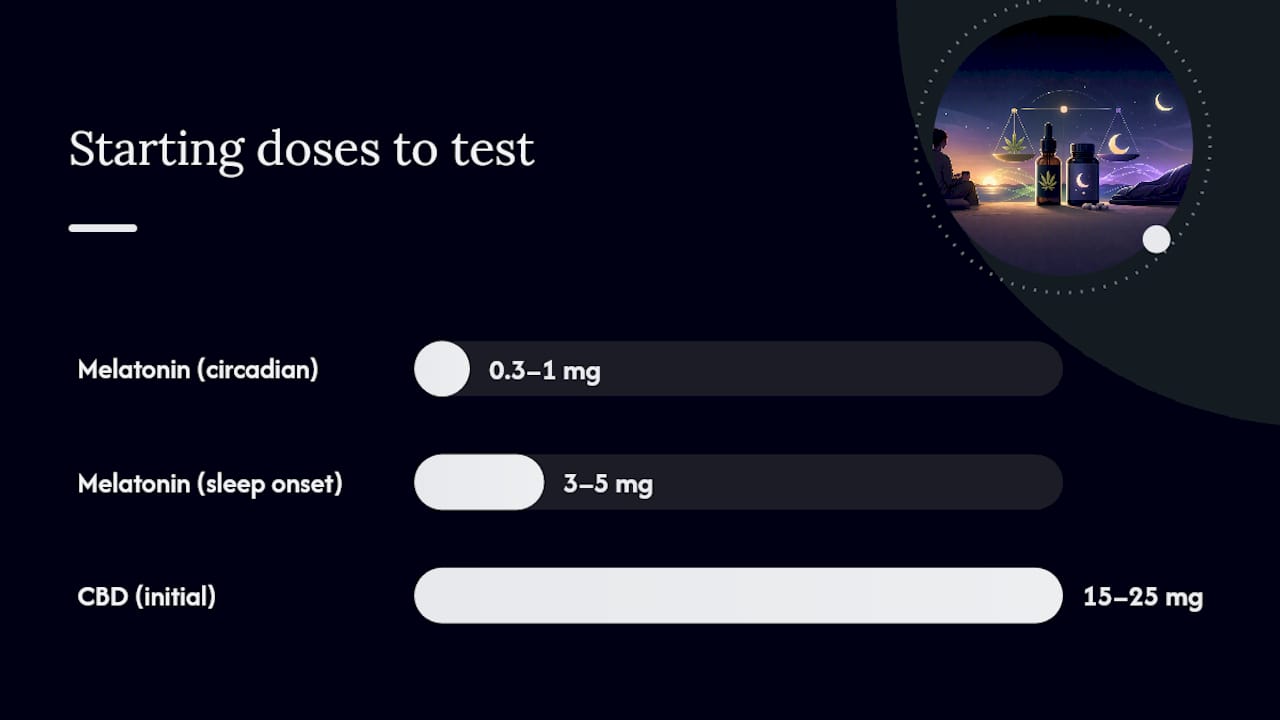
- Start low. For circadian shifting, try 0.3 to 1 mg of melatonin; for general sleep onset, up to 3 to 5 mg short-term is a reasonable ceiling. For CBD, begin around 15 to 25 mg.
- Time it deliberately. Take melatonin 1 to 3 hours before your target sleep time if you’re shifting your clock, or 30 to 90 minutes before bed if you’re just supporting sleep onset. CBD timing is more flexible, typically 30 to 60 minutes before bed.
- Reassess after 1 to 3 weeks. Look at your sleep diary and decide whether to adjust dose, switch agents, or, if there’s a clear reason, cautiously trial the two together at low doses.
Watch for daytime drowsiness throughout, skip alcohol on nights you’re testing a new dose, and avoid changing both variables (dose and timing) in the same week, or you won’t know which change caused the result.
Pro Tip: Choose consistent-dose formats, like soft gels or a tincture with a clear milligram-per-millilitre measurement, when you’re titrating. Loose gummy dosing or unlabelled oils make it far harder to know exactly what you took last night.
What to check on a CBD label before you buy
Product quality is where most of the real-world risk in this whole topic actually lives. Studies auditing CBD products have repeatedly found mismatches between labelled and actual CBD content, plus occasional contamination with solvents, heavy metals, or pesticides. If the dose on the bottle isn’t the dose in the bottle, every safety calculation above becomes guesswork.
A proper certificate of analysis (COA) should show:
- A batch ID that matches the one printed on your specific product, not a generic reference.
- Measured CBD content per dose, confirmed independently rather than just stated by the manufacturer.
- Confirmed absence of THC, or a level compliant with UK limits.
- Screening results for contaminants, including heavy metals, residual solvents, and pesticides.
This matters even more once melatonin enters the picture. If your CBD product actually delivers more than its labelled dose, thanks to the same pharmacokinetic effect discussed above, you could unknowingly be pushing far more melatonin exposure than you intended.
Smokocbd publishes third-party lab testing results for its broad-spectrum tinctures, gummies, and soft gel capsules, verifying zero THC and confirming potency against the label. That’s the standard worth expecting from any product you’re using to titrate a dose carefully, whether or not you buy from Smokocbd specifically.
Smokocbd’s educational content on CBD and sleep and its guide to CBD product formats walk through exactly this kind of label literacy for anyone shopping for the first time.
Signs you need a clinician, not another supplement
Some sleep problems need medical attention rather than a dosing tweak. See a GP or ask about a sleep clinic referral if you notice loud snoring with breathing pauses (possible sleep apnoea), if poor sleep is wrecking your ability to function during the day, or if you’re already on medication and unsure how it interacts with either supplement.
For chronic insomnia specifically, CBT-I outperforms supplement-based approaches as a first-line treatment; melatonin and CBD work best as short-term or adjunctive tools, not standalone fixes for long-standing sleep disorders.
Before any appointment, bring your medication list, your product’s COA, and your sleep diary. It saves time and gives your clinician the actual data, not a rough recollection.
A note on caution and what actually lasts
My honest read of this evidence is cautious optimism rather than enthusiasm. Melatonin and CBD both have real, if modest, support behind them, but the 2023 trial data doesn’t let anyone claim the combination is clearly better. Where I’d focus energy: product quality first, dose discipline second, and remembering that behavioural sleep habits often outlast whatever’s in the bottle.
A tincture built for careful, measured dosing
If you’re planning to titrate carefully rather than guess, the format you choose matters as much as the substance itself. Smokocbd’s Mint 2000mg Broad Spectrum CBD MCT Oil is measured by the millilitre, so you can adjust in small, trackable increments rather than relying on a fixed gummy dose you can’t split evenly. Every batch carries third-party lab testing confirming potency and zero THC, which matters if you’re also taking melatonin and want confidence that your actual CBD dose matches the label.
As with everything in this guide, speak to a pharmacist or GP first if you’re on prescribed medication or considering combining CBD with melatonin. Once you’ve had that conversation, the tincture format gives you the control to start low, hold steady, and adjust gradually, exactly the approach the evidence supports.
Sources
- Randomized controlled trial comparing CBD and melatonin formulations (2023)
- Review on melatonin and circadian regulation
- Review of cannabidiol and sleep-related outcomes
- Unraveling cannabidiol’s bidirectional regulation of melatonin pharmacokinetics (MDPI)
- Product quality and labelling variability in cannabidiol products