Full-spectrum CBD retains multiple cannabinoids and can contain trace amounts of THC, while THC-free products, usually broad-spectrum or isolate, are processed so THC is non-detectable. If you face drug testing or want to avoid THC entirely, THC-free is the safer route; if you want the whole-plant profile and accept trace THC, full-spectrum may suit you better.
TL;DR:
- Drug tests detect THC metabolites, not CBD, so regular use of full spectrum products at high doses raises the risk of a positive result.
- For drug testing, isolate or rigorously tested broad spectrum is safer; isolate offers single compound dosing, while broad spectrum retains other cannabinoids and terpenes.
- Check a current certificate of analysis that matches the batch and comes from an accredited lab; its THC results and detection limits show what non-detectable means.
- The FSA advises healthy adults to limit CBD to 10 mg daily because long term safety remains uncertain, including possible liver and thyroid effects.
- Evidence for the entourage effect remains limited to specific clinical contexts, so full spectrum’s broader mix does not guarantee better everyday results than isolate.
Table of Contents
- Definitions: full-spectrum, broad-spectrum and isolate explained
- Practical differences: THC amounts, dose maths and lab quality
- Safety, legality and drug-test risk in practice
- Quick decision guide: which to choose based on your priorities
- SMOKO CBD view: how we make THC-free broad-spectrum products and read a COA
- Potential benefits comparison between THC-free and full-spectrum CBD
- Common consumer misconceptions about THC-free vs full-spectrum CBD
- Author perspective: practical trade-offs
- SMOKO CBD products: where to find THC-free broad-spectrum tinctures, gummies and soft gels
- FAQ
- Sources
Definitions: full-spectrum, broad-spectrum and isolate explained
Reading a CBD label correctly starts with knowing exactly what these three terms mean, because they describe different extraction outcomes rather than different plants.
Full-spectrum extracts keep the complete range of compounds naturally found in hemp, including cannabinoids, terpenes, flavonoids and trace THC. This is why full-spectrum products can legally contain THC at low levels, generally up to a federally legal maximum percentage on a dry weight basis, as Medical News Today explains. That trace amount is what gives full-spectrum its reputation for a broader effect profile, though it also means these products are unsuitable for anyone who must avoid THC completely.
Broad-spectrum starts the same way but goes through an extra processing step that removes THC, aiming for a non-detectable result while keeping other cannabinoids and terpenes intact. The caveat is that “THC-free” claims depend on the testing lab’s detection limits, so a broad-spectrum product can still carry trace, non-detectable THC depending on the equipment used, a point Medical News Today flags clearly for shoppers.
Isolate goes further still, isolating pure CBD and stripping away every other compound, including terpenes and other cannabinoids.
- Full-spectrum: whole-plant compounds plus trace THC.
- Broad-spectrum: whole-plant compounds minus THC, down to non-detectable levels.
- Isolate: pure CBD with nothing else.
Practical differences: THC amounts, dose maths and lab quality
Numbers on a label only mean something once you convert them into what you are actually consuming. Full-spectrum oils commonly sit at or below the 0.3% THC threshold, but concentration and serving size both affect how much THC reaches you per dose, and repeated high doses can accumulate over a day or week.
Here is a simple way to work out your THC exposure:
- Check the product’s total CBD content per millilitre or per serving, stated on the label.
- Find the Δ9-THC result on the certificate of analysis (COA), usually given in mg/kg or percentage.
- Multiply your serving size by that THC concentration to estimate milligrams of THC per dose.
- Compare that figure against the lab’s limit of detection (LOD) and limit of quantification (LOQ) to see whether “non-detectable” genuinely means zero within that lab’s capability, as the Food Standards Agency’s novel food safety assessment sets out.
Quality control is not a formality. Independent testing has repeatedly flagged mislabelling and unexpected THC content in online CBD products, which is exactly why a credible, ISO 17025 accredited lab result matters more than marketing copy on the bottle.
Pro Tip: When you check a COA, look for the batch number matching your product, the Δ9-THC result against the LOD/LOQ, and a visible lab accreditation number before trusting the “THC-free” claim.
Safety, legality and drug-test risk in practice
UK drug tests screen for THC metabolites, not CBD itself, which is the detail that makes this choice practical rather than theoretical. The Food Standards Agency confirms that standard workplace and roadside tests look for THC, meaning regular use of high-dose full-spectrum products carries more risk of a positive result than broad-spectrum or isolate options.
The FSA advises healthy adults to limit total CBD intake to no more than 10 mg per day, a provisional guideline based on remaining uncertainty about long-term safety, including possible effects on the liver and thyroid, as outlined in the FSA’s food fact check.
In practice, risk runs on a hierarchy: full-spectrum carries the highest THC exposure risk, broad-spectrum sits in the middle depending on how rigorously it was tested, and isolate carries the lowest risk because it contains no other cannabinoids by design.
- Choose products with a COA confirming non-detectable Δ9-THC from an accredited lab.
- Track your total daily CBD intake against the 10 mg guidance rather than guessing.
- Pause CBD use in the weeks before any drug test you cannot afford to fail.
- Prefer isolate when absolute certainty matters more than a broader cannabinoid profile.
For a deeper look at pre-test timing, our guide on avoiding a positive zero-THC drug test walks through practical steps, and our overview of UK CBD regulation covers what to check before buying.
Quick decision guide: which to choose based on your priorities
Your decision usually comes down to a handful of practical questions: do you face drug testing, how sensitive are you to THC, do you want the entourage effect, how precisely do you need to control your dose, and what is your budget.
A few common scenarios make this concrete. If you must pass a drug test, isolate or a rigorously tested broad-spectrum product is the safer choice. If you want whole-plant support and accept trace THC, full-spectrum fits that priority. If you need tightly controlled, predictable dosing, isolate’s simplicity makes the maths easier.
Before buying anything, run through this checklist:
- Confirm the product has a current COA from an accredited lab.
- Check the lab’s accreditation and its stated LOD/LOQ for THC.
- Verify the milligram serving size matches what the label claims.
- Look up the product on the FSA’s public CBD register where a novel food application applies.
SMOKO CBD view: how we make THC-free broad-spectrum products and read a COA
We make our broad-spectrum products from organically grown, USA-sourced hemp, then verify zero THC through independent third-party lab testing before anything reaches a shelf. A proper COA should show the batch number, the Δ9-THC result against the lab’s detection limit, and the lab’s accreditation details, not just a pass or fail stamp. We cover this in more depth in our guide to broad-spectrum versus full-spectrum CBD and in our explainer on CBD versus THC.
Potential benefits comparison between THC-free and full-spectrum CBD
Both formats are taken for similar wellness goals, including everyday relaxation, sleep support and general comfort, but the evidence for any added benefit from full-spectrum’s extra compounds is still limited. Some clinical research into CBD-rich extracts suggests they can behave differently from purified CBD in certain populations, which is the basis for the so-called entourage effect, a theory that the other compounds in hemp work better together than CBD alone, according to a meta-analysis published in Frontiers in Neurology. That evidence is promising in specific clinical contexts rather than proven for general wellness use, so it is worth treating as a plausible theory rather than a guarantee.
THC-free broad-spectrum products are designed to retain most of that compound diversity, terpenes and non-THC cannabinoids included, without the THC that makes full-spectrum unsuitable for some people. For many everyday users, the practical difference between the two formats is less about which works better and more about which fits their personal risk tolerance and lifestyle. Isolate, by contrast, offers the most predictable, single-compound dose, useful when consistency matters more than variety.

Common consumer misconceptions about THC-free vs full-spectrum CBD
One frequent misunderstanding is that “THC-free” always means zero THC molecules exist in the product. In reality, it usually means THC was not detected at the testing lab’s specific sensitivity level, which is why checking the LOD and LOQ on a COA matters more than trusting the label alone, a distinction Medical News Today makes explicitly.
Another common assumption is that full-spectrum automatically works better because it contains more compounds. The entourage effect has some support in specific clinical contexts, but it is not a settled fact for general wellness use, so “more compounds” does not automatically mean “better results” for every person.
Some shoppers also assume that any trace THC is too small to matter. Researchers at the University of Sydney note that product names and marketing claims should never substitute for a proper COA, because accumulation across multiple daily doses can add up, and because drug tests respond to THC metabolites rather than a single serving in isolation.
Author perspective: practical trade-offs
When safety matters more than theory, I lean towards THC-free options, especially for anyone drug-tested or on medication, since the entourage effect remains an interesting but unsettled hypothesis. Always check a current COA, and speak to a clinician before combining CBD with existing prescriptions.
— Mike
SMOKO CBD products: where to find THC-free broad-spectrum tinctures, gummies and soft gels
We offer broad-spectrum CBD tinctures, gummy bears and soft gels, each formulated to give you a measured dose without the THC risk that comes with full-spectrum extracts. Every batch carries a certificate of analysis you can check before buying, so you can confirm non-detectable THC and stay within the FSA’s 10 mg daily guidance comfortably — please see the pricing page for current details.
- Browse our full CBD product collection for tinctures, gummies and soft gels.
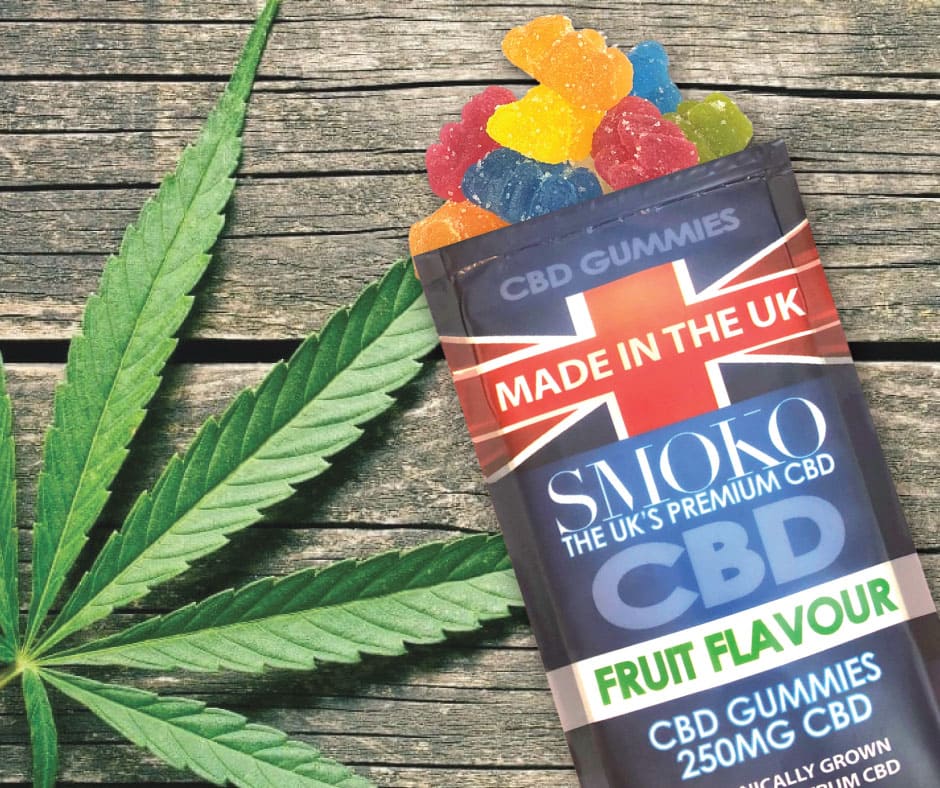
- Try our 250mg broad-spectrum CBD gummy bears for a pre-measured, easy-to-track format.
This article is general information, not a substitute for advice from a qualified doctor. Consult a qualified healthcare professional about your own circumstances before acting on anything here.
FAQ
Is there THC in full-spectrum CBD oil?
Yes, full-spectrum CBD oil typically contains trace THC, commonly cited at up to 0.3% on a dry weight basis, alongside other cannabinoids and terpenes, according to Medical News Today. This is the key difference from broad-spectrum or isolate products, which are processed to remove THC to non-detectable levels.
What is the best CBD for aches and pains?
There is no single best option, since both full-spectrum and broad-spectrum CBD are used for general comfort and relaxation, and the evidence for any added benefit from full-spectrum’s extra compounds remains limited to specific clinical contexts rather than proven for everyday use. Choosing a product backed by a clear certificate of analysis matters more than the spectrum type alone.
Is CBD hard on the liver or kidneys?
The Food Standards Agency advises healthy adults to limit total CBD intake to no more than 10 mg per day as a precaution, partly due to remaining uncertainty about long-term effects on the liver and thyroid, as stated in its food fact check. Anyone on medication or with existing liver or kidney conditions should speak to a clinician before starting CBD.
What is CBD isolate?
CBD isolate is pure CBD with every other hemp compound removed, including terpenes, flavonoids and other cannabinoids, leaving a single-compound product. It is often chosen by people who need the most predictable dosing or who must avoid any trace of THC for drug-testing reasons.
Sources
- Food Fact Check: CBD safety and health claims – Food Standards Agency
- Full‑spectrum vs broad‑spectrum CBD: Differences, products, and more | Medical News Today
- Safety assessment of cannabidiol (CBD) as a novel food | Food Standards Agency science
- Meta‑analysis comparing CBD‑rich extracts with purified CBD | Frontiers in Neurology