A circadian rhythm sleep disorder is what happens when your body’s internal master clock falls out of sync with the world around you. It’s a fundamental mismatch. This isn't about being unable to sleep; it's about your body being biologically programmed to feel sleepy and awake at times that just don't fit with a typical day. The real issue here is timing, not the ability to sleep itself.
What Happens When Your Internal Clock Is Mismatched
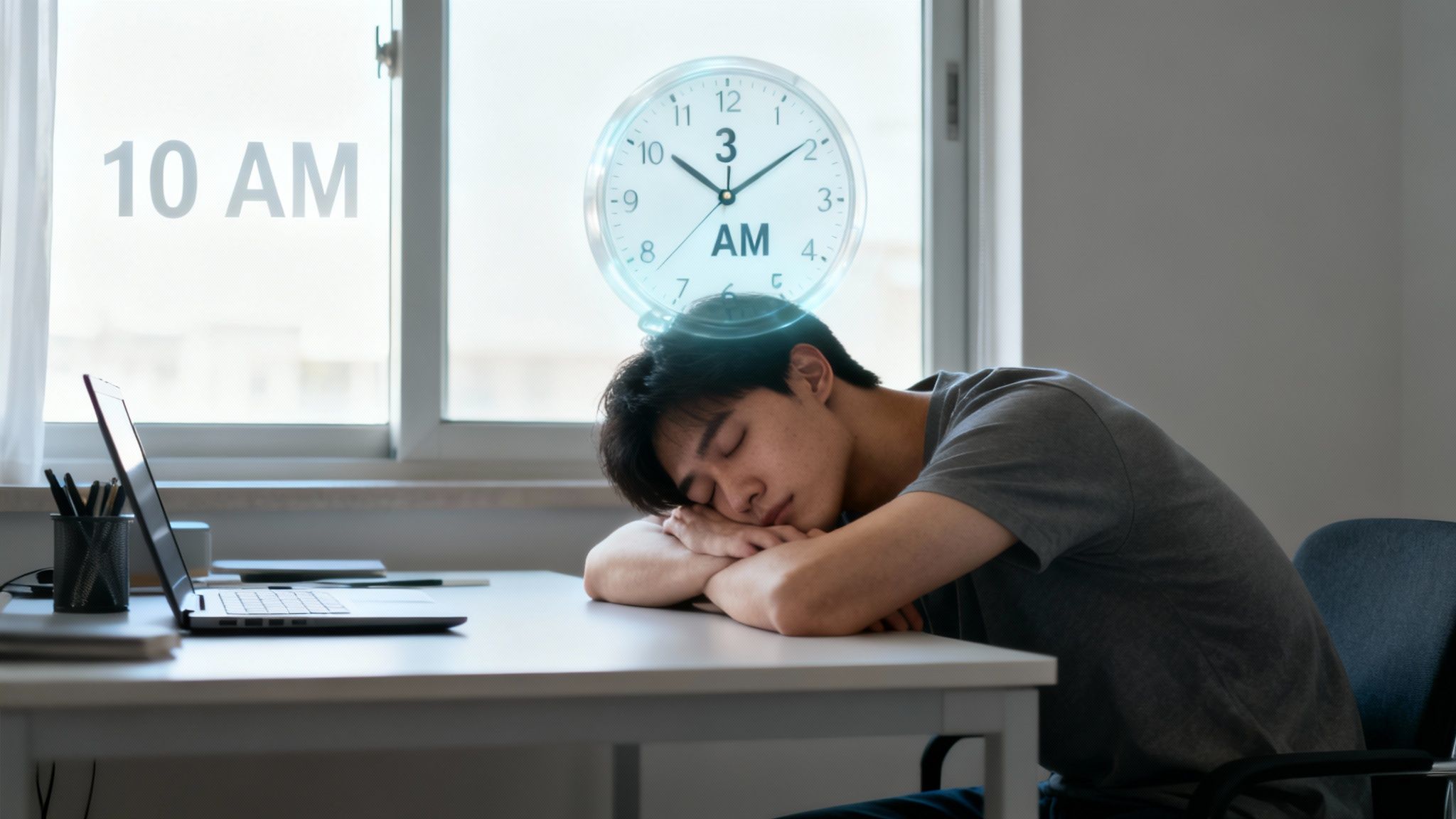
Think of your body as having an internal orchestra conductor. This conductor, a tiny part of your brain called the suprachiasmatic nucleus (SCN), makes sure all your biological systems are playing in harmony over a 24-hour cycle. It tells you when to feel hungry, when your body temperature should drop, and, crucially, when it’s time to sleep. For most of us, this internal clock is neatly synchronised with the sun.
But with a circadian rhythm sleep disorder, it’s like your conductor is following a completely different musical score from everyone else. You might be ready for a deep, restorative sleep just as your family is waking up, or you could feel a massive surge of energy long after the rest of the house has gone quiet.
This makes it very different from something like insomnia. Someone with insomnia often struggles to fall asleep even though they’re tired and have the chance to. On the other hand, a person with a circadian rhythm disorder can usually sleep perfectly well—but only when their misaligned internal clock finally gives them the green light.
The Source of the Mismatch
So, what causes this internal clock to go rogue? It usually boils down to two main factors: your genetics and your exposure to light. Some people are genetically predisposed to have a body clock that runs slightly longer or shorter than 24 hours, making them a natural ‘night owl’ or an ‘early bird’.
Light, particularly bright morning sunlight, is the most powerful signal that resets this clock every day. But if your light exposure is all over the place—perhaps due to shift work, late-night screen time, or even blindness—your internal conductor can easily lose its way.
A circadian rhythm sleep disorder is essentially a chronic state of internal jet lag. Your body's time zone is perpetually at odds with your geographical time zone, creating a constant battle between your biology and your environment.
Understanding the Scale of the Problem
While specific data for the UK is a bit sparse, these conditions are far more common than most people realise. Research from around the world suggests that certain types, like delayed sleep-wake phase disorder, can affect a large chunk of the population. This is especially true for adolescents and young adults, whose social and work lives often clash dramatically with their sleep schedules.
Depending on the group being studied, estimates can range from 0.2% to as high as 16%. You can learn more about the global research into these sleep disorders to get a better picture of the prevalence.
Understanding the Different Types of Circadian Disorders
A circadian rhythm sleep disorder isn’t just one single condition. Think of it more as a family of related issues, each with its own signature pattern of sleep disruption. Figuring out which type you might be dealing with is the crucial first step towards finding a solution that actually works.
Broadly, these disorders fall into two camps. Some are intrinsic, meaning the problem lies with your body's own internal timekeeping system. Others are extrinsic, where an external factor—like your job or travel—is forcing your body clock out of sync with the world around you.
Intrinsic Disorders: When the Body Clock is Off
Intrinsic disorders happen when your internal master clock is simply not running on a standard 24-hour schedule. It might be consistently too fast, too slow, or just completely erratic. This often has a genetic component and can feel like a trait you've had your whole life.
Delayed Sleep-Wake Phase Disorder (DSWPD)
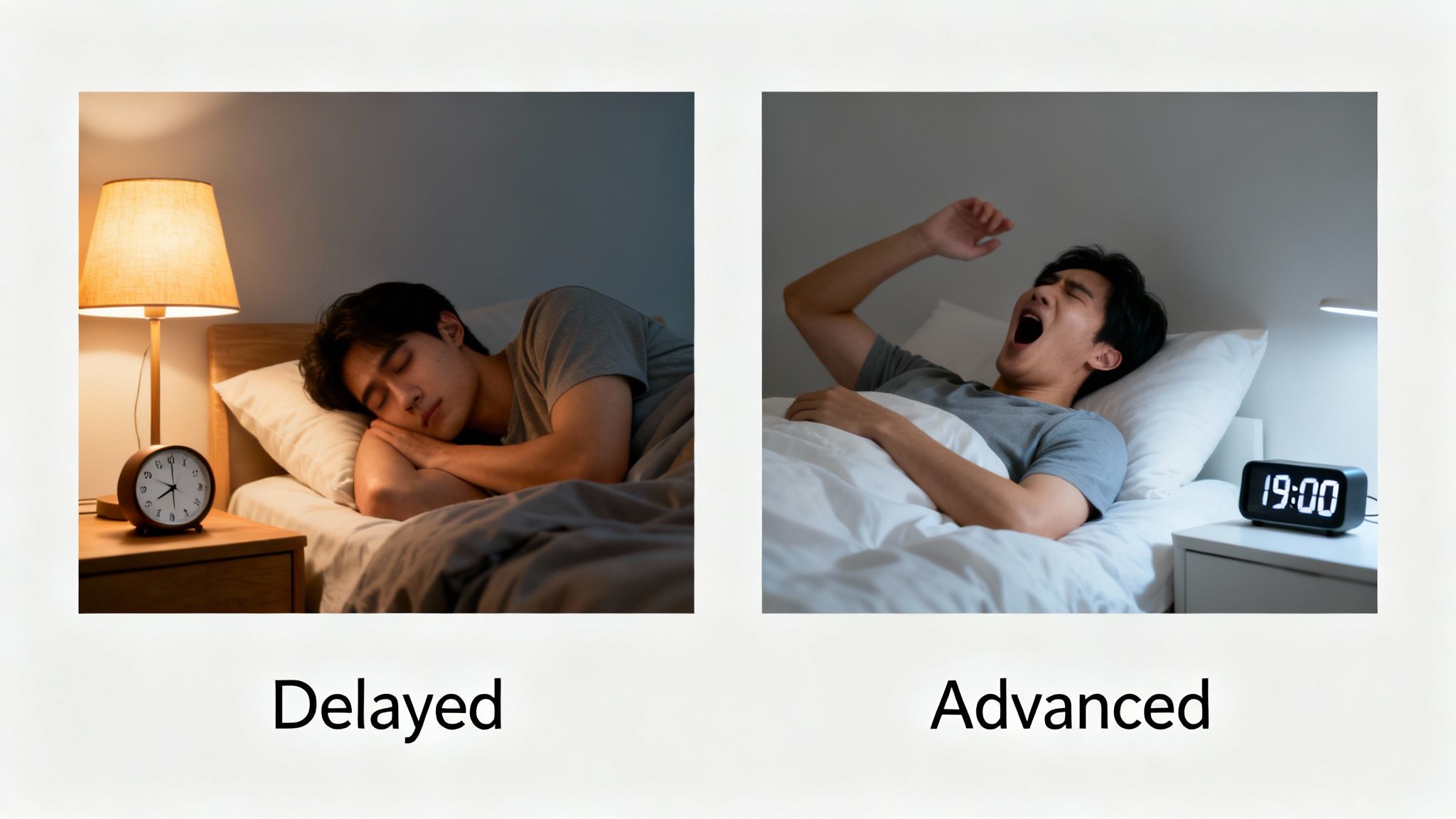
This is the classic ‘night owl’ experience, and it's particularly common among teenagers and young adults. If you have DSWPD, your internal clock is running late. You simply don’t feel sleepy until the early hours of the morning, maybe 2 a.m. or even later.
Naturally, your body then wants to sleep in until late morning or the afternoon to compensate. Being forced to get up for a 9-to-5 job feels like asking someone else to wake up at 4 a.m.—it’s brutal. This isn't just a bad habit; it's a genuine biological mismatch with societal norms that leads to chronic sleep debt.
Advanced Sleep-Wake Phase Disorder (ASWPD)
As the name suggests, ASWPD is the mirror image of the night owl. It’s more common in middle-aged and older adults, where the body clock is shifted significantly earlier. People with this condition feel an overwhelming urge to sleep in the early evening, often between 6 p.m. and 9 p.m.
This results in a very early wake-up time, sometimes before the sun is even up, around 3 or 4 a.m. While they might be getting a full night's rest, the timing makes evening socialising next to impossible and can be quite isolating.
Non-24-Hour Sleep-Wake Rhythm Disorder (N24SWD)
Now, imagine your body clock doesn't follow a 24-hour cycle at all. For people with N24SWD, the internal clock runs on its own schedule, often closer to 25 hours. This causes their sleep times to drift a little later each and every day.
This creates a constantly moving sleep schedule that cycles in and out of sync with the normal day-night cycle. There will be periods where their sleep pattern seems 'normal', followed by weeks where they're awake all night and sleeping during the day. This condition is especially common in people who are totally blind, as they lack the daily light cues that help anchor the body clock.
Extrinsic Disorders: When Life Gets in the Way
Sometimes, the internal clock is working just fine, but our lifestyle forces it into conflict with our environment. These are known as extrinsic disorders.
- Shift Work Disorder: This affects anyone working unconventional hours, like night shifts, early mornings, or rotating schedules. The demands of their job are in a direct tug-of-war with their body's natural drive to sleep at night. The result? Insomnia when they try to sleep and crushing fatigue when they need to be awake.
- Irregular Sleep-Wake Rhythm Disorder: Here, there's no consistent sleep pattern at all. Sleep is broken up into short naps scattered throughout the 24-hour day. This is often seen in people with neurodegenerative conditions like Alzheimer's or dementia, where the brain's ability to maintain a stable rhythm is impaired.
Common Circadian Rhythm Sleep Disorders at a Glance
To make it easier to see the differences, here’s a quick summary of the main types of circadian rhythm disorders we’ve discussed.
| Disorder Type | Typical Sleep Pattern | Commonly Affects |
|---|---|---|
| Delayed Sleep-Wake Phase | Consistently falls asleep late (e.g., after 2 a.m.) and wakes up late. | Adolescents and young adults. |
| Advanced Sleep-Wake Phase | Consistently falls asleep early (e.g., 6-9 p.m.) and wakes up very early. | Middle-aged and older adults. |
| Non-24-Hour Sleep-Wake | Sleep and wake times shift progressively later each day. | Individuals who are blind. |
| Shift Work Disorder | Difficulty sleeping during the day and staying awake during night shifts. | Night shift or rotating shift workers. |
| Irregular Sleep-Wake Rhythm | No consistent sleep pattern; napping occurs throughout a 24-hour period. | People with neurodegenerative conditions. |
Understanding your specific pattern is so important because the treatment for a ‘night owl’ could make things worse for an ‘early bird’. Each of these disorders needs a carefully tailored approach to help guide the body clock back to a healthier, more sustainable schedule.
The Hidden Health Costs of a Disrupted Body Clock
Living with a circadian rhythm sleep disorder can feel like you’re constantly fighting your own body. The daily struggle with tiredness and social friction is tough enough, but the long-term fallout from this internal mismatch runs much, much deeper, creating serious risks for your physical and mental health.
It's a huge mistake to see this as just a lifestyle problem. When your body's master clock is permanently out of whack with the 24-hour day, it triggers a chain reaction of biological stress that hits nearly every system you have. This isn't just about sleep; it's a fundamental breakdown in your body's operating instructions.
Metabolic Mayhem
One of the first and most well-documented casualties of a wonky body clock is your metabolism. Your circadian rhythm is in charge of regulating hunger hormones, insulin sensitivity, and how your body handles fats and sugars. When the timing is off, your body gets scrambled messages about when to burn energy and when to store it.
This chronic confusion can lead to:
- Weight Gain: Your body might start storing more fat, even if you haven't changed what you eat.
- Increased Risk of Type 2 Diabetes: When your insulin sensitivity drops, your body can't manage blood sugar levels properly.
- Intense Cravings: You might find yourself desperate for carb-heavy, sugary foods, often at the strangest hours.
This constant disruption also adds fuel to the fire of low-grade systemic inflammation, a major player in a whole host of chronic diseases. You can learn more about how to spot the signs of chronic inflammation in our detailed guide.
Cardiovascular Strain
Your heart and circulatory system also stick to a strict daily schedule. Blood pressure is meant to dip at night, giving your cardiovascular system a much-needed break to rest and repair itself. A circadian rhythm sleep disorder slams the brakes on this crucial process.
When you're awake and active at a time your body is biologically wired for sleep, your heart rate and blood pressure can stay stubbornly high. Over the years, this constant strain massively increases your risk of developing serious heart problems, including hypertension (high blood pressure) and heart disease.
Living with an out-of-sync body clock is like forcing your heart to run a marathon every single night instead of letting it recover. This relentless pressure weakens the entire system over time, leaving it vulnerable to long-term damage.
The Impact on Mental Wellbeing
The link between shoddy sleep and poor mental health is undeniable. A misaligned circadian rhythm can throw the production of key brain chemicals like serotonin and dopamine, which are vital for regulating your mood, completely off-kilter. This biological instability can leave you more vulnerable to developing mental health conditions.
Study after study shows a powerful connection between circadian disruption and a higher chance of developing depression, anxiety disorders, and severe mood swings. That feeling of being permanently jet-lagged wears down your resilience, making it harder to handle everyday stress and locking you into a vicious cycle of bad sleep and worsening mental health.
Recent UK-based research really drives home how serious this is. An analysis of nearly 90,000 people found that the more irregular someone's sleep timing was, the higher their risk of death from all causes, including cardiovascular disease and cancer. It's a powerful finding that redefines consistent sleep not as a luxury, but as a critical pillar of public health. You can read the full study on sleep regularity and mortality risk for a deeper dive.
How Professionals Diagnose and Treat Circadian Disorders
If you think you might have a circadian rhythm sleep disorder, getting a professional opinion can be a massive weight off your shoulders. The process isn't about one single test; it's more like detective work. A specialist will piece together clues from your personal history and some objective data to get a clear picture of what your body’s unique internal clock is doing.
This journey almost always starts with a good, long chat with a sleep specialist. They’ll want to know everything – your sleep habits, your work schedule, your lifestyle, and exactly when your symptoms kicked off. This conversation is vital for figuring out if it’s a true circadian disorder or something else, like insomnia or sleep apnoea.
Painting a Picture of Your Sleep
To get a real-world snapshot of your sleep patterns, your doctor will likely ask you to keep a detailed sleep diary for a couple of weeks. This is more than just jotting down when you fall asleep and wake up. It’s about tracking how alert you feel during the day, when you nap, and anything that seems to zap or boost your energy. It’s a simple tool, but it provides priceless insight into the timing of your internal clock.
You might also be given a small device to wear on your wrist called an actigraph. It looks and feels just like a watch but uses motion sensors to track when you're active and when you're at rest, usually over several days or weeks. This gives the doctor hard data that can back up what you've been recording in your diary, showing exactly when your body is moving and when it’s still.
These tools work hand-in-hand to map out your 24-hour biological rhythm. The sleep diary captures your subjective experience—how you actually feel—while the actigraph provides the objective proof of your body's true sleep-wake cycle.
Evidence-Based Treatments to Reset Your Clock
Once a circadian rhythm disorder is diagnosed, the goal is to retrain and nudge your internal clock back into sync with the 24-hour day. These therapies aren't a quick fix. They take consistency and a bit of patience, but they can be incredibly effective at shifting your natural rhythm.
Bright Light Therapy
This is often the first port of call. It involves sitting in front of a special high-intensity light box for a set period, usually 30-60 minutes each day. Light is the most powerful signal our body uses to reset its internal clock.
- For Delayed Sleepers ('Night Owls'): Getting that blast of bright light shortly after you wake up helps to pull your body clock forward, making you feel sleepy earlier in the evening.
- For Advanced Sleepers ('Early Birds'): A dose of bright light in the early evening can help push your body clock back, letting you stay awake a bit later and sleep in a little longer.
Strategic Melatonin Supplementation
Melatonin is the hormone your brain naturally releases to signal that it's time for bed. A low-dose supplement, when used correctly, can act as an artificial "dusk signal" to help shift your clock. Timing is absolutely critical here – take it at the wrong moment, and you could make things worse. A specialist will tell you the exact dose and time that's right for you.
Chronotherapy
For some people with Delayed Sleep-Wake Phase Disorder, a more hardcore approach called chronotherapy might be an option. This involves systematically delaying your bedtime by a few hours each day, essentially moving your sleep schedule all the way around the clock until it lines up with where you want it to be. This has to be done under strict medical supervision.
The infographic below shows just how wide-ranging the health impacts of a disrupted circadian rhythm can be, which is why getting treatment is so important.
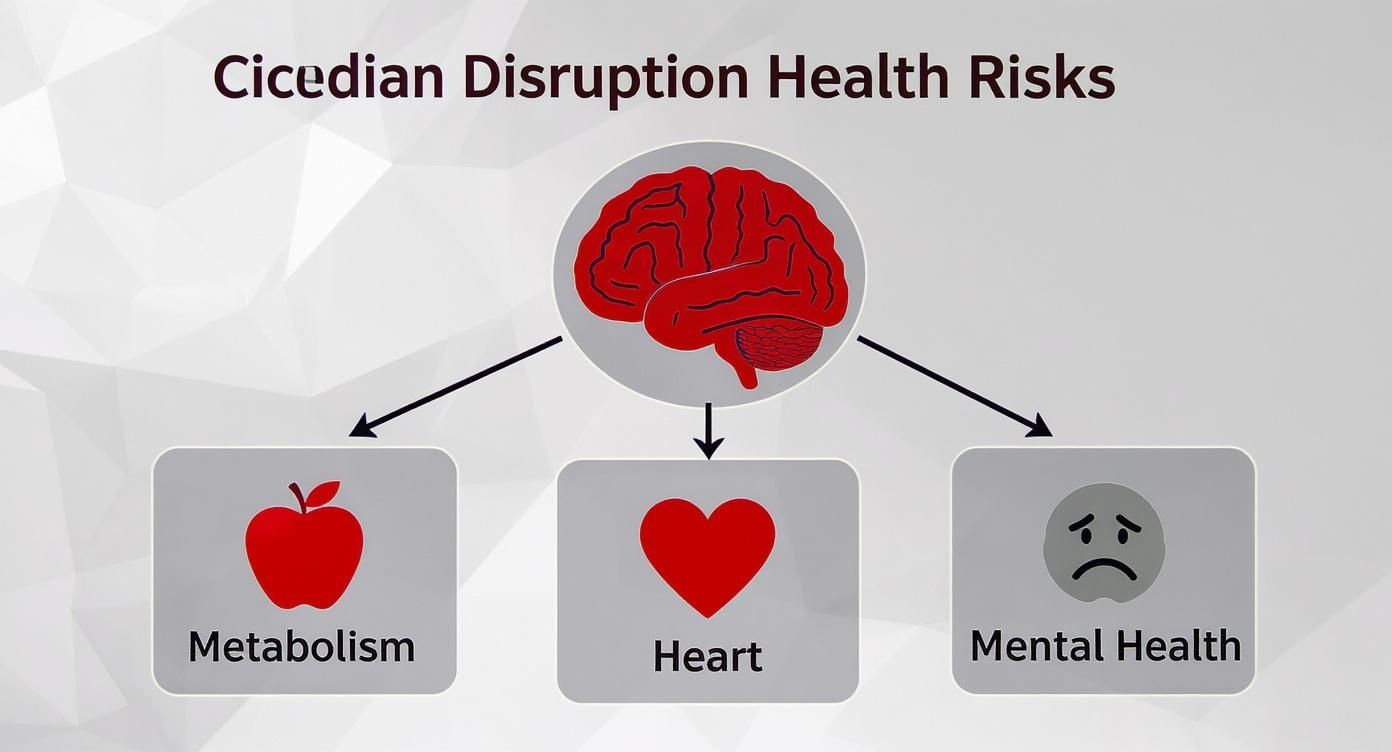
As you can see, a wonky internal clock can set off a domino effect, messing with everything from your metabolism and heart health to your mood.
Behavioural and Lifestyle Adjustments
Alongside these targeted treatments, things like Cognitive Behavioural Therapy for Insomnia (CBT-I) and rock-solid sleep hygiene are essential. This means sticking to a rigid sleep-wake schedule (yes, even on weekends!), creating a wind-down routine before bed, and making your bedroom a sanctuary for sleep. These behavioural changes are what lock in the new schedule your body is learning.
Many of these therapies work by tapping into the body's own internal signalling systems. If you're curious about the deeper science, our guide on what is the endocannabinoid system explores another key network that helps keep the body in balance. With the right professional help and a consistent effort, you really can reset your internal clock and get your sleep back on track.
Actionable Strategies to Realign Your Body Clock

While professional treatments for a circadian rhythm sleep disorder can be a game-changer, it’s the small choices you make every single day that truly anchor a healthy sleep-wake cycle. Think of it less like basic ‘sleep hygiene’ and more like ‘circadian hygiene’—a set of targeted habits designed to send loud, clear signals to your internal master clock.
These strategies are all about using your environment and daily routines to shore up a stable 24-hour rhythm. By smartly managing light, food, and activity, you give your body the strong cues it needs to stay in sync with the outside world. It’s about working with your biology, not fighting against it.
Master Your Light Exposure
Light is the single biggest influence on your circadian rhythm. Its power, however, is all about timing. The goal is to create a stark contrast between a bright day and a dark night, giving your brain an unmistakable cue to "wake up" and then to "wind down."
Getting bright light first thing in the morning is non-negotiable. Aim for at least 15-30 minutes of direct sunlight within an hour of when you want to wake up. This blast of morning light hits receptors in your eyes and essentially kick-starts your internal clock, slamming the brakes on melatonin production and ramping up alertness.
On the flip side, you have to be just as disciplined with light in the evening. The blue light blasting from our screens—phones, tablets, and computers—is especially disruptive, as it fools your brain into thinking it’s still high noon. Try to dim the lights in your home and put all screens away at least 90 minutes before your target bedtime. This gives your natural melatonin a chance to rise as it should.
Schedule Your Meals and Movement
It’s not just light. The timing of your meals and exercise also acts as a powerful cue for your internal clock. Believe it or not, your digestive system and muscles have their own daily rhythms, and when you align them with your master clock, you strengthen the entire system.
Eating at roughly the same time each day reinforces your body’s schedule. A decent-sized breakfast helps signal the start of your active day, whereas a big, heavy meal late at night can send confusing messages that mess with your sleep. Try to avoid eating a large dinner within three hours of bedtime.
The same goes for exercise:
- Morning or Afternoon Exercise: This is a great way to boost your energy and reinforce daytime alertness, further strengthening your wake cycle.
- Evening Exercise: Be careful here. Intense physical activity too close to bedtime can raise your core body temperature and heart rate, making it much harder to drift off. If you have to exercise in the evening, stick to something gentle like stretching or yoga.
By synchronising your daily activities—light, food, and exercise—you are essentially creating a symphony of cues that all play the same tune. This consistency is what helps to stabilise a fragile or misaligned internal clock.
Create a Rock-Solid Sleep Routine
Consistency is the absolute cornerstone of circadian health. Your body loves a good routine. A predictable schedule helps to anchor your sleep-wake cycle, making it much easier to fall asleep and wake up feeling refreshed.
Sticking to a strict sleep schedule is vital. That means going to bed and waking up at the same time every single day—yes, even on weekends. Sleeping in might feel amazing at the time, but it throws your internal clock into a state of confusion, creating a kind of "social jetlag" that makes Monday mornings feel brutal.
Your bedroom should be a sanctuary for sleep and intimacy, and nothing else. Keep it cool, dark, and quiet. If you have a hard time switching off, think about adding some relaxation techniques to your pre-sleep ritual. Many people find relief with different approaches, and you can explore some effective natural sleep remedies for better sleep in 2025 in our detailed guide. The important thing is to find what helps calm your mind and body, signalling that the day is officially done.
Exploring the Role of CBD in Circadian Health
With the explosion in CBD's popularity for all things wellness, it’s completely natural to wonder if it can help with something as stubborn as a circadian rhythm disorder. We see stories all the time about how CBD helps people feel calmer and get a better night's sleep, but it’s really important to separate personal experience from what the science actually says.
When we're talking about circadian disorders, the real question isn't just about feeling sleepy. It's about whether something can physically shift the body's master clock. This is a very specific job, and right now, there's very little direct scientific evidence that CBD can reset the suprachiasmatic nucleus (SCN) in the way that proven treatments like bright light therapy can.
Understanding the Research Gap
Most of the research we have on CBD and sleep looks at its potential to ease things that get in the way of good rest, like anxiety or pain. For instance, by helping to calm the nervous system, CBD might make it easier for someone to finally drift off when their body is ready. This is a far cry from correcting the root cause of the timing problem in a circadian rhythm sleep disorder.
The difference between anecdotal success and clinical proof is crucial. While someone with delayed sleep phase might find CBD helps them unwind at 2 a.m., it doesn’t mean the CBD is fixing the core reason they aren’t sleepy at 11 p.m.
Getting this distinction right is key to managing your expectations. Just using a supplement without tackling the root cause with evidence-based therapies is unlikely to fix a genuine circadian misalignment.
Navigating the UK Market and Safety
It's also worth remembering that the CBD market in the UK isn't regulated in the same way as pharmaceutical medicines. The quality, purity, and actual concentration of CBD can be all over the place from one brand to the next, making it tough to know what you’re really getting.
Because of this, and the fact it can interact with other medications, you should always speak with your doctor or a qualified healthcare professional before trying CBD or any new supplement. They can give you advice that’s right for your personal health history and help you make a safe, informed choice. A professional will always guide you toward the proven treatments first, making sure you're on the most effective track.
If you are looking into ways to manage sleep issues more generally, understanding how products like CBD oil for insomnia are used can offer useful context. However, this should never replace proper medical advice for a diagnosed disorder. At the end of the day, while CBD might have a role to play in supporting general relaxation, it isn't a proven treatment for shifting your body's internal clock.
A Few Common Questions About Circadian Disorders
When you’re grappling with a circadian rhythm sleep disorder, it’s only natural to have a lot of questions. Let's walk through some of the most common ones with clear, straightforward answers to help you make sense of it all.
Can I Fix a Circadian Disorder on My Own?
While improving your daily habits can make a huge difference in managing the symptoms, a true ‘fix’ usually needs a professional helping hand.
Disorders like Delayed Sleep-Wake Phase Disorder have deep biological roots that are incredibly tough to shift without a proper, structured treatment plan. Trying to force your body onto a new schedule by yourself can sometimes backfire, making the misalignment even worse. Your best first step is always to chat with a doctor to get a proper diagnosis.
How Is This Different from Insomnia?
It really comes down to a simple difference: timing versus ability.
Insomnia is when you struggle to fall asleep or stay asleep, even when the time is right and you have the chance. A circadian rhythm sleep disorder, on the other hand, means you can sleep like a log, but only when your internal clock finally gives you the green light—which is often completely out of step with the rest of the world.
Think of it this way: someone with Delayed Sleep-Wake Phase Disorder isn't an insomniac when they’re wide awake at 3 a.m. For their body, that’s just its natural "awake time". The ability to sleep is perfectly fine; it’s the timing that’s gone askew.
How Long Do Treatments Take to Work?
It varies from person to person, but with consistent daily use, many people start to feel a positive change in their sleep patterns within one to two weeks of starting something like bright light therapy.
However, locking in a new, stable rhythm can take several weeks of dedicated effort. The whole process is about gradually retraining your body’s master clock. Patience and consistency are your best friends here—much more so than intensity. A sleep specialist will help you track your progress and fine-tune your treatment plan along the way.