TL;DR:
- CBD interacts with the endocannabinoid system to potentially reduce inflammation and support stress relief.
- Proper dosing following UK FSA guidelines is essential for safe and effective CBD use.
- Quality, lab-testing, and product form are crucial for safe, reliable CBD recovery support.
You’ve pushed through a tough training session or survived another gruelling week at work, and now you’re wondering whether CBD might help you bounce back. It’s a fair question. CBD (cannabidiol) has become one of the UK’s most talked-about wellness supplements, with millions of adults turning to it for muscle recovery, stress relief, and chronic pain management. This article walks you through what the science actually says, how to dose safely within UK Food Standards Agency (FSA) guidelines, how to pick a quality product, and what realistic results look like.
Table of Contents
- How CBD supports recovery: Science and claims
- CBD dosage and timing: UK guidance for optimal results
- Choosing the right CBD products: Quality, forms, and safety tips
- Troubleshooting and verifying CBD’s effects: What to expect
- A practical perspective: What most guides miss about CBD recovery
- Explore trusted CBD solutions for your recovery
- Frequently asked questions
Key Takeaways
| Point | Details |
|---|---|
| UK limits and safety | Start with 20–25mg per day, never exceed 70mg without medical advice, and always use lab-tested products. |
| Evidence-backed effects | CBD can help reduce inflammation and stress, but clinical trials show limited muscle recovery and modest pain relief. |
| Product selection tips | Choose oils, capsules, or gummies with third-party testing, avoiding products with unclear ingredients or THC for athletes. |
| Realistic expectations | Monitor your progress, expect mild benefits, and consult your GP if you experience side effects or need personalised advice. |
How CBD supports recovery: Science and claims
CBD works by interacting with your body’s endocannabinoid system (ECS), a network of receptors and signalling molecules that helps regulate pain, inflammation, mood, and sleep. When you take CBD, it modulates key receptors including CB1 and CB2 receptors, as well as serotonin receptors, which is why it may influence both physical discomfort and emotional stress simultaneously.
For muscle recovery, the picture is promising in theory but more complicated in practice. Preclinical studies suggest CBD can reduce inflammatory markers after intense exercise. However, randomised controlled trials (RCTs) looking at CBD for sports recovery have returned mixed results, with several showing no statistically significant improvement in muscle soreness, damage markers, or endurance performance.
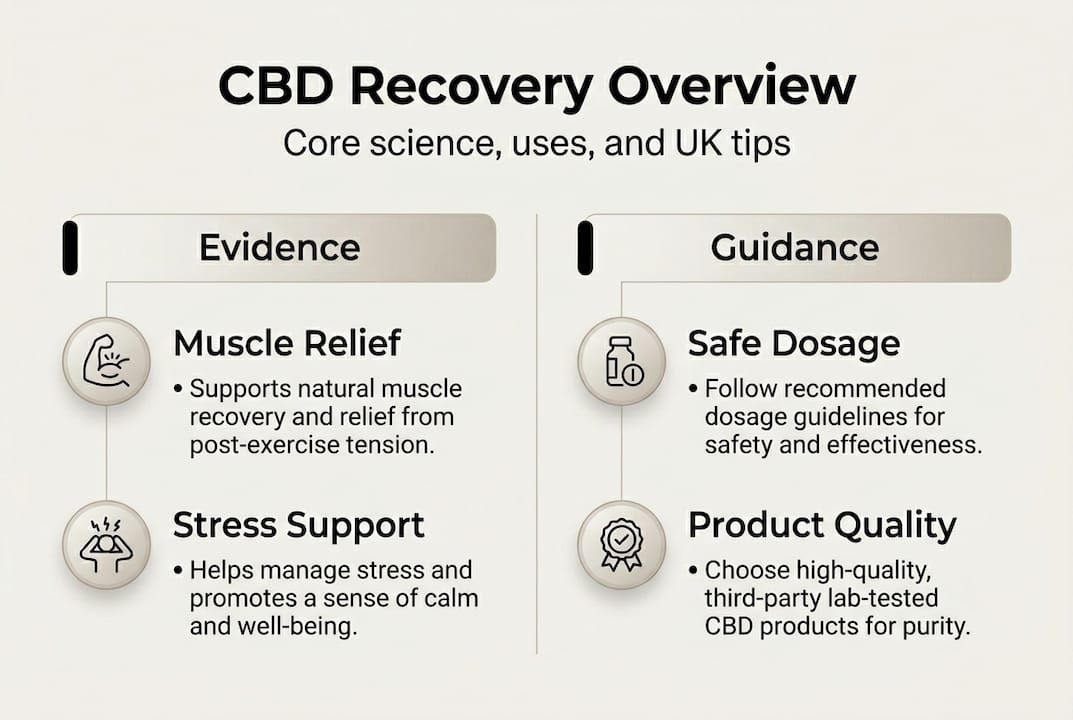
For stress and anxiety, the evidence is more encouraging. CBD’s interaction with serotonin receptors may help tone down the body’s stress response, making it a popular choice for those recovering from mentally demanding periods rather than purely physical ones.
For chronic pain, there is modest but meaningful clinical interest. The NHS guidance on CBD notes that cannabis-based medicines are only prescribed in specific circumstances, and routine use is not currently recommended outside specialist care.
Here’s a quick comparison of how CBD performs across different recovery types:
| Recovery type | Preclinical evidence | Clinical trial results |
|---|---|---|
| Muscle soreness | Promising (anti-inflammatory) | Mixed; often no significant effect |
| Stress and anxiety | Strong (serotonin modulation) | Moderate positive evidence |
| Chronic pain | Promising (pain pathway modulation) | Modest reductions; restricted NHS use |
Key potential benefits worth knowing:
- May reduce exercise-induced inflammation
- Could support better sleep quality, which is critical for recovery
- May help regulate the stress response after demanding weeks
- Topical forms may provide localised relief for sore joints and muscles
Explore the broader CBD benefits for wellness to understand where CBD fits into a holistic health routine.
CBD dosage and timing: UK guidance for optimal results
Knowing what CBD can do is one thing. Using it correctly and safely is another matter entirely. The UK FSA provides clear guidance: start at 20 to 25mg per day, increase by 5mg at a time, and do not exceed 70mg per day for healthy adults. The FSA’s provisional acceptable daily intake is set at 10mg for novel food products, though therapeutic use for pain and stress typically falls in the 20 to 50mg range.
Here’s a practical dosage reference table:
| Recovery goal | Starting dose | Target range | Max daily (FSA) |
|---|---|---|---|
| General wellness | 10mg | 10 to 20mg | 70mg |
| Muscle recovery | 20mg | 25 to 40mg | 70mg |
| Stress and anxiety | 20mg | 25 to 50mg | 70mg |
| Chronic pain support | 25mg | 30 to 50mg | 70mg |
Timing matters too. Follow these steps for best results:
- Start low, go slow. Begin with 20mg in the morning for the first week and note how your body responds.
- Increase gradually. Add 5mg every five to seven days until you find your effective dose.
- Time it to your training. Taking CBD 30 to 60 minutes before a workout may help with pre-exercise anxiety; taking it immediately after may support the inflammatory response.
- Use it at bedtime for stress recovery. Sleep is where the body does most of its repair work, and CBD may support deeper, more restful sleep.
- Stay consistent. CBD builds up in your system over time. Daily use over two to four weeks tends to produce more noticeable results than occasional use.
Pro Tip: Keep a simple recovery journal for the first month. Note your dose, timing, sleep quality, and pain or stress levels. It takes the guesswork out of finding your sweet spot.
For more detailed guidance, the CBD dosage guide and CBD dosing steps articles provide step-by-step support for navigating UK limits safely.
Choosing the right CBD products: Quality, forms, and safety tips
With dosing sorted, choosing the right product is key for effective and safe recovery support. The UK market is flooded with CBD products of wildly varying quality, so knowing what to look for protects both your health and your wallet.
Product forms and their best uses:
- CBD oils and tinctures: Fast-acting (15 to 45 minutes), ideal for acute stress or post-workout use. Taken under the tongue for quicker absorption.
- Soft gel capsules: Slower onset (45 to 90 minutes) but consistent dosing. Great for daily maintenance and chronic pain management.
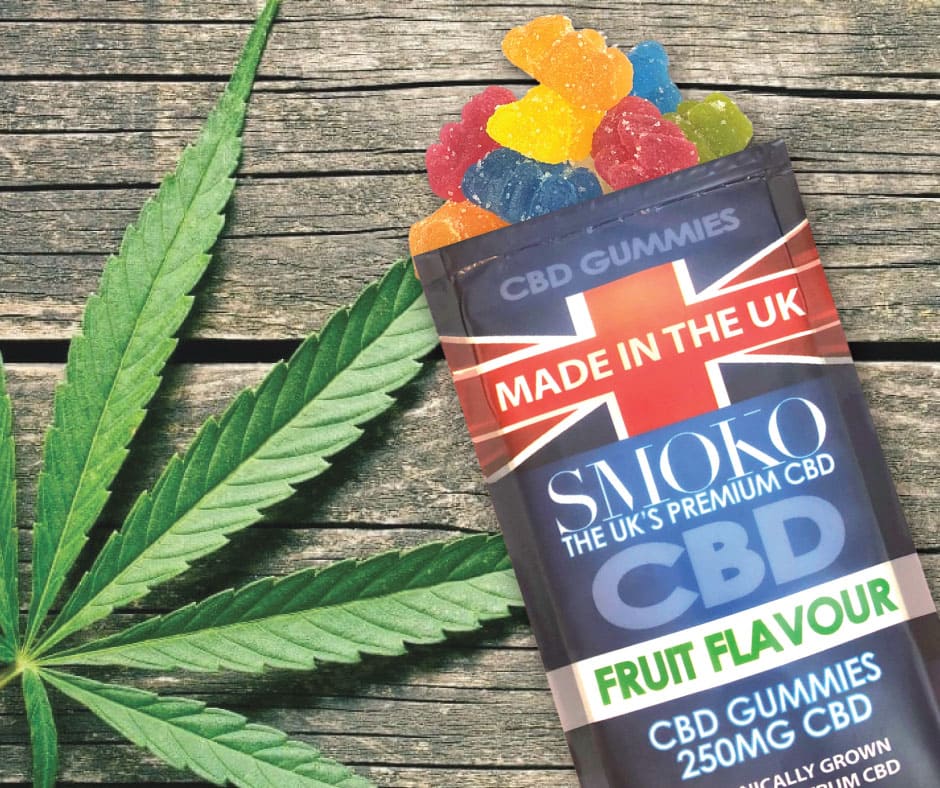
- CBD gummies: Convenient, pre-dosed, and easy to incorporate into a routine. Read the guide to CBD edible gummies for a full breakdown.
- Topical creams and balms: Applied directly to sore muscles or joints. No systemic absorption, so ideal for localised discomfort without affecting the whole body.
How to spot a quality product:
- Look for a Certificate of Analysis (CoA) from an independent third-party laboratory
- Confirm zero or trace THC content (important for athletes subject to WADA testing)
- Check for clear labelling showing CBD concentration per serving
- Avoid products with vague ingredient lists or no batch numbers
Important: The NHS safety advice is clear that CBD should be avoided if you are pregnant, breastfeeding, taking prescription medications (particularly blood thinners or anti-epileptics), or giving it to children.
For athletes specifically, WADA compliance is non-negotiable. CBD itself was removed from WADA’s prohibited list in 2018, but other cannabinoids (including THC) remain banned. Always verify your product’s lab results before competing.
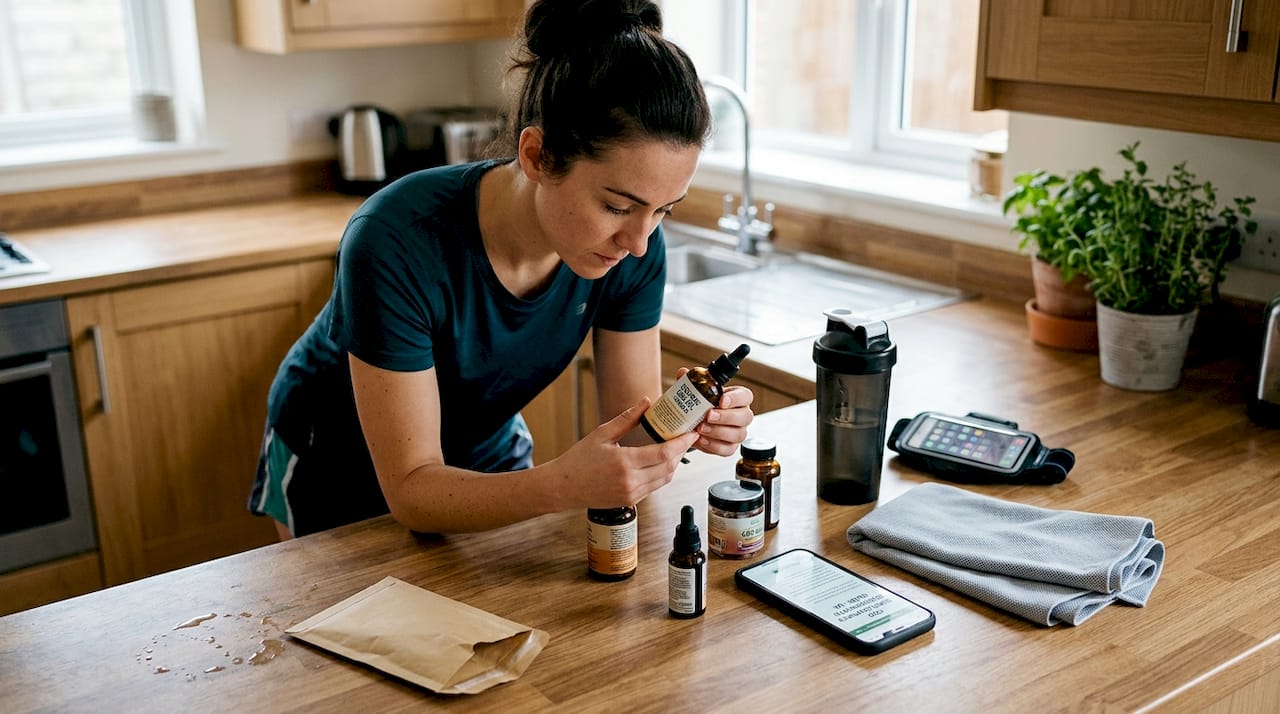
Pro Tip: Broad-spectrum CBD products contain a range of beneficial plant compounds without THC, offering what’s known as the “entourage effect” where cannabinoids work better together. Check the CBD recovery tips for more on choosing the right format for your goals.
Troubleshooting and verifying CBD’s effects: What to expect
After you’ve selected your product and started your regimen, it’s important to track your progress and understand what’s realistic. CBD is not a quick fix, and setting the right expectations from the start prevents disappointment.
How to monitor your recovery:
- Track pain levels. Use a simple 1 to 10 scale before and after your CBD routine each day.
- Monitor sleep quality. Note how long it takes to fall asleep and how rested you feel in the morning.
- Record stress and mood. Even a brief daily note helps identify patterns over time.
- Note any side effects. Mild side effects such as diarrhoea and fatigue are possible, particularly at higher doses. Elevated liver enzymes have been noted at very high doses in clinical settings.
- Give it time. Most people need four to eight weeks of consistent use before drawing conclusions.
Realistic expectations: For chronic pain, research suggests modest reductions of around 0.5 to 1.0 points on a 10-point pain scale. That’s meaningful for daily quality of life, but it’s not a dramatic transformation.
Here’s a comparison of common expectations versus what evidence actually supports:
| What people expect | What evidence shows |
|---|---|
| Rapid muscle recovery after workouts | No significant RCT evidence for this |
| Complete stress elimination | Moderate reduction in perceived stress |
| Major chronic pain relief | Modest, clinically meaningful reductions |
| Instant results | Effects typically build over weeks |
If you have fibromyalgia or complex chronic pain, CBD may offer some comfort, but always work alongside your GP rather than replacing prescribed treatment. A broader CBD evidence overview confirms that while preclinical data is encouraging, long-term human trials are still needed.
Consult your GP if you experience persistent side effects, notice no improvement after eight weeks, or are considering CBD alongside existing medication.
A practical perspective: What most guides miss about CBD recovery
Most CBD articles either oversell the benefits or dismiss the supplement entirely. The honest reality sits somewhere in the middle. Empirical data remains mixed: preclinical and observational studies show genuine promise for inflammation and pain, but RCTs for athletic recovery and performance enhancement have largely returned null results. And yet, millions of people report real, subjective improvements in sleep, stress, and daily comfort.
The mistake most people make is chasing acute performance gains from CBD. It’s not a pre-workout stimulant or a painkiller with immediate effect. Think of it more as a long-term stress and sleep support tool that, over time, helps your body maintain a healthier baseline. The sports trial evidence reinforces this: no shortcuts, but possible steady support.
Individual variation matters enormously. Your weight, metabolism, and the nature of your recovery needs all influence how CBD works for you. Treating it as part of a broader recovery strategy, alongside good nutrition, sleep hygiene, and appropriate training loads, is where it genuinely earns its place.
Explore trusted CBD solutions for your recovery
If you’re ready to try CBD for your recovery, carefully selected products make all the difference. SMOKO CBD offers a range of broad-spectrum, third-party lab-tested products made for UK adults who want quality they can trust.
For fast-acting relief, the mint CBD tincture is a popular choice, offering precise dosing with a clean, refreshing flavour. If you prefer something more convenient, the CBD gummies pack delivers a consistent dose in a format you’ll actually look forward to taking. For daily maintenance and chronic pain support, the CBD soft gel capsules offer reliable, measured doses with zero fuss. All products are zero THC and fully WADA-compliant.
Frequently asked questions
Can CBD help me recover faster after workouts?
While CBD may offer mild support for reducing inflammation and stress, clinical trials show no significant boost in muscle recovery, soreness markers, or endurance performance. It works best as part of a broader recovery routine rather than as a standalone solution.
What is a safe CBD dosage for recovery in the UK?
The UK FSA advises starting at 20 to 25mg per day, increasing by 5mg at a time, and not exceeding 70mg daily unless directed by a healthcare professional. Always check product labelling for accurate CBD concentration per serving.
Are there any risks or side effects with CBD for recovery?
Mild side effects include diarrhoea and fatigue, particularly at higher doses. Elevated liver enzymes have been noted in clinical settings at very high doses. Avoid CBD if you are pregnant, breastfeeding, or taking prescription medication without consulting your GP first.
Does CBD work for chronic pain and stress recovery?
CBD shows modest reductions in chronic pain of around 0.5 to 1.0 points on a 10-point scale, and moderate support for stress. The NHS does not recommend routine use outside specialist prescription, so always discuss with your GP if pain is severe or persistent.
Recommended
- Essential CBD Recovery Tips for Pain and Stress Relief – SMOKO CBD
- CBD Dosage Guide UK 2026: Safe Relief in 70mg Limits – SMOKO CBD
- CBD Benefits and Uses for Wellness in 2026: UK Guide – SMOKO CBD
- STEP-BY-STEP CBD DOSING UK 2026: MAX 70mg SAFE RELIEF – SMOKO CBD
- Cannabis for wellness 2026: benefits, risks and choices | Edwin’s Edibles & Elixirs