Full spectrum CBD doesn’t cause a high, despite containing trace THC. This whole-plant hemp extract combines multiple cannabinoids, terpenes, and flavonoids working together for enhanced therapeutic effects. We’ll explore its unique composition, how it differs from other CBD types, its evidence-backed benefits for pain and anxiety relief, UK legal status, and practical guidance for choosing quality products that support your natural wellness goals.
Table of Contents
- Introduction To Full Spectrum CBD
- The Entourage Effect And Why It Matters
- Therapeutic Benefits For Pain Relief, Anxiety, And Sleep
- Full Spectrum Vs Broad Spectrum Vs Isolate CBD
- UK Legal Status And Safety Considerations
- Choosing High-Quality Full Spectrum CBD Products
- Common Misconceptions And Risks Of Full Spectrum CBD
- Explore SMOKO’s Quality CBD Range For Natural Wellness
- Frequently Asked Questions
Key takeaways
| Point | Details |
|---|---|
| Full plant extract | Contains cannabinoids, terpenes, flavonoids, and trace THC legally limited to 0.2% in the UK |
| Entourage effect | Compounds work synergistically to enhance therapeutic benefits beyond isolated CBD |
| Evidence-backed relief | Supports pain management, anxiety reduction, and improved sleep quality |
| Product distinctions | Differs from broad spectrum and isolate by retaining trace THC and complete compound profile |
| Quality assurance | Third-party lab testing confirms safety, potency, and UK legal compliance |
Introduction to full spectrum CBD
Full spectrum CBD represents a comprehensive hemp extract that preserves the plant’s complete cannabinoid profile, including minor compounds such as CBG and CBN. Unlike isolated CBD, this formulation maintains the natural balance of over 100 cannabinoids found in hemp.
The extract also retains aromatic terpenes and flavonoids that contribute distinct therapeutic properties. These compounds create complex interactions within your body’s endocannabinoid system. Terpenes like myrcene and limonene influence how cannabinoids are absorbed and processed.
CBD legality in the UK hinges on THC content remaining below 0.2%, ensuring products deliver wellness benefits without intoxication. This legal threshold allows consumers to access full spectrum CBD’s benefits while maintaining compliance.
Key components include:
- CBD as the primary cannabinoid for therapeutic effects
- Minor cannabinoids like CBG for anti-inflammatory properties and CBN for sleep support
- Terpenes such as beta-caryophyllene and linalool for enhanced absorption
- Flavonoids contributing antioxidant benefits
- Trace THC below 0.2% legal limit for non-intoxicating use
The 0.2% THC restriction serves as a critical safety measure for UK consumers. Products exceeding this threshold become controlled substances, making verification through lab testing essential. Understanding this composition helps you recognise authentic full spectrum products and avoid misleading marketing claims.
The entourage effect and why it matters
The entourage effect describes synergy where cannabinoids, terpenes, and flavonoids work together to amplify therapeutic outcomes. This principle challenges the notion that isolated compounds deliver optimal benefits. Research demonstrates that whole-plant extracts outperform single-molecule formulations.
Minor cannabinoids play specific roles in this symphony. CBG exhibits potent anti-inflammatory properties that complement CBD’s effects on pain pathways. CBN contributes sedative qualities particularly valuable for sleep disorders. These compounds don’t simply add to CBD’s effects; they multiply them through biological interactions.
Terpenes serve as more than aromatic molecules. Beta-caryophyllene directly activates cannabinoid receptors, enhancing anti-inflammatory responses. Limonene influences serotonin pathways, supporting mood regulation alongside CBD. Myrcene improves cannabinoid absorption through cell membranes, increasing bioavailability.

Synergistic interactions in full spectrum CBD create outcomes impossible with isolated compounds. When you consume CBD isolate, you receive one molecule’s benefits. Full spectrum delivers a cascade of complementary effects that address multiple aspects of pain, anxiety, or inflammation simultaneously.
Understanding cannabinoid and hemp oil differences clarifies why full spectrum formulations command premium pricing. The cultivation, extraction, and preservation required to maintain the complete compound profile demand sophisticated processes. However, the enhanced efficacy justifies this investment for many users.
Pro Tip: When evaluating products, request detailed cannabinoid and terpene profiles showing the full compound spectrum. Reputable brands provide these lab results transparently, demonstrating authentic full spectrum composition rather than marketing language alone.
The entourage effect transforms CBD from a single therapeutic agent into a comprehensive wellness tool. This natural synergy explains why many users report superior results compared to isolated CBD experiences.
Therapeutic benefits for pain relief, anxiety, and sleep
Full spectrum CBD delivers better pain relief through combined cannabinoid action on inflammation and pain signalling. Minor cannabinoids like CBG target specific inflammatory pathways that CBD alone cannot fully address. This multi-pathway approach provides more comprehensive pain management than single compounds.
Chronic pain sufferers report significant improvements when switching from isolate to full spectrum formulations. The anti-inflammatory effects extend beyond immediate pain relief to address underlying tissue damage. Users with arthritis, fibromyalgia, and nerve pain particularly benefit from this holistic approach.
Case studies show full spectrum CBD reduces anxiety symptoms more effectively than isolate options. The entourage effect modulates stress responses through multiple neurotransmitter systems. Terpenes like linalool enhance CBD’s anxiolytic properties by supporting GABA receptor function.
Anxiety management with CBD for anxiety relief shows particular promise for generalised anxiety and social anxiety disorders. Users report feeling calmer without sedation or cognitive impairment. The natural compound balance prevents the tolerance issues associated with some pharmaceutical options.
Sleep quality improvements stem from cannabinoid and terpene interactions affecting circadian rhythms. CBN’s sedative properties combine with CBD’s anxiety-reducing effects to promote natural sleep onset. Myrcene enhances muscle relaxation, addressing physical tension that disrupts rest.
Common therapeutic benefits include:
- Reduced chronic pain intensity and frequency
- Lower anxiety levels in social and general situations
- Faster sleep onset and improved sleep maintenance
- Decreased inflammation markers in affected tissues
- Enhanced mood stability throughout the day
- Better stress resilience during challenging periods
Full spectrum CBD’s comprehensive approach addresses interconnected symptoms rather than isolated complaints. Pain often triggers anxiety, which disrupts sleep, creating cycles that single-intervention treatments struggle to break. The entourage effect targets multiple points in these cycles simultaneously.
Full spectrum vs broad spectrum vs isolate CBD
Full spectrum CBD contains all naturally occurring cannabinoids, terpenes, flavonoids, and trace THC below 0.2%. This complete profile maximises the entourage effect for enhanced therapeutic outcomes. The presence of THC, though minimal, distinguishes it from other CBD types.
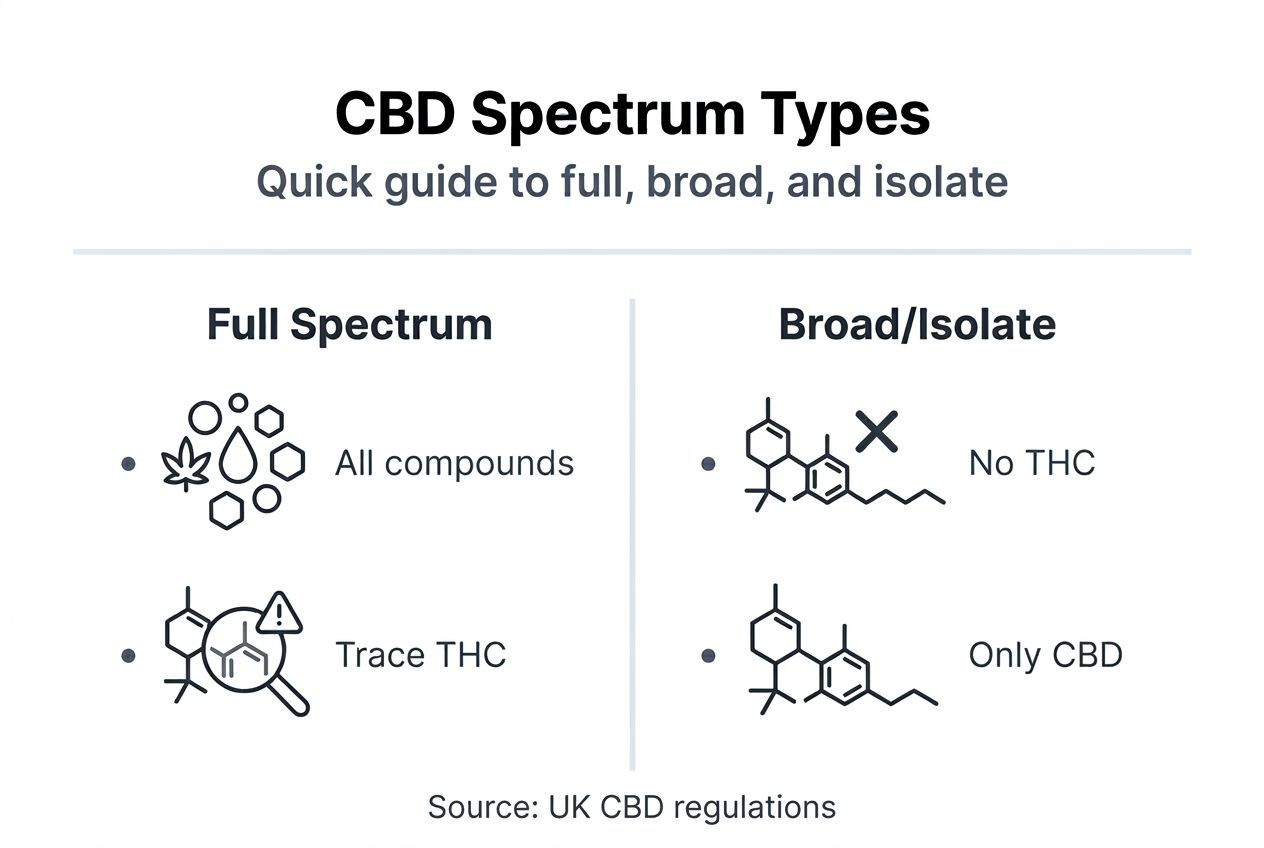
Broad spectrum CBD removes THC entirely whilst retaining most other cannabinoids and terpenes. This formulation suits users concerned about drug testing or those preferring zero THC consumption. The broad spectrum CBD guide details this THC-free alternative’s benefits and limitations.
CBD isolate represents pure CBD with no additional compounds. It contains approximately 99% CBD, stripped of all other plant molecules. This option provides predictable dosing without the complexity of multiple cannabinoids.
| CBD Type | Cannabinoid Profile | THC Present | Entourage Effect | Best For |
|---|---|---|---|---|
| Full Spectrum | Complete plant profile | Yes, under 0.2% | Maximum | Chronic pain, severe anxiety, comprehensive wellness |
| Broad Spectrum | Most cannabinoids and terpenes | No | Moderate | Drug-tested individuals, THC-sensitive users |
| CBD Isolate | CBD only | No | None | First-time users, flavour-sensitive, precise dosing |
Full spectrum offers maximum potency through compound synergy. Users typically achieve desired effects at lower doses compared to isolate. However, the trace THC may trigger positive drug tests in occupations with strict screening.
Broad spectrum provides a middle ground, retaining some entourage benefits whilst eliminating THC concerns. Many users find it nearly as effective as full spectrum for most applications. The THC removal process requires additional manufacturing steps, sometimes affecting final product cost.
Isolate suits beginners wanting to understand CBD’s effects without variable factors. It allows precise dose titration and predictable responses. However, research consistently shows reduced efficacy compared to full or broad spectrum formulations for complex conditions.
Understanding types of CBD products helps match your wellness goals to appropriate formulations. Consider your health objectives, workplace policies, and sensitivity to THC when choosing between these options.
UK legal status and safety considerations
The UK permits CBD products containing THC below the 0.2% legal threshold. This regulation ensures full spectrum CBD remains non-intoxicating whilst preserving therapeutic compounds. Products exceeding this limit fall under controlled substance legislation, making compliance verification essential.
CBD legal status UK regulations require sellers to demonstrate their products meet THC restrictions through independent testing. Reputable brands publish these lab results publicly. Consumers should verify compliance before purchasing to avoid legal complications.
Full spectrum CBD’s low THC content prevents psychoactive effects experienced with cannabis. You won’t feel intoxicated, impaired, or “high” from properly formulated products. The cannabinoid profile targets therapeutic receptors without activating pathways responsible for altered consciousness.
Drug testing presents a legitimate concern for full spectrum users. Though unlikely, trace THC can accumulate with regular high-dose use, potentially triggering positive results. Athletes, transport workers, and safety-sensitive professions should consider this risk carefully.
Safety considerations include:
- Possible interactions with blood thinners, requiring medical consultation
- Mild side effects like dry mouth, drowsiness, or appetite changes
- Pregnancy and breastfeeding contraindications due to limited research
- Gradual dose increases to assess individual tolerance
- Quality verification through third-party lab testing certificates
Most users tolerate full spectrum CBD well with minimal adverse effects. Start with low doses to evaluate your body’s response before increasing intake. Monitor how you feel and adjust accordingly.
Pro Tip: If you face workplace drug testing, choose broad spectrum or isolate CBD products to eliminate trace THC risks whilst maintaining cannabinoid benefits. Document your CBD use with product labels and lab certificates as evidence if testing questions arise.
The UK’s regulatory framework balances access to CBD’s therapeutic potential with public safety. Understanding these legal boundaries empowers informed purchasing decisions that support wellness without legal complications.
Choosing high-quality full spectrum CBD products
Third-party lab testing represents the gold standard for product verification. These independent analyses confirm cannabinoid content, THC levels, and absence of contaminants like pesticides or heavy metals. Trustworthy brands display certificates of analysis prominently on their websites.
Lab tested CBD products provide transparency that builds consumer confidence. Look for batch-specific testing rather than generic certificates. Each production run should undergo separate analysis to ensure consistent quality.
Organic cultivation practices prevent pesticide residues that compromise purity. Hemp plants absorb substances from soil efficiently, making clean growing conditions essential. Products derived from organically grown hemp offer superior safety profiles.
Clear labelling should specify cannabinoid spectrum, total CBD content, serving size, and THC percentage. Vague terms like “hemp extract” without specific cannabinoid breakdowns suggest lower quality or misleading marketing. Detailed labels demonstrate manufacturer confidence in their formulation.
Dosage instructions provide crucial guidance for effective use. High strength CBD guide resources explain appropriate starting doses for different conditions. Begin with low amounts, typically 10 to 20mg daily, then gradually increase until achieving desired effects.
Quality indicators include:
- Accessible third-party lab results for every product batch
- Organic certification or verified pesticide-free cultivation
- Detailed cannabinoid and terpene profiles on packaging
- Clear THC content statements confirming UK legal compliance
- Responsive customer support for product questions
- Transparent sourcing information about hemp origin
Extracting methods affect final product quality significantly. CO2 extraction preserves delicate terpenes and cannabinoids better than harsh solvent methods. Premium products typically specify their extraction process.
Understanding types of CBD products UK options helps identify formats matching your preferences. Tinctures offer flexible dosing, capsules provide convenience, and topicals target localised concerns.
Pro Tip: Prioritise brands offering comprehensive customer education alongside products. Companies investing in consumer knowledge demonstrate commitment beyond profit, typically correlating with higher manufacturing standards and product integrity.
Price shouldn’t be your sole decision factor, but extremely cheap CBD often signals inferior quality. Quality extraction, testing, and organic cultivation require investment that reflects in final pricing.
Common misconceptions and risks of full spectrum CBD
The belief that full spectrum CBD causes intoxication persists despite scientific evidence. THC levels below 0.2% cannot produce psychoactive effects characteristic of cannabis use. This concentration lacks sufficient potency to activate receptors responsible for altered consciousness.
Many assume full spectrum and isolate CBD function identically beyond compound count. Research demonstrates fundamentally different therapeutic profiles due to the entourage effect. Isolated CBD requires higher doses to achieve comparable results, if achievable at all.
Some users expect immediate dramatic results similar to pharmaceutical interventions. CBD typically works subtly over consistent use periods of two to four weeks. Patience and proper dosing prove essential for experiencing full benefits.
The trace THC content creates legitimate drug testing concerns that users shouldn’t dismiss. Whilst unlikely at recommended doses, regular high-dose consumption can accumulate sufficient THC metabolites for detection. Occupations with strict testing policies warrant considering THC-free alternatives.
Common misconceptions include:
- Full spectrum CBD produces a “high” like cannabis products
- All CBD types deliver identical therapeutic effects
- Higher prices always indicate superior quality
- CBD works immediately without consistent use
- Natural products carry zero side effect risks
- Legal status means complete absence of THC
Legal compliance requires verified THC limits through independent testing. Simply trusting manufacturer claims without lab verification exposes you to potentially non-compliant products. Always confirm testing documentation before purchasing.
Realistic expectations support successful CBD experiences. It won’t cure serious medical conditions or replace necessary medications. However, it can complement conventional treatments and support overall wellness when used appropriately.
Risk management involves:
- Verifying product compliance through accessible lab results
- Consulting healthcare providers before combining with medications
- Starting with low doses to assess individual tolerance
- Choosing THC-free options if facing drug testing
- Purchasing from established brands with quality track records
Understanding what full spectrum CBD can and cannot do prevents disappointment whilst maximising its genuine therapeutic potential. Approach it as a wellness support tool rather than a miracle cure.
Explore SMOKO’s quality CBD range for natural wellness
SMOKO CBD offers rigorously tested products meeting UK legal standards for THC content and purity. Our range includes both broad and full spectrum formulations, allowing you to choose based on your specific wellness needs and workplace requirements.
Our SMOKO mint 1000MG CBD tincture delivers potent relief in a refreshing flavour profile. For those beginning their CBD journey, our SMOKO citrus 500MG CBD tincture provides gentler introduction with vibrant taste. Explore our CBD tinctures and gummies bundle for convenient daily wellness support.
Each product undergoes independent third-party testing, with results accessible for verification. We source our hemp from certified organic farms and use premium extraction methods preserving the full compound spectrum. Discover natural alternatives backed by quality assurance and UK compliance.
Frequently asked questions
Does full spectrum CBD cause a high?
No, full spectrum CBD cannot cause intoxication despite containing trace THC. UK legal products contain below 0.2% THC, insufficient to activate psychoactive pathways. You’ll experience therapeutic benefits without altered consciousness or impairment.
How can I verify a product’s THC content?
Request certificates of analysis from independent laboratories testing each product batch. Reputable brands display these documents on their websites showing exact cannabinoid percentages. Avoid products lacking accessible third-party verification, as they may exceed legal THC limits.
Is full spectrum CBD safe if I face drug testing?
Trace THC can potentially trigger positive results with regular high-dose consumption. If your occupation enforces strict drug testing policies, choose broad spectrum or isolate CBD eliminating THC entirely. Document your CBD use with product labels and lab certificates as precautionary evidence.
How should I start dosing full spectrum CBD?
Begin with 10 to 20mg daily, taken consistently at the same time each day. Monitor effects over two weeks before increasing dosage incrementally. Most users find optimal results between 20 to 40mg daily, though individual needs vary based on body weight and condition severity.
What differentiates full spectrum from broad spectrum for sensitive users?
Full spectrum contains trace THC and complete cannabinoid profile maximising entourage effects. Broad spectrum removes THC whilst retaining most other compounds, reducing drug testing risks. Sensitive users or those avoiding THC entirely typically prefer broad spectrum for comparable benefits without compliance concerns.