Feeling those tell-tale aches and shivers but the thermometer reads normal? It’s a classic sign your immune system is quietly gearing up for battle. Before your temperature even has a chance to rise, chemicals called cytokines are already flooding your system, causing that familiar muscle soreness and the chills.
Learning to recognise these early signals means you can get ahead of whatever's coming and give your body the support it needs, right from the start.
Why You Get Body Aches And Chills Without a Fever
Think of it as your body's early warning system. When a virus or bacteria tries to move in, your immune system doesn't wait around. It immediately sends out inflammatory messengers to the front line. This initial immune flare-up is what can make your muscles ache, almost as if you’ve pulled an all-nighter at the gym.
Here in the UK, this is a super common response to respiratory viruses like the common cold (rhinovirus) or the seasonal flu, especially during the colder months. Understanding what’s happening under the skin empowers you to take simple, effective steps right away.
Here’s a quick rundown of the chain reaction:
- Your white blood cells release cytokines, which kick off inflammation.
- Blood vessels widen to let more immune cells rush to the site of the infection.
- Your sensory nerves get the message, signalling pain and chills to your brain.
- The shivering starts as your body’s natural way of generating heat, even before a full-blown fever kicks in.
How Early Immune Signals Play Out
You can think of your body like a car on a frosty morning. The engine is running and the oil is circulating, warming everything up long before the temperature gauge on the dashboard actually moves. The release of cytokines is that warm-up phase.
This preparatory stage is a smart defensive strategy, making sure all your resources are primed and ready for the main event. It's what causes those low-level aches and chills before a fever officially registers.
Quick Guide To Potential Causes
To help you quickly assess your symptoms, here’s a simple breakdown comparing the different levels of potential causes for body aches and chills.
| Cause Category | Examples | Typical Accompanying Symptoms |
|---|---|---|
| Common | Flu, common cold, viral infections | Sneezing, stuffy or runny nose, sore throat, cough |
| Less Common | Medication side effects, stress, fibromyalgia | Headache, nausea, fatigue, specific trigger points |
| Serious | Meningitis, sepsis, serious bacterial infections | Stiff neck, confusion, rash, rapid heart rate, difficulty breathing |
Knowing which category your symptoms most likely fall into can help you decide on the best course of action. For a deeper dive into how long-term irritation can manifest, check out our guide on the Signs of Chronic Inflammation.
By listening to your body's early cues, you can rest, hydrate, and manage the discomfort before things get worse. A proactive approach often means a quicker recovery and helps you avoid any unnecessary stress or trips to the GP.
Proactive Steps At The First Ache
As soon as you feel that first twinge or shiver, it’s time to act. These simple measures work with your body's natural defences and can often slow down the progression of symptoms.
- Get comfortable in a warm environment to help with the chills.
- Keep your fluids up with plenty of water, broth, or herbal teas.
- Try some gentle stretching to help ease any muscle tightness.
- Consider over-the-counter options like paracetamol or ibuprofen, following UK dosage guidelines.
- For some extra support, you might consider a THC-free CBD supplement, like SMOKO CBD soft gels, to help with discomfort.
If your aches and chills hang around for more than a few days or get worse, it’s always best to call NHS 111 or your GP for advice.
Taking early action based on these signals can stop minor symptoms from becoming a major headache. It’s a simple way to look after yourself, reduce pressure on emergency services, and support your long-term wellbeing.
Decoding Common Viral and Bacterial Causes
When those tell-tale body aches and chills kick in, your first thought is probably, "Oh no, what have I caught?" Most of the time, the culprit is a common virus or bacteria that's just put your immune system on high alert. Figuring out their unique calling cards can help you manage your symptoms and decide whether it’s time to hit the sofa or ring your GP.

Think of these illnesses as different alarms going off in your body. Some are loud and sudden, while others are a more gradual, low-level warning. Learning to tell them apart is the first step towards feeling better.
The Flu: A Sudden Onslaught
Influenza, or the flu, is famous for its dramatic entrance. One minute you’re feeling perfectly fine, the next you feel like you’ve been hit by a lorry. That sudden, out-of-nowhere feeling is a classic hallmark of the virus.
The body aches that come with the flu are usually intense and widespread. It’s not just a sore neck; your back, legs, and arms can feel deeply, profoundly sore. This happens because the flu virus triggers a massive inflammatory response, leading to that deep muscle pain known as myalgia.
The chills are just as fierce. They often show up right before a fever spikes and are your body's way of rapidly generating heat to cook the infection. It’s your immune system going into battle mode.
The Common Cold: A Gradual Inconvenience
Unlike the flu, a common cold tends to creep up on you. You might notice a scratchy throat one day, followed by a runny nose the next. The body aches and chills, if you get them at all, are generally much milder and less of a showstopper.
With a cold, you're more likely to have localised discomfort, like a headache or sinus pressure, rather than the all-over ache of the flu. The chills are also less severe and might come and go without a major fever. It's a pain, but it rarely stops you in your tracks like the flu can.
In the UK, body aches and chills are key signs of what's called 'influenza-like illness' (ILI). A recent survey found that an average of 1 in 6 people reported having these symptoms over a seven-day period. It just goes to show how common these respiratory infections are. You can dig into the data on these trends from the Office for National Statistics.
COVID-19: The Unpredictable Intruder
COVID-19 adds another layer of complexity because its symptoms can be all over the map. For some, it feels like a mild cold. For others, it brings severe, flu-like body aches and crushing fatigue. This sheer unpredictability is one of its defining features.
The muscle pain from COVID-19 can really zero in on the back and shoulders. It often comes with a profound sense of exhaustion that feels completely out of proportion to your other symptoms. While chills and fever are common, the symptom list can change from person to person and with different variants.
Telling Viral Infections Apart
Trying to distinguish between these viral foes based on symptoms alone can be tricky, but there are general patterns you can look for. This table gives a quick rundown to help you tell the difference.
| Symptom Feature | The Common Cold | The Flu | COVID-19 |
|---|---|---|---|
| Onset | Gradual, over a day or two | Sudden and intense | Can be gradual or sudden |
| Body Aches | Mild, if any | Severe and widespread | Can be severe, often with fatigue |
| Chills | Mild and infrequent | Common and often intense | Common, can vary in severity |
| Key Symptoms | Sneezing, runny nose | Fever, severe aches, headache | Cough, fatigue, loss of taste/smell |
Bacterial Infections: A Different Kind of Fight
While viruses are the usual suspects, bacterial infections can also bring on body aches and chills. A classic example is strep throat. Although the main event is a severely sore throat, the bacterial infection can make your immune system react with fever, chills, and general body aches.
The key difference here is the treatment. Viral infections like the cold and flu don’t respond to antibiotics; your immune system just has to fight them off with rest and plenty of fluids. Bacterial infections, however, often need antibiotics prescribed by a doctor to clear them up and prevent complications. If your sore throat is brutal and comes with aches and chills, it’s worth getting a medical opinion.
When Aches and Chills Point to Chronic Conditions
We all know what it's like to feel rundown for a few days with a bug. But what happens when body aches and chills decide to stick around, becoming a recurring, unwelcome guest? Sometimes, these flu-like symptoms aren't about a passing infection; they're signals from a deeper, long-term health issue.
If you find aches and chills lingering for weeks or even months without an obvious reason like a cold or the flu, it could be your body's way of telling you there’s a chronic condition at play. Instead of fighting an outside invader, your immune system might be reacting to internal triggers. This can create a constant state of inflammation that leaves you feeling permanently under the weather. This isn't a reason to panic, but it is a good nudge to start paying closer attention to your body's patterns.
Just recognising that these symptoms can be part of a bigger picture is the first step. It validates that feeling of being sick even when there's no visible cause—a frustratingly common reality for many people living with chronic illness.
The Role of Persistent Inflammation
At the very heart of many chronic conditions is persistent, low-grade inflammation. The best way to think of it is like a smoke alarm that's always chirping quietly in the background. It’s not a full-blown fire alarm, but it’s a constant signal that something isn’t quite right.
This ongoing state of alert can trigger the same immune messengers—known as cytokines—that your body releases during an infection. The result? Chronic body aches and that familiar sensation of being chilled to the bone. This inflammatory response is a key player in several conditions notorious for causing these symptoms.
- Autoimmune Disorders: Conditions like rheumatoid arthritis and lupus happen when the immune system gets its wires crossed and mistakenly attacks the body's own healthy tissues. This "friendly fire" creates significant inflammation, especially in the joints, leading to pain, stiffness, and flu-like body aches.
- Fibromyalgia: This is a complex condition defined by widespread muscle and bone pain, often accompanied by fatigue, sleep problems, and "brain fog." People with fibromyalgia often describe a constant dull ache and can be extremely sensitive to temperature changes, which brings on the chills.
- Chronic Fatigue Syndrome (CFS/ME): As the name suggests, the main feature of CFS/ME is profound fatigue that doesn't improve with rest. This exhaustion is frequently joined by muscle pain, joint aches, and flu-like symptoms that get much worse after even minor physical or mental effort.
Recognising the Patterns Over Time
Figuring out whether you're dealing with a simple illness or a chronic condition often comes down to tracking your symptoms. A virus usually follows a predictable path—you feel worse for a bit, then you get better over a week or two. In contrast, the aches and chills from a chronic condition might come and go in cycles, often called flare-ups and remissions.
A key difference is the absence of a clear trigger. If you find yourself experiencing body aches and chills repeatedly without a cough, sore throat, or other signs of infection, it's a strong indicator that something else is at play. Keeping a simple symptom diary can be incredibly helpful in identifying these long-term patterns.
It's also worth noting that some people experience long-lasting symptoms after a viral infection, such as with post-viral syndromes like long COVID. For those interested in this area, you can learn more about how some people are exploring wellness strategies by using CBD oil to support their recovery from long COVID. Understanding these connections helps build a more complete picture of your health.
When to Speak with a Healthcare Professional
If you suspect your body aches and chills are more than just a passing virus, it's really important to get professional medical advice. A GP can help you navigate the diagnostic process, which might involve blood tests, a physical examination, and a detailed chat about your symptom history.
Don't ever dismiss persistent aches and chills as "just feeling under the weather." These symptoms are valid signals from your body trying to tell you something. Getting an accurate diagnosis is the critical first step toward creating an effective management plan, which could include medication, lifestyle changes, or physical therapy. The right support can make a world of difference in managing a chronic condition and improving your quality of life.
Your At-Home Toolkit for Symptom Relief
When body aches and chills have you down, the main goal is simply to feel more comfortable while your immune system gets on with the job. You don't need anything fancy; a few practical, at-home strategies can make a world of difference, helping you rest and recover. Think of these steps as your first line of defence for getting through the worst of the symptoms.
Feeling even a little bit in control can be a huge mental boost when you're unwell. By focusing on four key areas—hydration, warmth, rest, and targeted relief—you can create a much more comfortable environment for your body to heal. It’s all about easing that muscle soreness and shivering that makes you feel so miserable.
Stay Thoroughly Hydrated
Hydration is about more than just quenching your thirst. It’s crucial for replenishing the fluids your body is burning through to fight off an infection, especially if you’re running a fever. If you get dehydrated, it can make muscle cramps and fatigue even worse, dialling up the intensity of your body aches.
Try to sip fluids consistently all day long. If plain water just isn’t appealing right now, give these comforting alternatives a go:
- Warm Herbal Teas: A cup of chamomile, ginger, or peppermint tea can be wonderfully soothing for a sore throat and often helps settle an upset stomach.
- Nourishing Broths: A simple chicken or vegetable broth is brilliant. It gives you hydration, electrolytes, and a bit of light nourishment when you don't have much of an appetite.
- Diluted Fruit Juice: Sometimes adding a splash of apple or cranberry juice to your water can make it easier to drink without overloading on sugar.
Use Warmth to Soothe Aches
Applying gentle heat is a classic, and for good reason—it’s an incredibly effective way to relax tight, sore muscles. Warmth helps increase blood flow to the aching areas, which can ease stiffness and dial down the pain signals your body is sending out. It's a simple comfort that can have a massive impact.
A warm bath is one of the best ways to tackle widespread aches. The heat just envelops your whole body, providing all-over relief. Just be mindful if you have a fever—make sure the water is lukewarm, not hot, to avoid raising your body temperature any further. For more focused relief, a heating pad or a warm compress on your back, shoulders, or legs can work wonders.
Key Takeaway: The goal of at-home care is to manage the discomfort caused by your body's inflammatory response. These strategies work by soothing the side effects of your immune system's hard work. To understand more about the underlying causes, you can learn about how to reduce inflammation in the body through lifestyle and wellness choices.
Over-the-Counter Medication Guidance
For many of us, over-the-counter (OTC) medications are a key part of getting through body aches and chills. They’re great for reducing pain and bringing down a fever, which in turn helps you get the proper rest you need to recover.
It’s important to choose the right one for your specific symptoms:
- Paracetamol: This is usually a good first port of call for general pain and fever. It’s also gentle on the stomach for most people.
- Ibuprofen: As a non-steroidal anti-inflammatory drug (NSAID), ibuprofen is particularly good for body aches because it directly tackles the inflammation causing them. However, it isn’t suitable for everyone, particularly people with certain stomach or kidney issues.
Whatever you choose, always read the label and follow the dosage instructions to the letter. If you have any pre-existing health conditions or are taking other medicines, it’s always wise to have a quick word with a pharmacist or your GP before taking any new OTC pain relievers. Combining these with plenty of rest and hydration really is a powerful trio for recovery.
Exploring CBD For Comfort and Recovery
When you're floored by body aches and chills, your main goal is simple: feel human again. Beyond the usual suspects of paracetamol and plenty of fluids, many people are now looking at other ways to support their body. One of the big ones gaining traction is Cannabidiol, or as most of us know it, CBD.
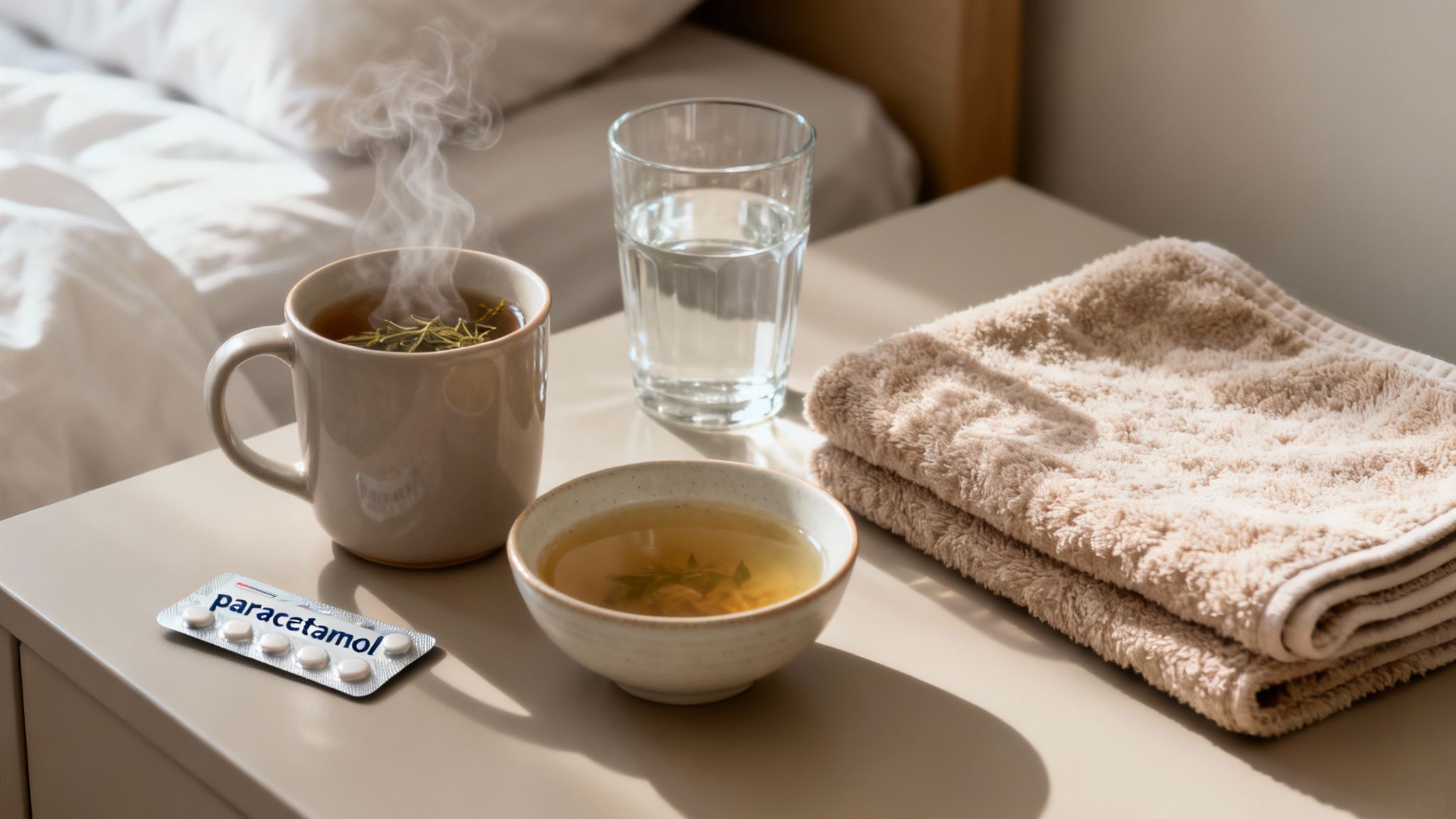
It’s crucial to see CBD not as some miracle cure, but as one part of your overall recovery plan. Think of it as a helpful addition to your routine, there to help manage the discomfort and support your body’s own healing powers, whether you're shaking off a nasty bug or coping with aches that just won't quit.
How CBD Works With Your Body
To get why CBD might help, you need to know about a remarkable network running inside all of us: the endocannabinoid system (ECS). Picture the ECS as your body's master regulator, the internal crew chief that keeps an eye on crucial functions like pain signals, immune responses, sleep, and even your mood.
Your body naturally makes its own molecules, called endocannabinoids, that work with this system to keep everything in balance. CBD, which comes from the hemp plant, is thought to give the ECS a helping hand, especially when it's under the cosh from illness or inflammation.
By interacting with this system, CBD may help tweak how your body registers pain and dials down inflammation—the very things that make body aches so miserable. This unique interaction is why it's become such a point of interest for people looking for a bit of relief.
Choosing The Right CBD Product
Diving into the world of CBD can feel like a lot to take in, but a few simple pointers will steer you towards a high-quality product you can trust. Here in the UK, it all boils down to safety, purity, and legality. This is where knowing your product types and lab tests really matters.
For complete peace of mind, always look for products that are:
- Broad-Spectrum and THC-Free: This means you get a rich mix of beneficial cannabinoids and terpenes from the hemp plant, but the THC (the compound that gets you "high") has been completely removed. You get the potential plant goodness without any unwanted side effects.
- Third-Party Lab Tested: Any brand worth its salt will have independent lab reports ready for you to see. These certificates prove what's in the bottle and, just as importantly, what isn't—like pesticides or heavy metals.
- Made in the UK: When a product like SMOKO CBD is manufactured in the UK, it's held to incredibly high standards. This gives you an extra layer of confidence that what you’re buying is top-notch.
Stick to these principles, and you can make a smart choice that fits your wellness goals. The aim is always to find a pure, trusted product that you feel good about adding to your daily routine.
CBD For Managing Discomfort And Aches
One of the biggest reasons people reach for CBD is to help manage discomfort. When your immune system is in a full-on battle with an infection, the inflammation it creates is a direct cause of those deep, nagging body aches and chills. CBD may offer support by helping your body better regulate that inflammatory response.
It’s a similar story for those living with chronic conditions where aches are a daily feature. For them, CBD can become part of a longer-term approach to managing symptoms and improving their quality of life. For a deeper dive into the science, you can learn more about using CBD for pain relief in our detailed guide.
Supporting Restful Sleep For Better Recovery
When you're ill, good sleep isn't a luxury; it's essential. This is your body's prime time for repair work, rebuilding your immune defences and healing tissues. The problem is, body aches can make getting comfortable enough to drop off feel almost impossible.
Many people use CBD to help improve their sleep. By encouraging a feeling of calm and easing the physical aches that have you tossing and turning, it can help set the stage for the deep, restorative rest your body is crying out for. A solid night's sleep can make all the difference to how you feel the next morning.
When Should You Seek Professional Medical Advice?
Most of the time, you can manage body aches and chills safely at home with plenty of rest and fluids. But it's important to know when your body is sending out a real distress signal. Some symptoms are more than just a common cold or flu – they're red flags telling you to get medical help, fast.
Learning to spot the difference between a run-of-the-mill illness and something more serious is key. A standard viral infection should start getting better within a few days. If your symptoms suddenly get worse, or feel unusually severe from the start, it's time to call in the professionals. Always trust your gut; if you feel like something is seriously wrong, don't wait.
Emergency Warning Signs
Certain symptoms need immediate action. If you or someone you're looking after experiences any of the following, you need to seek emergency medical care straight away. These can be signs of a severe infection or another critical health problem that can't wait.
The most urgent warning signs include:
- Difficulty Breathing or Shortness of Breath: Any struggle to catch your breath is a serious concern.
- Chest Pain or Pressure: This should never be ignored and requires immediate evaluation.
- Sudden Confusion or Disorientation: A significant change in mental state is a major red flag.
- A Stiff Neck and Severe Headache: When this pair appears with a fever, it could point to a serious infection like meningitis.
- A Rash That Doesn't Fade Under Pressure: Use the "glass test"—if you press a clear glass against the rash and it doesn’t disappear, seek help immediately.
When to Contact Your GP or NHS 111
Not every worrying symptom means a trip to A&E, but that doesn't mean you should ignore it. Calling your GP or NHS 111 for guidance is the right move if your body aches and chills are hanging around with other persistent or concerning symptoms.
Key Guidance: If your symptoms are severe, getting worse instead of better after a few days, or are paired with a high fever (above 39.4°C or 103°F) that isn't coming down with medication, it's time to call for advice.
You should also book a non-urgent appointment with your GP if your aches and chills are still there after two weeks without any clear reason. Lingering flu-like symptoms can sometimes point to an underlying issue that needs a proper look. It’s a simple, responsible step to stay on top of your health.
Still Got Questions About Body Aches?
Even when you know what’s going on, it's natural to have a few more specific questions floating around. Let's tackle some of the most common ones to clear up any lingering doubts you might have about your symptoms.
We'll look into the surprising link between your mental state and physical aches, how long the flu is likely to have you feeling sore, and what it means when you ache after a vaccination.
Can Stress and Anxiety Cause Body Aches and Chills?
Absolutely. When you’re wound up with stress or anxiety, your body flips into its 'fight or flight' mode. This isn’t just a mental state; it floods your system with hormones like cortisol and adrenaline, causing your muscles to clamp down as if preparing for a physical threat. When that tension doesn't let up, it leads directly to those persistent, nagging body aches.
What’s more, this intense internal alarm can throw your body's thermostat completely out of whack. This is why you might get the chills or start shivering, even if you’re not actually sick or sitting in a cold room.
How Long Do Body Aches and Chills Last with The Flu?
When you’re down with the flu, the body aches and chills are usually at their absolute worst for the first two to three days. This is the peak of the battle, when your immune system is throwing everything it has at the virus.
After that initial onslaught, you should start to feel things gradually ease up. It's totally normal, though, for some muscle soreness and general fatigue to hang around for a week or maybe even longer while your body gets back to 100%. If the really rough symptoms—like a high fever and severe aches—aren't getting any better after three or four days, it's probably time to give a healthcare professional a bell.
Important Takeaway: The first few days of the flu are the toughest. If you're seeing slow but steady improvement after day three, that’s a great sign your body is winning the fight. If you feel stuck or things are getting worse, it's worth a call to your GP or NHS 111.
If you're looking for a high-quality, natural addition to your wellness routine to support your body's recovery and manage discomfort, explore the range of THC-free products from SMOKO CBD. Discover our lab-tested CBD oils and soft gels at https://smokocbd.com.