Living with nerve pain can be an incredibly frustrating and isolating experience. Unlike a straightforward muscle ache you can pinpoint, neuropathic pain feels different—it’s that persistent burning, tingling, or shooting sensation that seems to have a mind of its own. It comes from damage or a mix-up within the nervous system itself, which is why it can be so stubborn and hard to manage, affecting everything from your work to simply getting a decent night's sleep.
When you're dealing with this day in and day out, you're likely looking for anything that can offer some relief. This guide is here to help you navigate one potential avenue of support: nutritional supplements. We'll explore some of the most promising options, looking at how they're thought to work and what the science says, so you can make more informed choices for your own health.
Understanding Your Options for Nerve Pain Relief

The Widespread Impact of Neuropathic Pain
If you're struggling with nerve pain, you are far from alone. It's much more common than people think. In fact, research suggests neuropathic pain affects around 9.2% of the UK population. That’s roughly 6 million adults grappling with these difficult symptoms.
Studies, like this in-depth analysis from the UK Biobank research on neuropathic pain, have shown that people with this condition often report a significantly lower quality of life compared to those with other kinds of chronic pain. This really highlights just how crucial it is to find effective ways to manage it.
A Path Forward With Natural Support
Let's be clear: supplements aren't a magic bullet or a cure. Think of them more as allies that can support your body's own systems. They often work by targeting the underlying issues that can make nerve pain worse, like inflammation, oxidative stress (a kind of cellular rust), and specific nutrient shortfalls that are vital for nerve health.
Here's a quick look at the key players we'll be diving into:
- Alpha-Lipoic Acid (ALA): A potent antioxidant that acts like a bodyguard for your nerve cells, helping to shield them from damage.
- B Vitamins: These are the essential maintenance crew for your nervous system, crucial for healthy nerve function and repair.
- Acetyl-L-Carnitine: This one helps fuel the tiny powerhouses inside your nerve cells, supporting their energy needs.
- Magnesium: Known for its calming effects on the nervous system, it can help in regulating pain signals.
To help you get a clearer picture, here's a quick summary of these key supplements.
Quick Guide to Top Supplements for Nerve Pain
This table breaks down some of the most discussed supplements for nerve pain, what they do, and who might find them most useful.
| Supplement | How It May Help Nerve Pain | Best For |
|---|---|---|
| Alpha-Lipoic Acid (ALA) | A powerful antioxidant that may protect nerve cells from oxidative damage and improve nerve function. | People with diabetic neuropathy or those looking for strong antioxidant support. |
| B Vitamins (B1, B6, B12) | Essential for nerve health, repair, and maintaining the myelin sheath that protects nerves. | Individuals with deficiencies, peripheral neuropathy, or general nerve function support. |
| Acetyl-L-Carnitine (ALCAR) | Helps produce energy in nerve cells and may reduce pain by promoting nerve regeneration. | Those experiencing pain from chemotherapy, diabetes, or age-related nerve issues. |
| Magnesium | Helps to calm the nervous system by blocking NMDA receptors, which are involved in pain signalling. | General nerve-related discomfort, muscle cramps, and those needing nervous system support. |
This is just a starting point, of course. By exploring these options in more detail, you can start to build a more personalised approach to managing your symptoms and taking back a sense of control.
If you're interested in exploring a wider range of supportive strategies, our guide on natural remedies for nerve pain offers plenty of additional ideas.
Why Nerve Pain Feels Different
To figure out how certain supplements might offer some relief, we first need to get our heads around why nerve pain is such a different animal compared to other types of pain. When you twist your ankle or accidentally touch a hot pan, the pain you feel is a direct, logical message. Your tissues send a clear signal to your brain saying, "Hey, there's an injury here!" This is what’s known as nociceptive pain, and it’s your body’s alarm system working exactly as it should.
But nerve pain, or neuropathic pain, is a whole different ball game. It’s not an alarm warning you about a new injury; it’s a problem with the alarm system itself.
Think of your nervous system as the complex electrical grid of a city. The nerves are the countless wires carrying signals from every house and street lamp back to the main power station—your brain. In a healthy system, these signals are crisp, clear, and accurate.
When the Wiring Goes Wrong
Neuropathic pain is what happens when these "wires" get damaged or become faulty. This can be caused by all sorts of things, from diabetes and physical injuries to infections or even certain vitamin deficiencies. When the nerves themselves are compromised, they can start sending out chaotic, jumbled, and downright incorrect signals.
It's a bit like a frayed electrical cord that starts to spark and send random power surges. Your nerves can do something similar, firing off pain signals to your brain without any real trigger. This is why you might feel a burning, tingling, or shooting sensation, even when there's absolutely nothing causing it.
Neuropathic pain is essentially a "glitch" in your body's communication network. The pain is very real, but it’s coming from malfunctioning nerves, not a fresh injury to your tissues. This distinction is absolutely crucial for finding ways to manage it effectively.
This faulty signalling is behind the bizarre and often maddening sensations that come with nerve pain, such as:
- Spontaneous Pain: Sudden, sharp bursts of pain that seem to come from nowhere.
- Allodynia: Feeling pain from something that shouldn't hurt at all, like the gentle touch of a bedsheet on your feet.
- Hyperalgesia: An outsized, extreme pain response to something that should only be mildly painful.
Calming the Haywire Signals
Because the problem lies with nerve dysfunction, simply taking a standard painkiller often misses the mark. The goal isn’t just to silence a specific alarm bell; it’s more about trying to repair and calm the entire electrical grid.
This is where the best supplements for nerve pain enter the picture. They aren't just about masking the symptoms. Many of them work on a much deeper level to support the health and function of the nerves themselves. For instance, some supplements are powerful antioxidants that help protect the delicate nerve "wiring" from further damage.
Others provide the raw materials that nerves need to repair themselves, or they help to regulate the chaotic firing of those pain signals. By tackling the underlying nerve health, these supplements aim to reduce the static and quiet down the haywire messages that are causing all the discomfort.
Understanding this fundamental difference—pain from an injury versus pain from faulty nerve signals—is the first and most important step. It completely reframes the problem, shifting the focus from simply dulling a sensation to actively supporting your nervous system and helping it get back on track.
Science-Backed Supplements for Nerve Health
Trying to navigate the world of supplements can feel like a guessing game, but when it comes to nerve pain, science has a few clear frontrunners. These aren't just random ingredients from a health food shop; they're compounds that actually interact with your body’s nervous system in specific, supportive ways. Let’s break down the most promising options, looking at how they work, the evidence behind them, and what you need to know before you consider them.
The reality of nerve pain goes way beyond simple discomfort—for many, it's a huge barrier to living a normal life. What experts call high-impact chronic pain (HICP), which is severe enough to limit daily activities, affects between 5.7% and 7.8% of adults here in the UK. That’s up to 5.2 million people whose ability to work, socialise, and just get on with things is seriously restricted. Back pain is a huge driver of this. If you want to dive deeper, you can explore the research on high-impact chronic pain for the full picture.
This image helps to show the key differences between nerve pain, which starts in the nervous system itself, and tissue pain, which is your body's direct response to an injury.
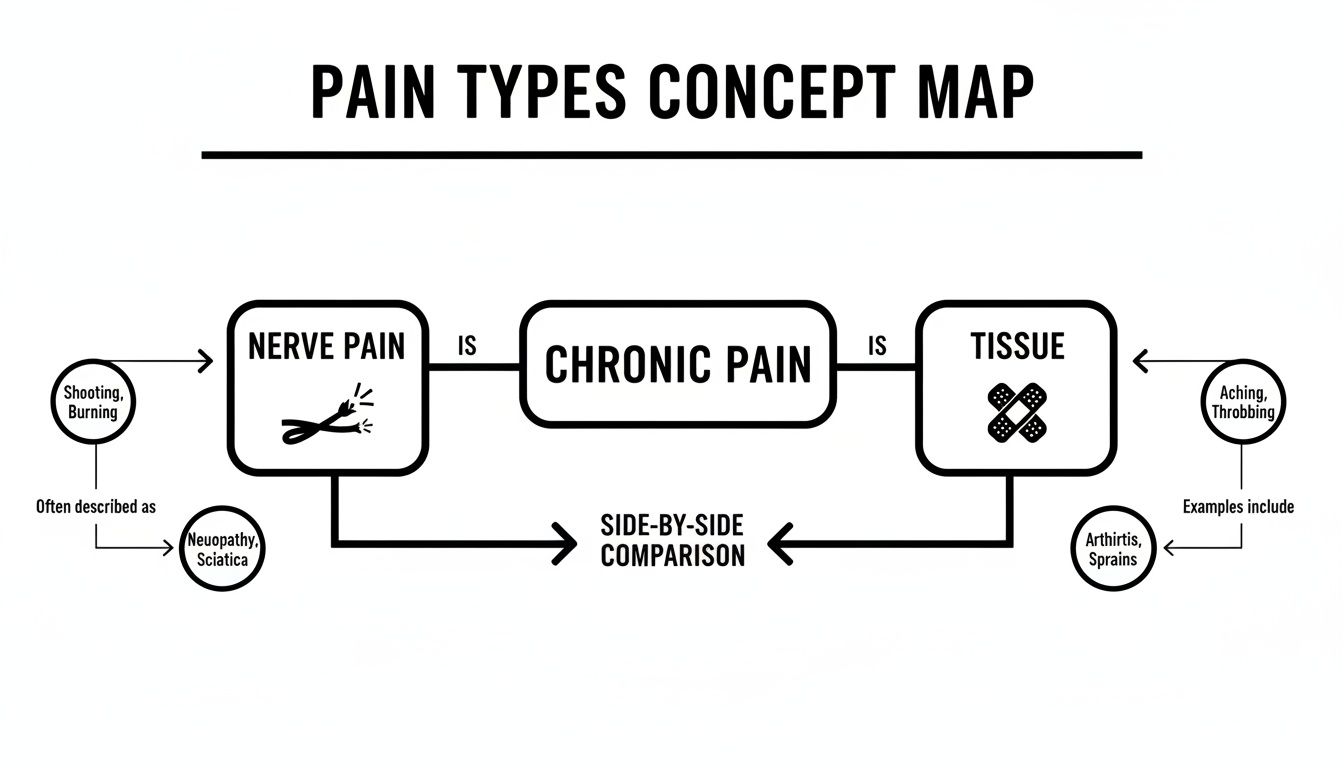
Getting your head around this distinction is the first step. It helps you understand why the supplements below are chosen for their ability to support and calm your body's "wiring," not just to put a plaster over the symptoms.
Alpha-Lipoic Acid (ALA): The Nerve Protector
Think of Alpha-Lipoic Acid (ALA) as a personal bodyguard for your nervous system. It’s a powerful antioxidant that your body makes on its own, but levels can drop as we age or with certain health issues. What makes ALA really stand out is that it’s both water-soluble and fat-soluble. This means it can get to work protecting pretty much every cell in your body, including your delicate nerve cells.
Its main job is to fight oxidative stress—a process that’s a bit like rust building up inside your body. This rusting can damage nerve fibres and make neuropathic pain a lot worse. By neutralising nasty free radicals, ALA helps shield your nerves from this constant assault.
ALA's dual-solubility allows it to cross the blood-brain barrier, offering direct antioxidant protection to the central nervous system—a key benefit for addressing nerve-related issues at their source.
Clinical studies have shown some really promising results, especially for people with diabetic neuropathy. The research shows that ALA can significantly improve symptoms like burning, tingling, and sharp pains. Some studies even suggest it might help improve nerve conduction, which means the signals themselves travel along the nerves more effectively.
- Common Dosage: For nerve pain, clinical trials often use doses from 600 mg to 1,200 mg a day. Sometimes this is given intravenously in a clinic before switching to oral supplements.
- Evidence Strength: For diabetic neuropathy, the evidence for ALA is considered pretty strong. It’s one of the most recommended supplements for this specific condition. Its effectiveness for other types of nerve pain is still being looked into, but the early signs are good.
B Vitamins: The Nerve Maintenance Crew
If ALA is the bodyguard, then B vitamins are the essential maintenance and repair crew for your nervous system. The whole family of B vitamins is important, but three of them really stand out when it comes to managing nerve pain.
Vitamin B1 (Thiamine): This vitamin is absolutely vital for turning food into energy, and nerve cells are incredibly energy-hungry. A deficiency can lead to a type of nerve damage known as beriberi.
Vitamin B6 (Pyridoxine): B6 is a key player in making neurotransmitters—the chemical messengers that allow your nerves to talk to each other. Keeping levels topped up is important for a calm and well-regulated nervous system.
Vitamin B12 (Cobalamin): This is probably the most famous B vitamin for nerve health. B12 is essential for maintaining the myelin sheath. Think of this as the protective, insulating layer that covers your nerves, just like the plastic coating on an electrical wire. A healthy myelin sheath ensures nerve signals travel quickly and without short-circuiting.
When B12 levels are too low, this myelin sheath can break down, leading to some pretty significant neuropathic symptoms. This is a big concern for older adults, vegetarians, and vegans, since B12 is mainly found in animal products.
- Common Dosage: Doses can vary a lot depending on your individual needs and whether you have a deficiency. A good B-complex supplement often provides a solid baseline, but people with diagnosed deficiencies will need higher, targeted doses from their doctor.
- Evidence Strength: The link between B vitamin deficiencies and neuropathy is rock-solid. For nerve pain caused by a deficiency, supplements are a standard and effective treatment. For people who aren't deficient, the evidence is less direct, but making sure you get enough is still a fundamental part of supporting overall nerve health.
Acetyl-L-Carnitine (ALCAR): The Nerve Energiser
Inside every cell in your body are tiny power plants called mitochondria. You can think of Acetyl-L-Carnitine (ALCAR) as a specialist fuel delivery service for these power plants, especially the ones inside your nerve cells. Nerves need a huge amount of energy to send signals and repair themselves, and ALCAR helps make sure they get the fuel they need to do their job.
But it’s not just about energy. ALCAR has also been shown to have neuroprotective qualities, meaning it helps protect the nerves themselves. It may help encourage the regeneration of nerve fibres after they've been damaged and has shown pain-reducing effects in several studies.
This makes it a great shout for nerve pain linked to conditions that mess with cellular energy, like chemotherapy-induced neuropathy or diabetic neuropathy. By both boosting energy and protecting the nerves, ALCAR offers a two-pronged approach to getting some relief.
- Common Dosage: In studies, the typical dose ranges from 1,500 mg to 3,000 mg a day, usually split into two or three smaller doses.
- Evidence Strength: The evidence is moderately strong, particularly for chemotherapy-induced and diabetic neuropathy. Several clinical trials have reported significant improvements in pain and nerve function for people taking ALCAR.
Magnesium: The Nerve Calmer
Magnesium is a bit of a superstar mineral—it’s involved in over 300 different processes in the body, and one of its most important jobs is calming the nervous system. Think of it as a gatekeeper for pain signals. It helps to block a specific receptor in the brain called the NMDA receptor.
When these NMDA receptors get overexcited, they can crank up the volume on pain signals, making you much more sensitive to pain. This process, known as "central sensitisation," is a key feature of many chronic pain conditions, including neuropathy. By helping to keep these receptors in check, magnesium can essentially turn down the volume on those pain signals.
Unfortunately, many people have less-than-ideal magnesium levels, especially those with chronic conditions like diabetes. This can lead to a state of heightened nerve excitability and inflammation. Understanding the different signs of chronic inflammation can help you see how interconnected all these systems in your body really are.
- Common Dosage: Recommended daily allowances vary, but for therapeutic support, doses often range from 300 mg to 500 mg of elemental magnesium per day. It’s best to look for highly absorbable forms like magnesium citrate, glycinate, or malate.
- Evidence Strength: While we could still do with more large-scale human trials, the way it works biologically is well understood. Lots of smaller studies support magnesium's role in easing neuropathic pain. It’s often recommended as a safe and foundational supplement for supporting your nervous system as a whole.
How CBD Fits Into Modern Nerve Pain Management
Alongside the foundational supplements we've covered, Cannabidiol (CBD) has become a major part of the conversation around nerve pain. It offers a pretty unique approach because it works with one of your body’s most important self-regulating networks: the endocannabinoid system (ECS).
You can think of the ECS as your body's internal balancing act. It’s a massive network of receptors and signals that helps manage just about everything, from mood and sleep to appetite and, most importantly for us, how we perceive pain. When this system is running smoothly, your body is just better equipped to handle stress and stay in a state of equilibrium.
CBD doesn't just jam into the main ECS receptors like a key in a lock. Instead, it acts more like a skilled conductor, influencing the whole system indirectly to help it work more efficiently. This interaction is thought to help quieten down overactive pain signals and reduce inflammation—two of the main culprits behind neuropathic pain.
Targeting Pain and Its Companions
One of the toughest things about nerve pain isn't just the physical sensation. It's the toll it takes on your mental wellbeing. Chronic pain often goes hand-in-hand with anxiety and sleepless nights, creating a vicious cycle that can feel impossible to escape.
This is where CBD’s broad support really shines. By interacting with the ECS, it can help manage not only the pain signals but also the stress and anxiety that often make them feel worse. Many people find that CBD helps quieten a racing mind, making it easier to finally get some decent, restorative sleep.
Chronic pain, anxiety, and sleep loss are deeply tangled together. An approach that addresses all three at once, like bringing CBD into the mix, can be far more effective than just targeting pain on its own. Getting better sleep and feeling less anxious can actually lower your body's overall sensitivity to pain.
This ability to support multiple areas of your health is why CBD is often seen as such a valuable part of a wider pain management plan. It complements other supplements by bringing a calming influence to the entire nervous system. You can dive deeper into how this all works in our guide to CBD for pain relief.
Choosing a Quality CBD Product
Let's be honest, the CBD market is crowded, and not all products are created equal. When you're looking at CBD as one of the best supplements for nerve pain, quality and transparency are absolutely non-negotiable. Here’s what to look for to make sure you're getting something safe and effective:
- Broad-Spectrum Formulation: This type of CBD contains a range of helpful plant compounds (cannabinoids and terpenes) but has all the THC removed. This means you can get the benefits of the "entourage effect"—where the compounds work together for a better result—without any psychoactive effects.
- Third-Party Lab Testing: Good brands will always give you access to independent lab reports. These documents, called certificates of analysis (COAs), verify the product's purity. They confirm it’s free from nasty stuff like pesticides and heavy metals, and prove it has the amount of CBD it says on the bottle.
- Organic Sourcing: The quality of the end product all starts with the plant. Look for CBD that comes from organically grown hemp, as this ensures the plant material is clean from the very beginning.
- UK-Based Manufacturing: Products made right here in the UK have to stick to strict quality control and safety standards. This gives you an extra layer of confidence in what you're putting into your body.
By keeping an eye out for these quality markers, you can be confident that the CBD you choose is clean, potent, and ready to support your wellness journey properly.
Choosing High-Quality Supplements Safely
Stepping into the world of supplements for nerve pain can feel like navigating a maze. The shelves are packed with options, all promising relief, but how do you know what’s genuinely helpful and what’s just clever marketing? Getting a handle on a few key details is the best way to make safe, smart choices for your health.
It's a simple truth: not all supplements are created equal. The quality can vary dramatically from one brand to the next. A poor-quality product might not have enough of the active ingredient to do any good, or worse, it could be contaminated with things you definitely don't want. To protect yourself, you need to learn how to read a label like a detective.
What to Look for on the Label
Think of the supplement label as its CV. It should give you clear, transparent information that inspires confidence in what you're buying. Here’s what you should zero in on:
- Third-Party Testing Seals: This is your non-negotiable proof of quality. Look for certifications from independent labs that verify the product's purity and potency. These seals mean an unbiased third party has confirmed that what’s on the label is actually what's in the bottle.
- Bioavailable Forms: Your body can absorb some forms of nutrients much better than others. For example, magnesium citrate or glycinate are known to be better absorbed than the cheaper, less effective magnesium oxide. A quality brand will always invest in these more effective forms.
- Clear Dosage Information: The label must state exactly how much of the active ingredient is in each serving. Be wary of vague terms like “proprietary blend,” which can be a sneaky way to hide low, ineffective doses of the important stuff.
- Minimal Fillers and Additives: Take a peek at the "other ingredients" list. While some binders are necessary to make a tablet, the list shouldn't be a long roll call of artificial colours, sweeteners, and pointless fillers.
Your health is always the top priority. The first step in any responsible supplement plan is a chat with a healthcare professional who can offer advice tailored specifically to you and your medical history.
The Importance of Medical Guidance
This brings us to the most critical point: safety. Even though you can buy supplements over the counter, they aren't without risks. This is especially true if you're already managing a health condition or taking prescription medication.
It is absolutely essential to speak with your doctor or a qualified pharmacist before starting any new supplement. They have the full picture of your health and can flag potential problems before they start. This is particularly vital if you are taking medications for conditions like diabetes, heart disease, or high blood pressure.
Certain supplements can interfere with how your body uses prescription drugs, either making them less effective or cranking up the risk of side effects. For instance, some can impact blood thinners, while others might interact with blood sugar medication. Understanding potential CBD drug interactions is also crucial; you can learn more in our detailed guide on safe CBD use and potential drug interactions.
To give you an idea of what to look out for, here’s a table with a few common examples.
Potential Supplement and Medication Interactions
| Supplement | May Interact With | Potential Effect |
|---|---|---|
| Alpha-Lipoic Acid (ALA) | Diabetes Medications | Can lower blood sugar, potentially increasing the risk of hypoglycaemia. |
| Vitamin B6 | Certain Seizure Medications | High doses may reduce the effectiveness of drugs like phenytoin. |
| Magnesium | Antibiotics, Blood Pressure Meds | Can interfere with the absorption of some antibiotics and boost the effect of blood pressure drugs. |
Remember, this table is just a starting point and doesn't cover everything. It’s here to show why that professional guidance is so important. Your doctor is your best partner in putting together a plan to manage your nerve pain safely and effectively.
Creating Your Holistic Pain Management Plan
Supplements can be fantastic allies, but they rarely work in isolation. Real, lasting relief from nerve pain comes from building a plan that supports your entire well-being. Think of supplements as specialists; they're at their most effective when the rest of the team—your diet, movement, and stress levels—is working in harmony.
Putting this bigger picture together doesn't have to be overwhelming. It's all about making small, consistent changes that create a healthier environment for your nervous system. By weaving targeted supplements into supportive lifestyle habits, you're giving your body its best shot to heal, calm down, and manage pain signals more effectively.
Nourishing Your Nerves Through Diet
The food you eat provides the actual building blocks for nerve health. Moving towards an anti-inflammatory diet, one that’s rich in whole foods, can make a huge difference in reducing that background "static" of chronic inflammation that often makes neuropathic pain worse. The goal here is to nourish your system, not to deprive it.
Try to bring more of these elements onto your plate:
- Omega-3 Fatty Acids: Found in oily fish like salmon and mackerel, these healthy fats are vital for building nerve cell membranes and taming inflammation.
- Antioxidant-Rich Fruits and Vegetables: Think berries, leafy greens, and colourful veg. They're packed with compounds that fight the oxidative stress we talked about earlier.
- Lean Proteins and Healthy Fats: Foods like nuts, seeds, and avocado provide the essential fuel and nutrients for nerve repair and function.
By focusing on these nutrient-dense foods, you're directly supplying your body with the tools it needs to protect and support its delicate wiring.
The Gentle Power of Movement
When you're in pain, the very thought of exercise can be intimidating. But gentle, consistent movement is incredibly beneficial for nerve health. It boosts blood flow, delivering vital oxygen and nutrients to damaged nerves, and over time it can help to dial down pain signals.
You don't need to run a marathon. The trick is finding something you enjoy and can stick with.
- Stretching: Gentle stretches can help relieve muscle tension that might be compressing or irritating nerves.
- Walking: A simple daily walk is a brilliant low-impact way to boost circulation and your mood.
- Yoga or Tai Chi: These practices combine gentle movement with mindfulness, which is a great combination for calming an agitated nervous system.
Managing Stress and Mental Wellbeing
The connection between mind and body is impossible to ignore, especially when it comes to chronic pain. The psychological toll is huge—research shows that 70-80% of people with long-term pain also struggle with depression and anxiety. On top of that, poor sleep affects 75% of chronic pain patients, creating a draining vicious cycle. You can learn more about the interconnected patterns of pain and psychological distress in the UK to grasp the scale of this challenge.
This is exactly why stress management is a non-negotiable part of any pain plan. Techniques like deep breathing, meditation, or mindfulness help to soothe an overactive nervous system, which can actually lower your body's sensitivity to pain. When you take control of your mental wellbeing, you’re also taking control of your pain.
Your personalised plan is your roadmap to feeling better. It's about empowering yourself with a variety of tools—supplements, nutrition, movement, and mindfulness—to improve not just your pain, but your overall quality of life.
At SMOKO CBD, we believe in supporting your wellness journey from every angle. Our high-quality, lab-tested CBD products are designed to be a seamless part of your holistic plan, helping you find calm, manage discomfort, and get the restorative rest you deserve. Explore our range and take the next step towards a more balanced life at https://smokocbd.com.